THE DEAD KID POEMS

The Dead Kid Poems, by Alexis Rhone Fancher

Review by Sarah Stockton

Alexis Rhone Fancher’s new chapbook, The Dead Kid Poems  (Kyso Flash Press, 2019), while a complete collection unto itself, is described on the title page as a companion volume to a previous chapbook called State of Grace: the Joshua Elegies (Kyso Flash Press, 2015). Not having read Fancher’s previous work, I can still vouch for the fact that while this new collection contains its own cohesive integrity, reading these poems feels like stepping into the middle of a much longer conversation; not so much eavesdropping, as witnessing. Not as a passive bystander, but as an attentive companion to this ongoing story of grief.

A sense of the continuity of the poet’s suffering and resiliency is conveyed even with the page numbering; the Table of Contents starts on page 13 (with no numerals on preceding pages). This small numerological detail adds to the overarching sense of time’s long embrace–or is it a devastation–so well-documented in lines like this from a poem, titled, “Today, in her garden, my sister says, This plant came from the birds,” about her sister’s child, which take us from pregnancy to current reality:

I want to tap my sister’s younger self on the shoulder, say
don’t worry; this will turn out badly,
no matter what you do.

Most life narratives don’t follow one smooth and congenial plot line, much as we might wish it were so. The sufferings and shock of illness, death, addiction, and estrangement touch us all to one degree or another, at one time or another. And yet it is this poet’s gift to offer up the best configuration of words and meaning she can conjure, to transform suffering into connection, and shame into strength. In the poem “Every Day is Mother’s Day,” we are asked to contemplate an answer to the question:

If you had only
one child and he died,
are you still a mother?

The poem goes on to answer:

Yes, a son. Just one.
Or: No. I have no children.
That’s unthinkable.

Like he never was.
Say it and then catch yourself:
Such cruel betrayal.

Again and again, the poet asks us to think the unthinkable, and to think about what we would say if we didn’t care what anyone else thought. In “Car Shopping,” the great antithetical freedom of grief is expressed in one short, sharp moment,

You can fit grandkids
in the back, the saleswoman
promises. I tell
her my only son is dead.
My husband’s horrified look.

Some of the poems in The Dead Kid Poems are not about the death of the poet’s son from cancer, but about addiction, another kind of death, albeit played out here in slow, suffocating motion, sustained but not truly arrested by loving intentions or co-dependent desperation. “Anna as War Zone,” written to a sister, the mother of Anna, is a testament to the ways in which other lives are damaged by addiction’s greedy tentacles. It opens with the truly brilliant line, My sister is a cargo plane of Hail Marys; Anna, the war zone she circles. Then the poem goes on in exasperation, or despair:

She’s low on fuel, her husband ready to walk, the rest of us at wit’s end. A good mother never gives up on her child, my sister insists. I am speaking to a wall.

The title and subjects of The Dead Kid Poems might dissuade some readers, but I would hope not. I’d gladly hand this chapbook out at a 12-step meeting, a wake, or give it to an adversary or my own children. It says, pay attention, this is what grief does. If time, for a grieving parent, for any of us, is both frozen and malleable, much too long and all too short, then we might as well tell the truth while we can, to whoever will listen. As the poet says in “Overdose (Persona poem for K. S-B on the death of her son),”

Don’t minimize my loss.
My boy is not better off dead.

For once, let’s say it like it is:

He did not pass away.
He died.

There are no panaceas in these poems, and few condolences. Small gifts run through it, however: honesty and dark humor, examples of survival with grace. And finally, we are left with a small comfort that a deep solace is possible:

Last night as I finally drifted off, my dead boy covered me with his yellow baby blanket.

Sleep now, Mama, he said.

[BUY IT !]
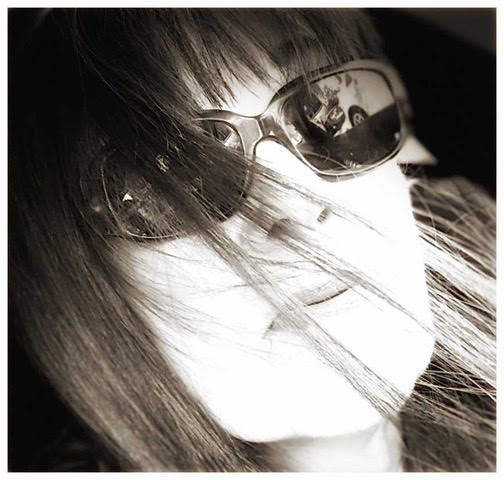
Poet and photographer Alexis Rhone Fancher has work published in over 200 literary magazines, journals, and anthologies, including Best American Poetry, Rattle, Hobart, Verse Daily, The MacGuffin, Plume, Tinderbox, Diode, Nashville Review, Rust + Moth, Nasty Women Poets, Wide Awake: Poets of Los Angeles and Beyond, among others. Her photographs have been published worldwide. Her books include: How I Lost My Virginity to Michael Cohen & other heart stab poems, Enter Here, and the autobiographical, Junkie Wife. Her chapbook, State of Grace: The Joshua Elegies was released in 2015, and its companion, The Dead Kid Poems, published in May, 2019. EROTIC, a volume of her new and selected erotica, will be published in 2020 by New York Quarterly. A nominee of multiple Pushcart Prize, Best Small Fictions, Best Micro-fiction, and Best of the Net awards, Alexis is poetry editor of Cultural Weekly.

Review by Sarah Stockton

Risa Denenberg is the curator at The Poetry Cafe.
She is a co-founder and editor at Headmistress Press and has published three full length collections of poetry, most recently, “slight faith” (MoonPath Press, 2018).

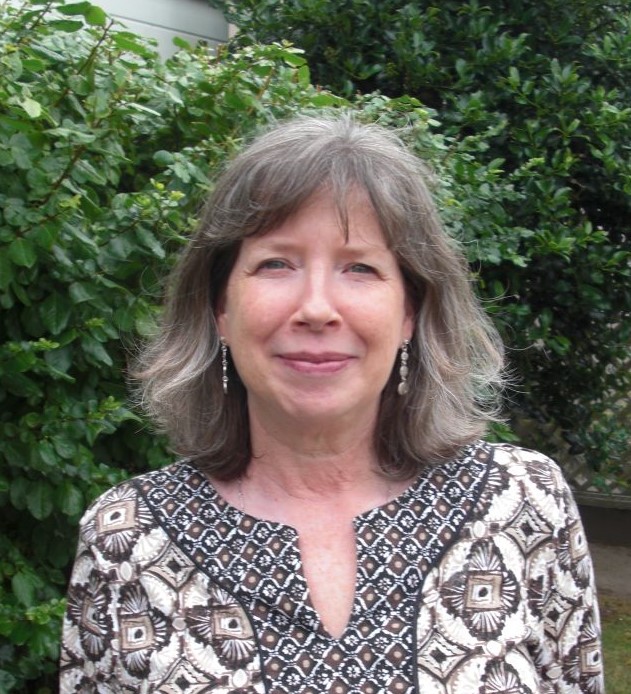
Sarah Stockton

Meet Guest Reviewer: Sarah Stockton

A life-long bibliophile and poetry autodidact, Sarah Stockton also holds a BA/English and MA/Education, and has extensive training as an addiction counselor, creativity coach, and spiritual director. Along with raising two kids, Sarah has held various university positions over the years as both staff and adjunct professor (in literature and theology). Sarah is also a freelance writer and editor, and the author of two nonfiction books on spirituality. Most recently her poems have appeared in The Shallow Ends, Rise Up Review, American Journal of Poetry, Crab Creek Review, Empty Mirror, and Glass Poetry, among other publications. 


www.sarahstockton.com Twitter and Insta: @sarahpoetica

FOOTNOTE

Footnote, by Trish Hopkinson

Trish Hopkinson is a force in the poetry community with her almost-daily publication of an all-things-poetry blog that informs poets where, how, and why to submit poems; conducts interviews with editors of no-submission-fee journals; and publishes guest blogs addressing all aspects of writing, reading, submitting and publishing poetry. I’ve followed this blog avidly and very much appreciated her recent interview introducing The Poetry Café.

With such a footprint in the world of poetry, I was curious to read Hopkinson’s work. Footnote was published by Lithic Press in 2017 with the subtitle of “A Chapbook of Response Poems.” Each of the twenty poems in Footnote has either a footnote or a dedication (some as ‘for,’ others as ‘after‘), inscribed beneath the poem. Each poem embraces the spirit of its annotation, at times using found lines, erasures, or the style of another writer. While visually each poem has the familiar appearance of lines and stanzas on the page, they each possess a quirky—somewhat experimental—writing style.  An example of a poem I particularly enjoyed was, “And Finished Knowing – Then –,” footnoted with a nod to Emily Dickinson, of course, but with Hopkinson’s sly imprint,

I conjured a childbirth, in the air,
and nurses all askew
stood standing – standing – till the dream
seemed real enough to chew.

I wondered how the poems in the book came together. At an interview at The Literary Librarian, Hopkinson explained the book’s origins:

“In 2015, after teaching a community poetry writing workshop on response poetry, I realized I had quite a few response poems of my own. So in this case, the collection was a surprise waiting for me in already completed work.”

These days we find a wealth of ‘Response Poems’ that foment resistance to injustice and oppression. Hopkinson’s responses come from a different tradition—emotional and spiritual responses to other artists that have affected, influenced, and secured a solid foothold in her psyche and writing. Footnote is in essence a work of conversations. Her dedications include an artist (Everett Ruess), a musician (Janice Joplin), a filmmaker (David Lynch), and a writer (James Joyce), but are mostly poets (Baraka, Paz, Rilke, Ai, Neruda, Dickinson, Plath, Rumi, Poe, Ferlinghetti, Ginsberg). As a reader, I always find myself wanting to know the poet through the poems. We get a nuanced taste of Hopkinson from her choices. While a first person voice is mostly absent in these pages, the poems are strong evidence of her appetites.  

I was intrigued by Hopkinson’s use of syntax and voice. Compared with conventional sentence structure (subject … verb … adjective … noun), these poems often lack a subject. Not only are there few ‘I’ pronouns, there are relatively few pronouns of any sort, as here in the first stanza of “A Way In,”

As involved and still
as looking inward. Loudly
closing all the shutters at once.

“A Way In” reflects a speaker with a deep and full inner life, one that gazes internally for sustenance—a true introvert. The reality is a closed room where,

Sunlight will edge between cracks
& in warm strips of faith, of truth.

There are glorious murals of lilies
on the wainscot
in the dollhouse. The dolls
sit still all day.

The speaker remarks that she is satisfied with Pausing,

in this moment, staying still,
waiting to pass this old age, the
mortal pain of body; sloughed off . . .

How to describe this voice—muffled, ghost-like, echoing? Several of the poems offer hints of the speaker’s mind in response to the iconic artists she bows to. These range from “A Way In” with its atmosphere of stillness, to “We all got a secret side,” which tells us, It’s even stranger underneath, to “From Her to Eternity,” where she says, I am a mere abstraction. Yet, there is a confessional tone in her poem, “Waiting Around,” which starts with these lines:

It so happens, I am tired of being a woman.

And ends with this stanza,

I wait. I hold still in my form-fitting camouflage.
I put on my strong suit and war paint lipstick
and I gamble on what’s expected.
And what to become. And how
to behave: mother, wife, brave.

There is darkness in many of the poems in Footnote, a darkness that is not, however, nihilistic. I find both craft and courage in these poems. The reaching outward to connect. The love of language and art. The need to find sustenance in art, writing, music and film. Like most of us, the poet herself might feel like a footnote at times, but rather than giving in to being stuck in a predictable role, she becomes immersed in communicating with artists of enormous power. And in the process of those larger conversations, occurring in the dark cerebral places where we know ourselves best, she becomes a peer in the conversation.

In “Broken Hearts Buried Here” with its footnote, “found in Ulysses,” Hopkinson’s contributions to the conversation are broad, and very much her own, as in these lines,  

Lots of them lying around—lungs and livers and old rusty pumps,
A pump after all, pumping thousands of gallons of blood
every day, every mortal day, a fresh batch courting death


like stuffed birds buried in a kitchen matchbox.
Consumptive girls with little sparrow’s breasts,
baldheaded business men, men with beards, old women, children.


The cemetery is a treacherous place.
The soil fat with corpse manure, bones, flesh, nails,

Finally in the last poem, “Footnote to a Footnote” with its own footnote, “after Allen Ginsberg’s “Footnote to Howl,” Hopkinson blesses the panoply of what is most holy to her,

Bookshelves are holy.
   Missing dust covers are holy,
   magicians & black & white T.V. shows,
   Penn Jillette theories & Andy Griffith justice,
  Uncle Walt songs & Ginsberg poems—holy, holy, holy.

[BUY FOOTNOTE!!]

Trish Hopkinson has always loved words—in fact, her mother tells everyone she was born with a pen in her hand. She has been published in several anthologies and journals, including Stirring, Pretty Owl Poetry, and The Penn Review; and her third chapbook Footnote was published by Lithic Press in 2017. Hopkinson is co-founder of a regional poetry group, Rock Canyon Poets, and Editor-in-Chief of the group’s annual poetry anthology entitled Orogeny. She also co-founded Provo Poetry and is currently the Literary Arts Coordinator for the Utah Arts Festival. You can follow Hopkinson on her blog where she shares information on how to write, publish, and participate in the greater poetry community at https://trishhopkinson.com/.

Risa Denenberg is the curator at The Poetry Cafe.
She is a co-founder and editor at 
Headmistress Press and has published three full length collections of poetry, most recently, “slight faith” (MoonPath Press, 2018).