Terrain

Terrain, by Gina Hietpas (Blue Cactus Press, 2020)
Cover art by Heather Romano

Review by Risa Denenberg

Before reading the poems in a new book, I always like to spend some time absorbing its essence in its entirety: cover art, back notes, poem titles, author’s bio, acknowledgements, blurbs. The cover art on Gina Hietpas’s “Terrain” is the remarkable work of the artist Heather Romano, who created it specifically based on “images from the text” and “the underlying themes of the poems.” In it, a naked woman is shown, mid-face to hips, tattooed with living symbols, hands at heart and solar plexus in a gesture of protecting a living landscape of vines, fruit, and birds.

Hietpas’s narrator lives up to that image— vulnerable, protective, patient. She brings the reader into her story with an invitation. In “Coyote Speaks to Me,” a coyote dares a human to accept the joys and hardships to be encountered throughout the poems in this work. It ends with coyote’s encouragement:

Stick with me!
I’ll show you persistence and the art of pounce.
Watch me shrug off disappointment.

In solitude you learn your story.
Only than can you riff on the moon.

In “What We Dreamed,” a couple buys a piece of land trusting their ability to make a life, “a reprised “go west” dream. Living the dream, they find themselves here:

Christmas Eve, drenched in the Milky Way,
we warmed ourselves with possibilities.
We assumed blessing in the winks of stars.

In “Dessert” an “After supper” . . . “walk through the orchard,” displays the abundance of life, in this case, fruits—apples, plums, blackberries.

The poems unfold the story of a marriage, early settling into “cold water living” while building a home and having children. The couple’s greatest hardship is yet to come in these early days of “Trim the wicks, light the lamps. / Feed the fire.” In the poem titled, “Coyote Chatter,” we learn that the coyote—a perfect spirit animal for this story—is “a trickster, hipster, predator, editor.”

Indeed, the “trickster” brings the unexpected; the “editor” revises the story. There is nothing sentimental in these poems, no paradise, just trust, love, and hard work. But there is also an unexpected trouble. In “Aria: We Are Introduced to Our Future,” a pain-filled night becomes:

Tomorrow, your morphine-laced body,
            splayed on steel-edged tables,
            pictured and probed,
will reveal in grainy images the seismic shift
            in our dreams.

Time passes, children grow, a home is built of “[c]edar, quarter sawn, straight grained/ layers of ancient cambium,” while a husband’s illness ties him to dialysis. Years pass, a family accepting this complication in their wake. In “The Ache of October,” the woman reflects,

I, now my mother’s age, wrap myself
in russet and gold, sit in the seen of sun.
Weep. Weep. Murmurs the nuthatch
caching bugs beneath the cherry’s bark.

These poems narrate a life, of which I’ve sketched some larger movements. Between signposts and events, the poems reflect a poet who is alive to the land, it’s foliage and wildlife. Each poem is vibrant with imagery and pays close attention to what is at hand, giving the sense of someone who lives faithful to the present moment.

In the final poem, “Credo,” Hietpas speaks of the harvest of endurance and acceptance:

Love is a stone.

It can fracture under pressure.
But yielding to wind or wave,
the sharp edges smooth.

Grain by grain, it gives of itself
to become the grit beneath your feet.
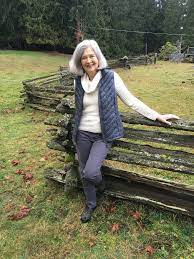

Gina Hietpas is a self-taught poet, born and raised in Tacoma, Washington state. Nowadays, she lives outside Sequim, WA, on a small farm with her husband, a few cows and a passel of chickens. Her land is a habitat for elk, deer, coyotes and an occasional bear. It is, for the most part, a peaceful coexistence. The opportunity to be a back-country ranger for several seasons shaped her connection to wilderness. Professionally she was a middle school teacher for twenty five years.  Now that she has retired, she focuses her efforts on writing. She has studied with Kelli Russell Agodon, Alice Derry, Holly Hughes, Susan Rich and Kim Stafford. Hietpas’ work has appeared in Minerva Rising, Tidepools, Spindrift and New Plains Review.
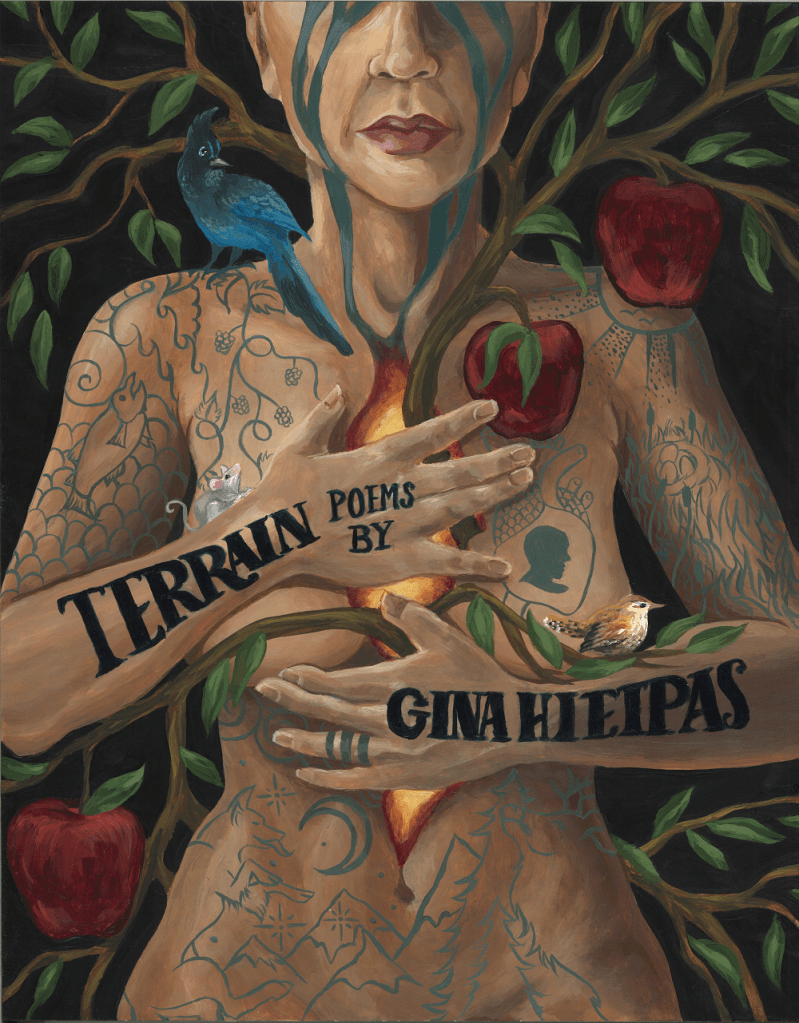

Terrain, Poems by Gina Hietpas
Blue Cactus Press, 2020
49 pages; $17
ISBN: 9781733037556
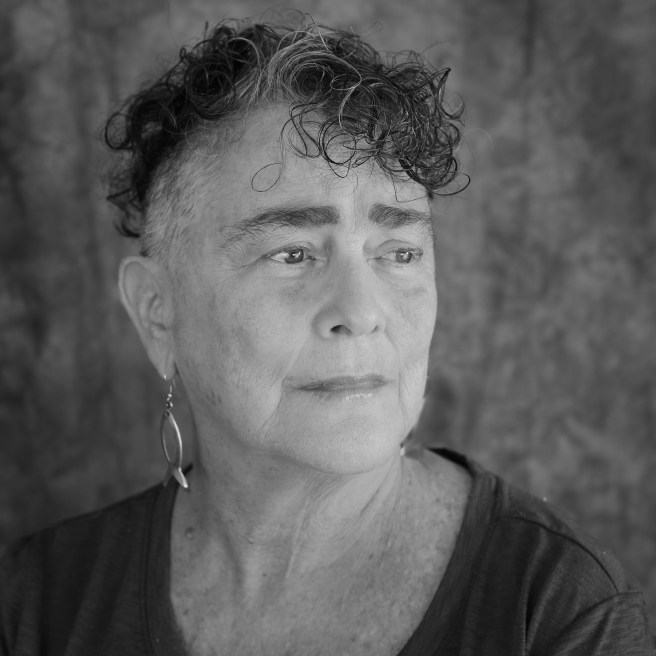


Risa Denenberg lives on the Olympic Peninsula where she works as a nurse practitioner. She is a co-founder of Headmistress Press and the curator at The Poetry Cafe Online. Recent publications include slight faith (MoonPath Press, 2018), and Posthuman, finalist for the 2020 Floating Bridge Chapbook Prize.


Risa Denenberg is the curator at The Poetry Cafe.

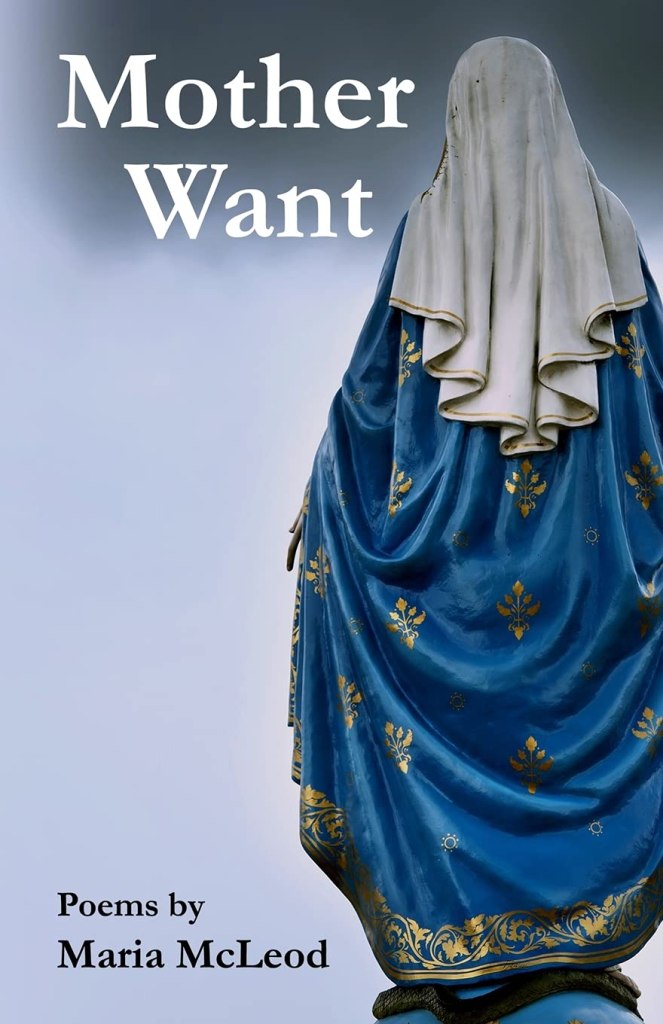
Mother Want

Mother Want, by Maria McLeod
Winner of the 2020 WaterSedge Poetry Chapbook Contest

Review by Risa Denenberg

Thank God for poetry and horses.

In her prize-winning chapbook, Mother Want, Maria McLeod narrates harrowing tales of childhood, both hers and her parents’— rendering a panorama of inter-generational wounds. Breaking the cycle involves finding a way out of the story, without disowning it. For McLeod, the poetry muse offers a pathway through the act of writing; horses heal simply by being, as she describes in “And the Sky Bloomed Pink”:

I learned about love
when working with horses.

[…] those sweet moments
mucking stalls, alone
with the horses at first light.

Still, the through-line, to the last poem, “Summer’s End, Dogs,” does not relinquish want or hide melancholy. Watching children leave the house, McLeod finds keepsakes in an ordinary life: backpacks, yellow school bus, garden weeds, plum tomatoes, and the “unrelenting loneliness/ of neighborhood dogs, announcing over and over:/ someone is missing, someone is gone.”

Inevitably, the mother looms large in Mother Want. In the title poem, the longing for a do-over is a poignant wish “to love what isn’t lovable” and “to meet my mother/ before the years of sleep.”  

I want to know her before she disappeared, before
she gave up being the mother, before she gave up
being the body of the mother, the breasts
and words, and touch of the mother.

But also “to empty her out, to ransack/ her body, to cause damage.”

In childhood, we don’t recognize our parents as beings apart from us with their own stories, and certainly not as children themselves. Aging and death of parents can be a time for reappraisal, perhaps even forgiveness, or at least acknowledgement that they did the best that they could. “Joyce, 1945,” subtitled, “fur meine Mutter,” reveals disturbing scenes of the mother’s childhood—stories McLeod was told “when I was finally old enough to hear of it.” McLeod speaks perceptively of her mother as a child, “unable to discern joy from terror.” 

In “On Sunday, Our Father,” the father is portrayed as the more functional parent in the home with an absent mother. He was portrayed as frightening: “We could hear the anger in his walk/ across the hardwood floor/ hatred of his wife.” And “Once he punched a hole/ in our bedroom door.” But also this:

He warmed bottles
of milk while my mother sleepwalked through life.
He made us pizza for dinner;
he let us drink pop. We loved
our father.

Later in “Death Defied,” we learn that the father was a “sickly boy” who was supposed to die but instead “rose out of bed, defying his doctors.” Similarly, the narrator in Mother Want defies the somber prospects of her childhood. Indeed, both parents’ backstories are sewn into the fabric of the child’s day-to-day reality.

There are other possible configurations of childhood in these pages. In “Bereft/ for Stephen,” the death of a beloved father brings forth the wisdom that,

Death has no dominion over your child self,
grieving not for the absence
of the frail father, but for the familiar
comfort of the sturdy back you mounted
before you could swim.

There are also present-day stories here, such as in “November Green/ for Mary.” November is a seen as a time of decay and decomposition as two friends walk and talk “of our work/ as professors, of love and marriage, illness, and our parents/ decline.” A cancer diagnosis is disclosed— “the wife of a friend … was dead,” while the speaker is “13 months post diagnosis,” but is “reluctant to refer to [her]self as lucky.” In this rambling friendship, there is also the story of a 10-year-old daughter’s elaborate funeral for her hamster “Creampuff,” with friends dressed in black and “some of the girls/ wearing fascinators, as if attending a British wedding.” There is a tenderness towards children in this poem that was often lacking in the poet’s childhood.

The poems in Mother Want are not only memoir, although the childhood memory pieces recounted here are indeed memorable—in the way an earworm won’t go away after the song ends. There are also poems of portraiture—ekphrastic poems of persons, so to speak—which are both memorable and gentle, a relief from traumatic memories.  In “Hammer and Nails,” a carpenter, “imagines where/ he’ll frame out windows, add a door.” As the day draws to a close,

He measures his next day’s work, makes his way
onto the dilapidated porch, faded color
he’ll need to scrape off, recoat. Make it new:
make it right.


Standing alone, this is a lovely portrait; but it is also an immensely satisfying metaphor for what might be done for a broken childhood.


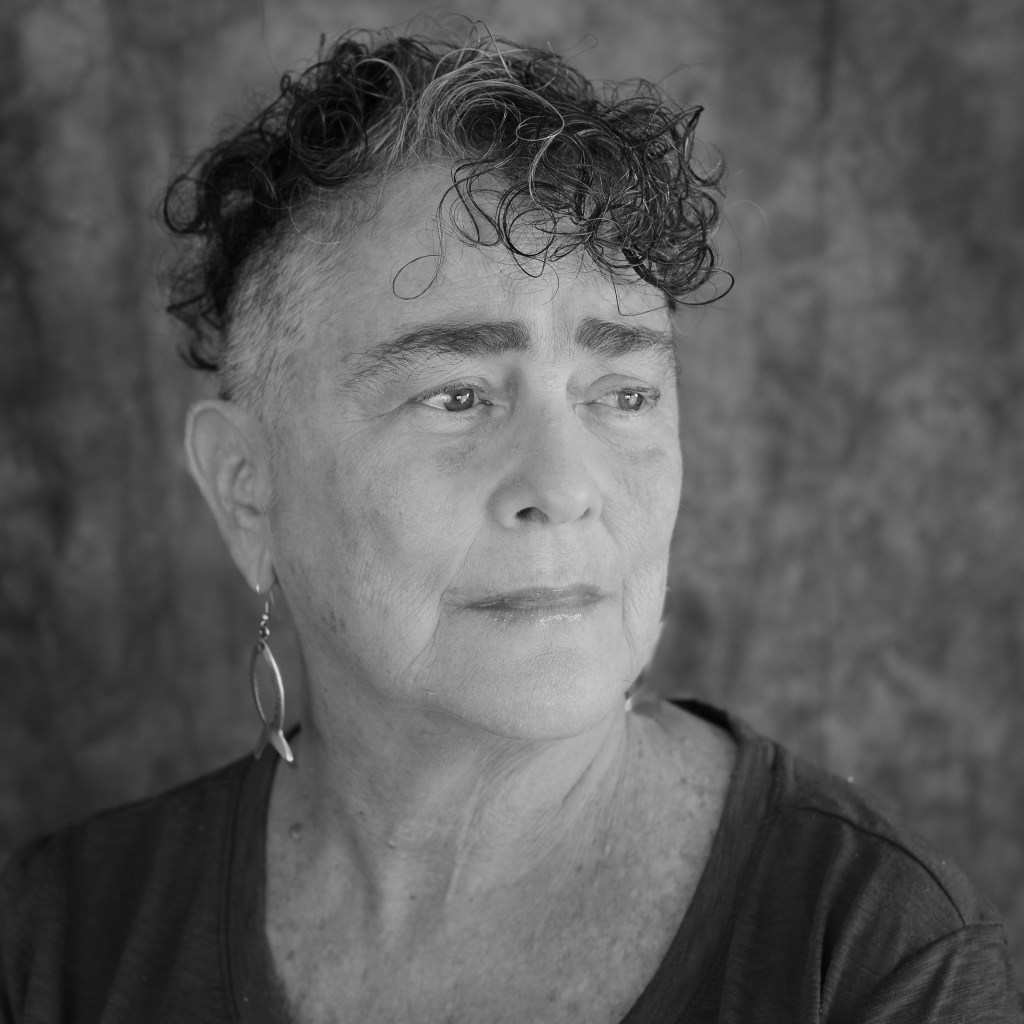
Maria McLeod writes poetry and prose. Honors include the Indiana Review Poetry Prize, the Robert J. DeMott Short Prose Prize, and three Pushcart Prize nominations. She was named the 2020 WaterSedge Poetry Chapbook Contest winner, judged by then Oregon State Poet Laureate Kim Stafford, for Mother Want, published in 2021. Her second poetry chapbook, Skin. Hair. Bones., is forthcoming from Finishing Line Press in 2022. Her poetry and prose have appeared in journals such as Puerto Del Sol, The Brooklyn Rail, Painted Bride Quarterly, Crab Orchard Review, Sonora Review and others. Originally from the Detroit area, she currently resides in Bellingham, Washington where she works as a professor of journalism for Western Washington University.

Mother Want, Maria McLeod
Winner of the 2020 Water Sedge Poetry Chapbook Contest
Publisher: ‎ Independently published (May 25, 2021)
Paperback: ‎ 37 pages $10
ISBN-13: ‎ 979-8731318600


Risa Denenberg lives on the Olympic Peninsula where she works as a nurse practitioner. She is a co-founder of Headmistress Press and the curator at The Poetry Cafe Online. Recent publications include slight faith (MoonPath Press, 2018), and Posthuman, finalist for the 2020 Floating Bridge Chapbook Prize.


Risa Denenberg is the curator at The Poetry Cafe.
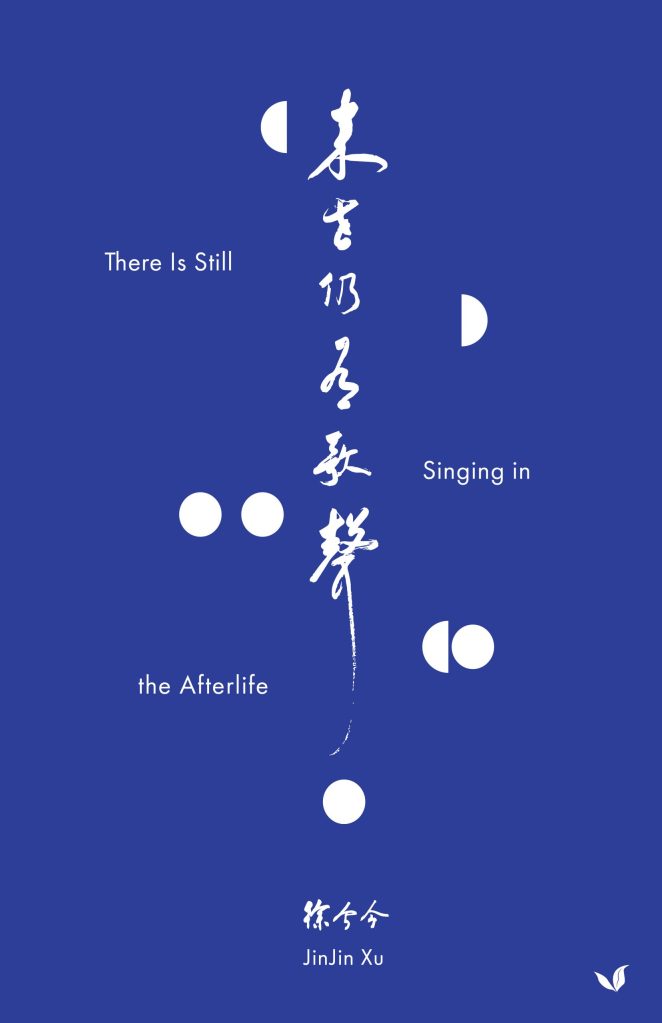
There is Still Singing in the Afterlife

There is Still Singing in the Afterlife, by JinJin Xu (Radix Media, 2020)

Winner of the inaugural Own Voices Chapbook Prize selected by Aria Aber

Review by Jeri Frederickson

There Is Still Singing in the Afterlife drew me in through its imagery and unabashed closeness to intimate loss and historical grief. You may find yourself and echoes of your own family in this debut collection by JinJin Xu. Drawing on personal experiences, playing with language and visual poetry, these poems shine a light for readers to see our own paths in the aftermath of complex family dynamics and loss.

We are in an afterlife of our own in 2021. I imagine this collection was written and set for publication before the Covid-19 global pandemic, and yet it entered the world right in the middle of it. Fortunately for us, as the world tries to find a post-Covid, or a Covid+ world, There is Still Singing in the Afterlife lifts the burden of finding a way. Xu visualizes an afterlife of both global and personal loss, chaos, and misunderstandings. As I read, I kept asking myself how does this collection feel so alive, like a song, despite its often heavy content? Xu shows the reader a way to sing again and a way to live through play, even as we grieve.

As is often the case with a contest-winning chapbook, There Is Still Singing in the Afterlife has already received several reviews; I agree with previous reviews asserting the language’s poignancy and intimate closeness. The language draws us into the longing and hardship inside familial ties in poems like “New Year’s with my Aborted Sister,”

& my poor mother, with only a daughter to her name
             Melts her red tears into the little girl
            I have long searched for.
I am her daughter in this life, her mother in the next.
             I undress her grief, suckle cancer from her breasts

Xu’s precise language affirms and eases the weight of similar grief. Some reviews of this chapbook have pointed to the titular poem or to the “To Red Dust” poems to uplift Xu’s exploration of and confusion with familial bonds. While I find their perspective interesting and certainly relevant to poems like “New Year’s with my Aborted Sister,” I’m most interested in another aspect of this collection. Xu’s playfulness through language and the visual design of the collection includes glossy images that emboss, strike-through, or erase text, and the text moves across the page with a playfulness that first caught my attention when thumbing through the pages. Even before I entered the words as individual units of meaning, this collection took on a sense of play.

“To Red Dust” plays with the book as a physical object, and the reader gets to be part of the play. The words flow in portrait as well as landscape across the pages of this poem. The book’s need to be turned and engaged with as a physical object was a delight as Xu weaves heady ideas and complicated emotions into physical images:

As if I am not of my father’s body, I write
My name into my exhale, please
A swipe of his palm –
Do not leave us in the red dust

“Red Dust” sets the rhythmic pace of the collection, acting as the inhale and exhale while making the reader crane her neck and turns the page around and around even as Xu turns the ideas of family around and around.

At times, I didn’t understand quite what was going on in a poem, and I was surprised to find this never bothered me. Xu interweaves the senses with an emotional understanding even when the logic or narrative seemed out of reach:

unnameable mother
sat gashing fish scales
into the tremble
of a bucket
between her legs,
not yet knowing
the cost
of a bullet fired
at dawn
into the belly
of her
poem –

I didn’t understand all of what was going on in each scene of “Showing my Mother a Censored Film She Cannot Unsee, in Three Acts”, but I loved the playfulness of the poem’s styles and always felt drawn into the poem and landed with the poem’s end. Xu’s ability to play in this weaving creates a sense of trust in the reader to go along with the poem.

Xu plays with form through erasure in “The Revolution is Not a Dinner Party.” This poem of very short lines creates a melody even as it erases its source. Chairman Moa’s Little Red Book is the source material, and the poem lifts extended images such as:

Blind war
xxxxxxin thick ropes.

Ghosts,
xxxxxxa now common

Language. Not
xxxxxxliving. Paper.

We have many personal, societal, and governmental ghosts, and Xu’s deft words slide over playful rhythms and forms to give us a doorway to dance through into the afterlife of those griefs. There Is Still Singing in the Afterlife is a complex and visually compelling debut to hold. Let us look forward to more from JinJin Xu.


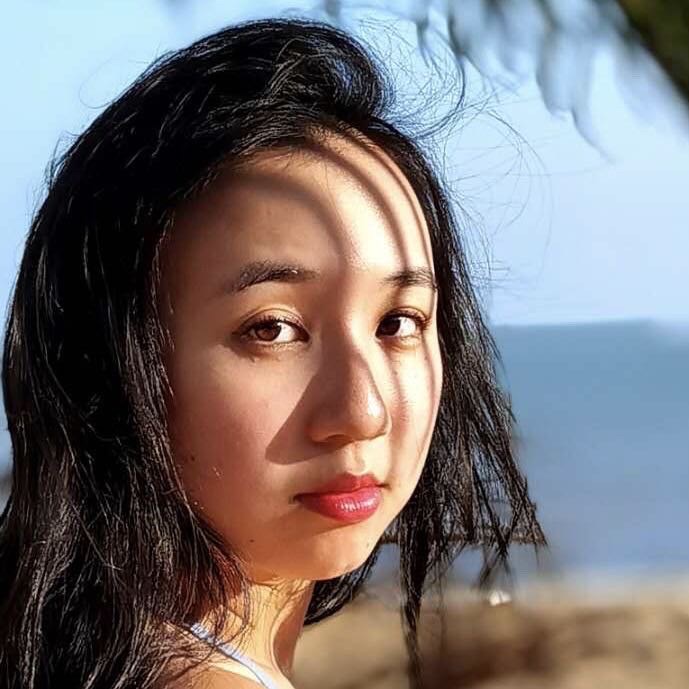
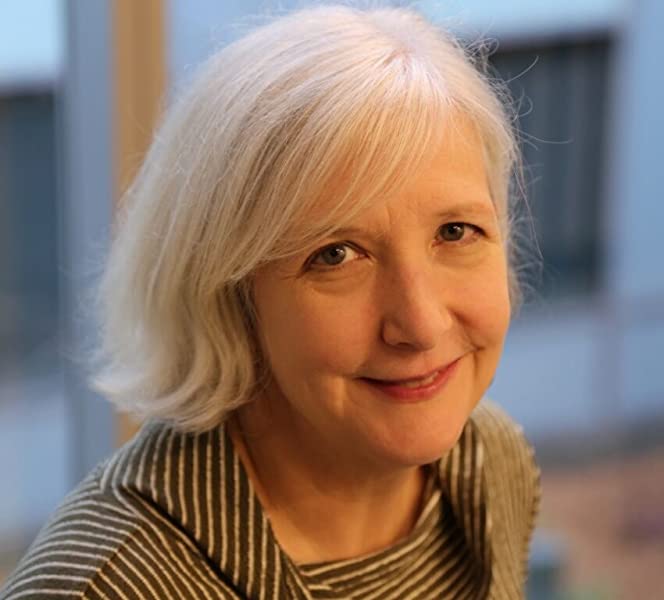
Photograph of JinJin Xu by Xu Xiao Ping.

JinJin Xu is the 2020 winner of the Poetry Society of America’s George Bogin Memorial Award. She has received honors from Southern Humanities Review, Tupelo Press, and the Thomas J. Watson Foundation. Her films have exhibited at Berlin’s Harun Farocki Institute and NYC’s The Immigrant Artist Biennial.
Born and raised in Shanghai, she received her MFA in Poetry from NYU, where was a Lillian Vernon fellow, and now teaches hybrid ballet/poetry workshops through NYU Tisch’s Art of Future Imaginations Grant, and serves as Books Editor of Washington Square Review. Her debut chapbook There Is Still Singing in the Afterlife was selected by Aria Aber for the inaugural Own Voices Chapbook Prize (Radix Media) and was published November, 2020. Her second chapbook This Is My Testimony is forthcoming Fall 2021 from Black Warrior Review. Find more of her work at jinjinxu.com.


Title: There is Still Singing in the Afterlife
Author: JinJin Xu
Publisher: Radix Media: November 20, 2020
ISBN: 978-1-7340487-2-8

$12, 48pp


Jeri calls Chicago home with her two cats and many plants. She dives into literary, visual, and performing art as a channel to nurture love and access beauty while questioning the experiences that hold people together. She graduated from Antioch University Los Angeles with an MFA in Writing. Her chapbook You Are Not Lost is published by Finishing Line Press 2021. IG: @jfredcreates


Risa Denenberg is the curator at The Poetry Cafe.