Kubra Nazir

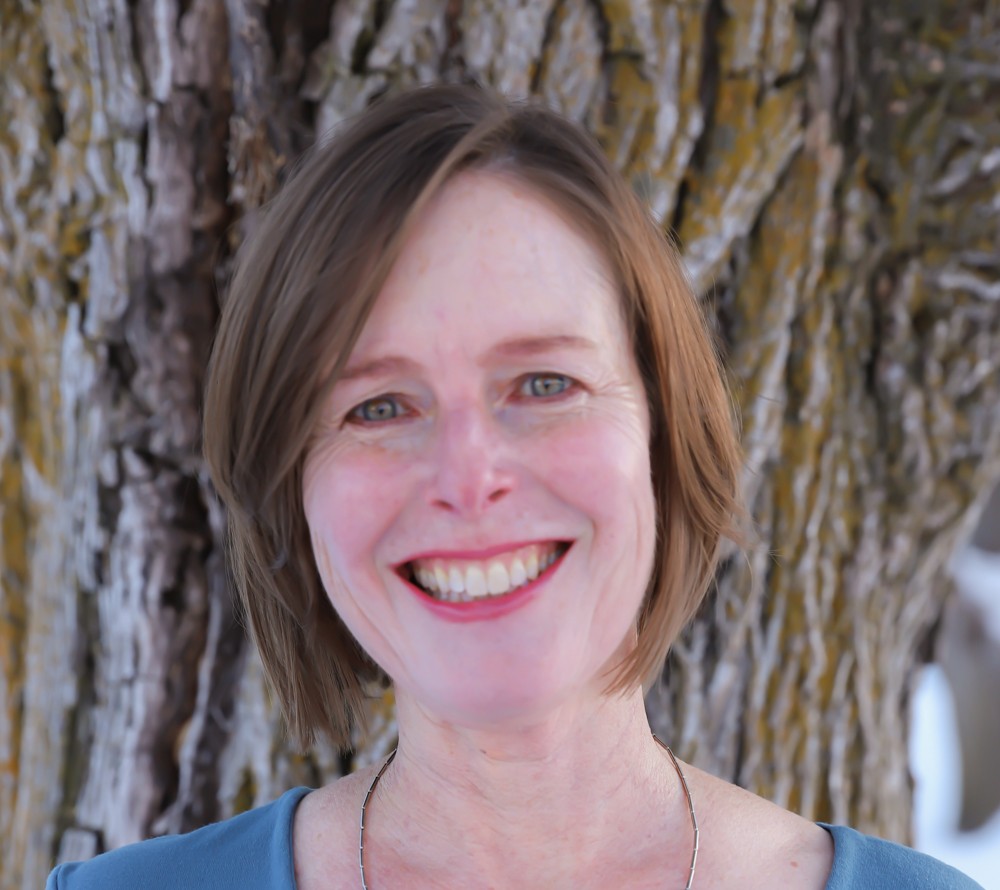
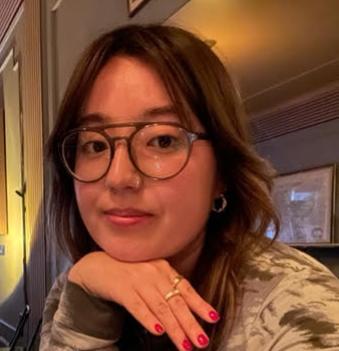
Kubra, a seeker of stories, has completed her Bachelor’s and Master’s in English Language and Literature from Kashmir University. Her work across corporate and teaching spaces has enriched the clarity with which she reads and writes. She has taught English Literature at the postgraduate level and contributed to research and editorial projects. In addition, leading a team of creative writers, gave her the fulfilling experience of guiding a diverse group of writers from across the world. Rooted in Kashmir and deeply in love with writing, she dreams of crafting a book someday—one that carries her voice, her memories, and the stories that have shaped her.

Qasida for When I Became a Woman

Qasida for When I Became a Woman, by Huma Sheikh

Published by Finishing Line Press, 2026
Reviewed by Kubra Nazir

Our Homeland, Kashmir, has a peculiarity about silences. Tales and tragedies rarely culminate there; they return in memories, in flashbacks, in whispers. Among those screaming silences, I once heard the story that lies at the heart of Huma Sheikh’s life, the loss of her father, the tragedy that shaped her becoming. While I was reading Qasida for When I Became a Woman, it felt like stepping into a realm where long-kept silences resurrected as an elegy of endurance. The poems, like a phoenix, emerge from the crevices of memory, transforming grief into poetry and memory into resistance.

As a fellow Kashmiri, I understood how she carried that ache all these years— an ache of a homeland that teaches its daughters to speak through absence. She doesn’t mourn alone, rather she crafts word by word what the past tried to blanket. Qasida, a classical Arabic poetic form of praise or elegy, has been turned into an instrument of invocation here, an unburdening where womanhood emerges through memory and silence.

The title of the poetry collection suggests a transformation of what it means to be a woman, and a reclamation against the silencing of women’s voices. It shows what it truly means to inherit both language and silence.

Each line is layered with so much depth and feels like a threshold between the personal and the collective. It reminded me of how writing poetry becomes the very act of witness not only of suffering but of survival. In the poem, “For Kashmiris, war an everyday meal,” she writes,

How to rebuild
a sense of refuge when hope beans spill and death blooms
for the kin of the slain, memories of dear ones, the
endless crackle of a flesh storm?

In Sheikh’s hands, the Qasida becomes an instrument of dialogue between what was taken and what refuses to be silenced. Throughout the poems, she goes back and forth to that memory of her father that changed the entire course of her life. She remembers her father, not as a figure lost to time but as a presence that still inhabits her silences. Her father, a renowned singer of Kashmir, somehow lives in the cadence of her lines as she pays tribute to him and his memories, echoing his songs through the collection like refrains. In the poem, “Qasida for a woman on a train,” she writes,

A Brooklyn subway’s screech like Father’s last Ghazal
Kam yaar sapidh khwaab jammed into a cassette
recorder.

Throughout the poetry collection, the past peeks into the present, drifting between temporal planes; moments of childhood arise in her present voice, showing how a woman’s silence is the loudest cry. The inheritance of silence is portrayed as imagery that fuses the domestic with the divine. Sheikh’s silence becomes a prayer; her body becomes a landscape of remembrance. Each line is an instrument of reclamation, showing the way for women to respond. Every word feels earned and every pause deliberate.

As I read through the poems, I could sense a quiet ache in the depths of each line. Her poems are a reminder of how survival sometimes lives quietly in long-kept silences. These poems are more of a collective elegy, a shared act of remembrance, where one woman is speaking on behalf of a those who are still in the journey to find a voice.

In this quiet act of gathering sorrows of many, the solitary transforms into a wound others can feel too. A gathering of voices of those who have endured, remembered, and kept speaking even when the world turned away.


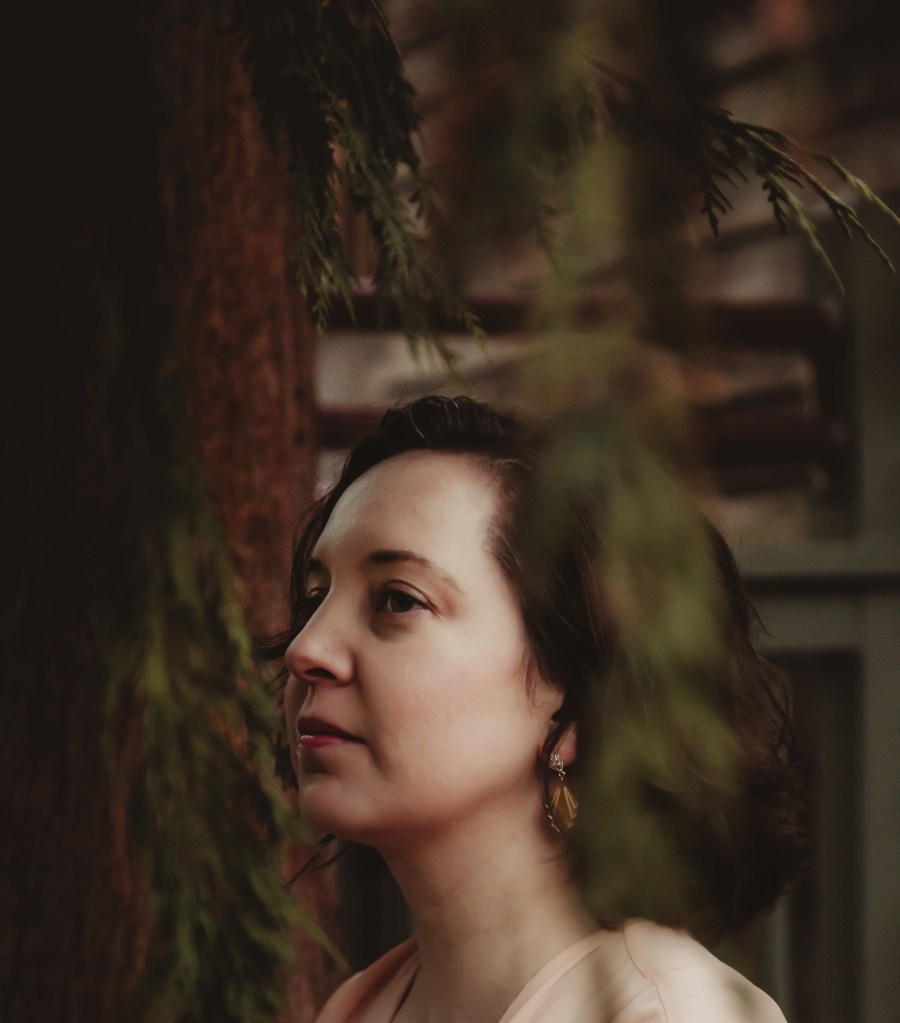
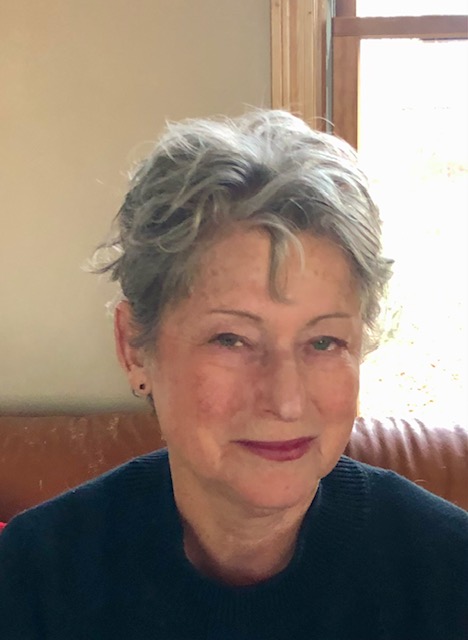
Huma Sheikh is an author, poet, and scholar. Drawing from her Kashmiri roots, her work blends personal narrative with political history. Her writing has appeared in Kenyon Review, The Journal, Consequence Magazine, Cincinnati Review, and Prism International, among others. A finalist for multiple literary prizes, she holds a PhD in English (Creative Nonfiction) and teaches writing at George Mason University. Her poetry chapbook, Qasida for When I Became a Woman, was a finalist for the New Women’s Voices Chapbook Competition (Finishing Line Press) and shortlisted for the Own Voices Chapbook Prize by Radix Media.


Qasida for When I Became a Woman, by Huma Sheikh
Forthcoming from Finishing Line press in January 2026

Price: $17.99


Kubra Nazir, a seeker of stories, has completed her Bachelor’s and Master’s in English Language and Literature from Kashmir University. Her work across corporate and teaching spaces has enriched the clarity with which she reads and writes. She has taught English Literature at the postgraduate level and contributed to research and editorial projects. In addition, leading a team of creative writers, gave her the fulfilling experience of guiding a diverse group of writers from across the world. Rooted in Kashmir and deeply in love with writing, she dreams of crafting a book someday—one that carries her voice, her memories, and the stories that have shaped her.


Risa Denenberg is the curator at The Poetry Cafe Online.

Lisa Hall Brownell

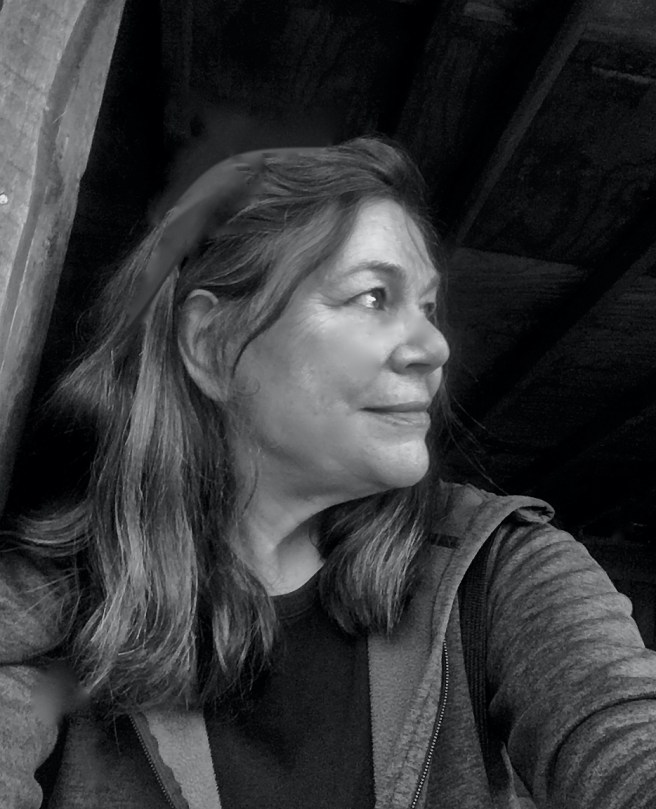
Lisa Hall Brownell is a writer and editor. Her novel “Gallows Road” was published by Elm Grove Press in 2022 and has been featured in Kirkus Review, the Historical Novel Review, Connecticut Magazine, and elsewhere. She is finishing her second novel Vee’s Bracelet and a collection of short stories, Sidetracks. Lisa earned an M.A. in English with a concentration in creative writing from San Francisco State University and edited SFSU’s literary magazine Transfer. She is a graduate of Brown University where she wrote poetry and plays and worked in the university bookstore.

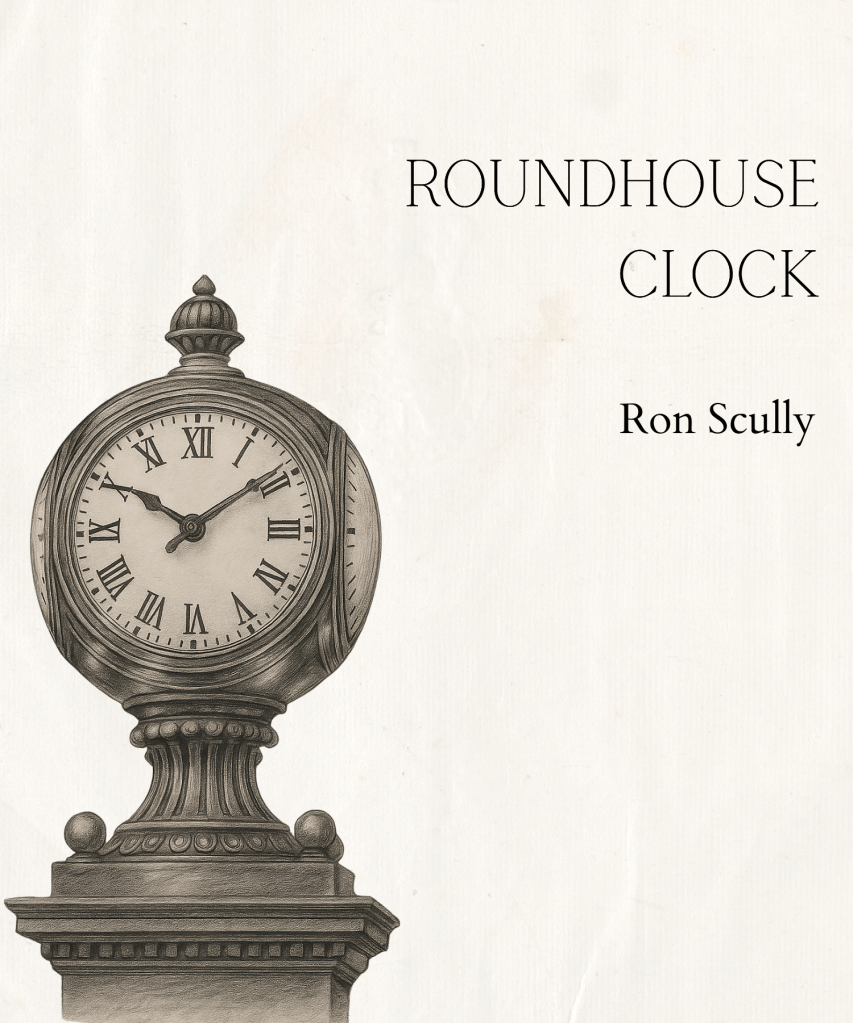
ROUNDHOUSE CLOCK

ROUNDHOUSE CLOCK, by Ronald Scully
Yavanika Press, 2025

Review by Lisa Hall Brownell


I crossed paths with the poet many years ago when he was a bookseller in New England and also a scholar of philosophy. A few decades later, I discovered his recent poetry and chapbooks published online. I was intrigued by the variety of  his chosen subjects, and the many forms his poems take, including haiku, haiga, origami poems, micro-poems, and even an homage to Wallace Stevens’ “Thirteen Ways of Looking at a Blackbird.”

Poems in Scully’s collection titled the river: a suite of micro poems are shaped like swirling eddies, as seen in this haiku:

it takes the river
to keep the rocks quiet
time’s sluice

Although Scully distills many complex ideas and loves Latin phrases, his poems are certainly accessible. Many are also free to download online or available for a nominal fee, such as his recent chapbook about chess, master pieces, with witty illustrations that underline that this poet likes to play with words — seriously.

With Roundhouse Clock, Scully appears to be a clockmaker at work, a mechanic of momentum. In the spirit of wordplay, I’d say that Roundhouse Clock strikes the right note. If you’re looking for a reset or a rewind, it just might tick all the boxes.


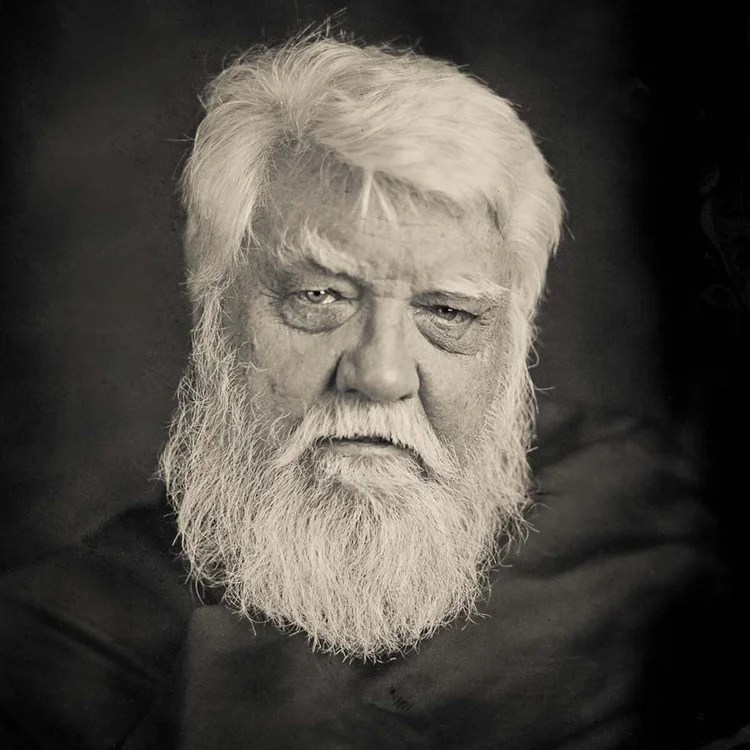
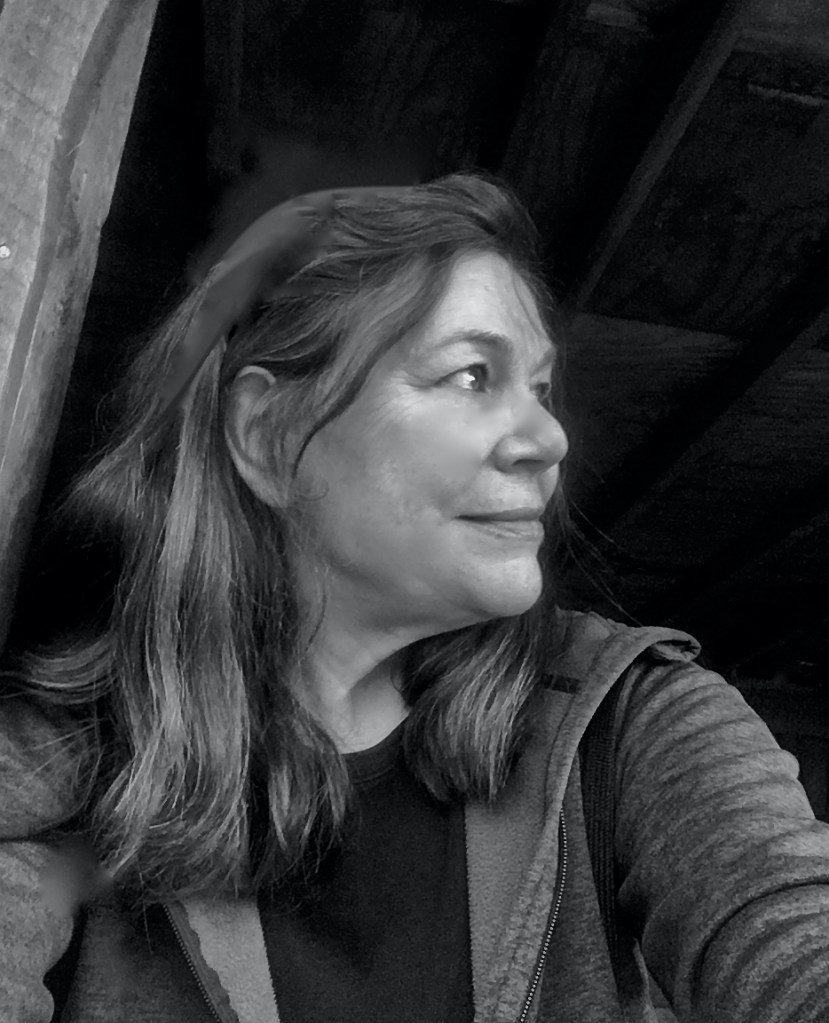
Ron Scully is a very retired bookseller. After half a lifetime on the road, an authentic Willy Loman only funnier, he relocated from New England and settled in the Pacific Northwest to read and write. He practices haiku daily and has published widely in short form journals. He is the author of over half a dozen chapbooks, most recently needful things (Buttonhook Press, 2024), bureau of weights and measures (Half Day Moon Press, 2024), and the river: a suite of micropoems (Origami Poems Project, 2025). Currently, he is working on the play of his lifetime and researching the possibility of a sports literature anthology. Otherwise, his grandchildren help keep the neurons firing.


ROUNDHOUSE CLOCK
Author: Ronald Scully
Yavanika Press, 2025

Purchase a copy!
22 pages; $3.00


Lisa Hall Brownell is a writer and editor. Her novel “Gallows Road” was published by Elm Grove Press in 2022 and has been featured in Kirkus Review, the Historical Novel Review, Connecticut Magazine, and elsewhere. She is finishing her second novel Vee’s Bracelet and a collection of short stories, Sidetracks. Lisa earned an M.A. in English with a concentration in creative writing from San Francisco State University and edited SFSU’s literary magazine Transfer. She is a graduate of Brown University where she wrote poetry and plays and worked in the university bookstore.


Risa Denenberg is the curator at The Poetry Cafe Online.

Ellen Miller-Mack

Ellen Miller-Mack

Ellen Miller-Mack is a poet, nurse practitioner, & blues lover. “Hot Tamale Blues” can be heard Tuesday afternoons at WMUA 91.1 FM (www.wmua.org.) Ellen has an MFA in Poetry from Drew University. Her reviews and poems can be found in Lavender Review, Lily Review, Rattle, Rumpus, MER, Affilia, Valparaiso Poetry Review and others. She co-authored The Real Cost of Prisons (PM Press). She co-hosts “Poet Talk” which is broadcast live from WMUA on Thursday evenings . “Poet Talk” is also a podcast on Spotify. Ellen lives in Western Massachusetts.

That’s the very nature of Saturn

That’s the very nature of Saturn, by Michy Woodward

Published by Bottlecap Press
Review by Ellen Miller-Mack

Welcome, Michy Woodward, on behalf of women poets from the ‘70s who wrote poems about their lives and sexualities with honesty and clarity. The energy of That’s the very nature of Saturn got me thinking about a poem by Pat Parker (1944-1989) titled “For Willyce” and the poetry of feminist poets Diane Wakoski (b. 1937) and Alta (1942-2024).

The chapbook opens with “We used to be a society,” a litany of well-crafted arrows aimed at Tesla, Ozempic (“America’s least politicized needle”), and targeted direct-to-consumer botox ads, interspersed organically with ideas that are more interior, serving the poem with moments of acute self-awareness and wry humor, stating, for example, that lesbian dating is so fraught with “… the fallacy of the top shortage [it’s] as if I don’t exist.”

There are many deft leaps and delightful surprises in this collection. The poems are trustworthy and left me wanting to know where they were going. In both “monday and then tuesday” and “it’s 2 am on a Wednesday,” I catch a whiff of Joanne Kyger (1934-2017) who wrote wonderfully quotidian poems that may appear at first to be journal entries.  Woodward offers a kindred poem beginning with “and I don’t have health insurance/but I feel lucky to be alive “ and ending with,

kissing the morning with laziness
the gorgeous possibilities
of tomorrow
which is already today.

I am enchanted by “your blue subaru,” a tender love poem in which Subaru rhymes with (the singer) Erykah Badu. It’s a small poem, nine short lines, beautifully crafted.

Woodward’s poem “hot girls” appears in the June 2024 issue of Lavender Review. It led me, with great enthusiasm, to this chapbook. In “hot girls,” Woodward laments “ i just keep trusting hot girls who are hot enough to make me trust them.” The hot girls are ravishing and ravaging stand-ins for the perils of love and lust. This poem is expansive, honest and funny, the kind of funny where you know the goddesses are laughing at you so you have to laugh along. It’s a love poem to our susceptible selves. It’s also a young lesbian poem. I wonder if young lesbians would be surprised to know that the longing, lust, love, and desire dip into unrequitedness and even kaleidoscopic sex as they grow older. Lesbian or not, follow Michy Woodward; she is a talented and sure-footed poet.


Curator’s note: Ellen Miller-Mack compares Woodward’s poems with past work of important lesbian and feminist poets. You may not have heard of these poets, and links are included to encourage you to check out their work. –Risa Denenberg


Michy Woodward (she/her) is a queer, mixed-race, Asian American Brooklyn-based writer and artist from Miami. She loves exploring intimacy, sensation, and the relationship between interiority/exteriority through her writing. Her work largely indulges in the softness of everyday life. Her poetry has been published in Bullshit Lit, Queerlings, Lavender Review, Roi Faineant Press, Silly Goose and The Amazine. You can find her on instagram @michywoodward. She loves Sundays, her cat Kimi, and being near bodies of water.


That’s the very nature of Saturn
Michy Woodward
Bottlecap Press, 24 pages, $10


Ellen Miller-Mack is a poet, nurse practitioner, & blues lover. “Hot Tamale Blues” can be heard Tuesday afternoons at WMUA 91.1 FM (www.wmua.org) Ellen has an MFA in Poetry from Drew University. Her reviews and poems can be found in Lavender Review, Lily Review, Rattle, Rumpus, MER, Affilia, Valparaiso Poetry Review, and others. She co-authored The Real Cost of Prisons (PM Press). She co-hosts “Poet Talk” which is broadcast live from WMUA on Thursday evenings . “Poet Talk” is also a podcast on Spotify. Ellen lives in Western Massachusetts.


Risa Denenberg is the curator at The Poetry Cafe Online.

Nadja Maril

Nadja Maril’s chapbook Recipes from My Garden, a compendium of poems and short essays centered around herbs, a kitchen garden, and family memories, was published by Old Scratch Press, in September (2024). Maril’s prose and poetry has been published in literary magazines that include, Lunch Ticket, Spry Literary Review and Across the Margin. A former journalist and editor, Nadja has an MFA from Stonecoast at the University of Southern Maine. To read more of her work and follow her weekly blog posts, visit Nadjamaril.comhttps://nadjamaril.com/

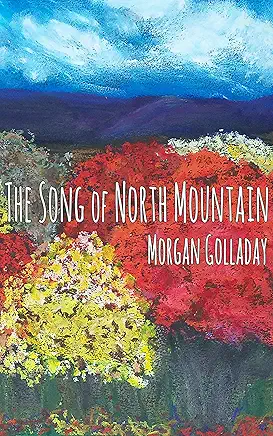
Song of North Mountain

Song of North Mountain by Morgan Golladay
Published by Old Scratch Press, 2024
Reviewed by Nadja Maril

Writers begin their journey towards publication at very different times in their lives, some in high school, others after retirement. Is there a right time to begin sharing one’s poems with the world? Perhaps the answer can be found in the quality of a writer’s first poetry collection.

The Song of North Mountain, a debut chapbook by Morgan Golladay, demonstrates the combination of wisdom and excitement of a new guest at the literary dinner table. Golladay takes us on a journey through seasons and times of her childhood home in Virginia, located between the Blue Ridge and North Mountains in the Shenandoah Valley.  Golladay’s poems transport us to the foothills of Appalachia, a region that is rapidly changing as our planet warms.  Her poems capture the stark beauty and breathtaking colors of the valleys, meadows, rivers, and ridges, as seen in the poem “Spring on the Mountainside.”

Out on the Devil’s Throne
careful briars show green,
warming, like me, in the heat of the sun. Redbuds languish,
eagerly waiting to erupt,
to be first, to show true color
to this mountain.
I trust in their uncompromising cycles, that spring follows winter
as night follows day.
The redbuds beckon me up the mountain.

Black and white images found throughout the book are original drawings by Golladay, who began the formal study of art in her fifties, preceding her launch as a poet. Expressing oneself in more than one art form is not unusual for poets; her work makes me think immediately of William Blake who so skillfully combined art and poetry in his nature-focused work. 

Recently, I had the opportunity to interview Golladay who expressed great enthusiasm for trying new artistic practices. She described an experiment she conducted ten years ago with a friend she met in an acrylics workshop.  Both artists had completed seventy-five black and white sketches in seventy-five days and they challenged each other to add poetry to those sketches. Golladay said she decided to combine the two art forms to learn whether the sketch informed the poem or vice versa. “Black and white sketches require a lot of different elements to be effective,” she explained. “Think of the illustrations of Rockwell Kent, the engravings of Durer, sketches of Michelangelo, Picasso, Mayer. For me, it was a steep learning curve.”

The Song of North Mountain is divided into four sections each aligned with one of the four elements: Fire, Air, Water, and Earth. In the fifth century BC, the Greek philosopher Empedocles proposed that the opposing forces of love and conflict upon these four elements create the diversity found in nature. Golladay has chosen these elements as the structure for her poems, highlighting these opposing forces rather than the seasons, which are more typical in nature poetry. Here, the cycle begins with Fire where most of the poems have a connection to light, brightness, and sometimes drought. This section is followed by Air, Water, and Earth.

The home of her ancestors, Golladay’s North Mountain is rich with history and memories. Many of the poems are informed by the changes wrought by time and aging. This poem, found in the Earth section and titled “Family Lines,” begins:

The lots are overgrown with weeds, brambles, saplings jutting through loose stones
that mark lost foundations.
Someone once lived here.

Someone planted those surviving daffodils, that stray lilac.

Sunday dinners, visitations, funerals,
jam-making, weddings, and scrubbed floors celebrated the families that lived here.
(Their footprints are found
when the yard is tidier.)
But the rubble remembers the sweat and the labor, the daffodils recall the hands that planted them.

“Under the Locusts,” found in the Air section, zeroes in on a particular farm. The sense of loss and resignation in this poem is poignant as it documents how the land changes as small farms begin to disappear.

Long after the farm was abandoned,
the evidence of thousands of hoof-falls showed among the locusts. Roots
stood stark and barren, surrounding dirt worn and blown away. Strange shapes, mystical and druidic in their formation,
reared from the dirt, submerging, reappearing several feet away.

There are many poems here about animals, some include humans as well. The poem, “Little Swimmer,” found in the Water section, portrays a venomous snake; another poem in this section is about a stodgy turtle. In our world of cellphones, computers, fast moving cars, and technologies that link global industries and people within seconds, I enjoyed the opportunity to retreat to basic relationships between a harmless reptile and a human.  The poem, “A Moment of Grace,” is one of my favorites. It ends with the lines:

We spoke in silence,
thanking each other for dappled sunlight, ripe berries, and a moment of grace.

When writing about the loss of her own ability to climb a tree or the cutback of train service to the region, Golladay accepts her changing world with pensive resignation. She more often focuses on wonders that still exist and can still be found if you closely watch, smell, touch, and listen. Song of North Mountain conveys the rhythm of place that is clearly close to the poet’s heart, a sense she ably shares with her readers.


Artist and poet Morgan Golladay’s first published poem was awarded Third Prize in the 2021 Delaware Press Association Communications Contest. Much of her work is reminiscent of her native Shenandoah Valley, its people and places. A graduate of the University of Mary Washington, Golladay’s career included almost 40 years as a volunteer and staff member for several non-profit organizations. In 2024, the Delaware Press Association awarded her the first and second prize for short stories and an honorable mention for poetry. Her first book of poetry, The Song of North Mountain, is a National Book Award nominee. Golladay currently resides in Milford, Delaware. She is tall, left-handed, and blue of eye. Everything else is subject to change.

The Song of North Mountain
Morgan Golladay
Published by Old Scratch Press, 2024


Nadja Maril’s chapbook Recipes from My Garden, a compendium of poems and short essays centered around herbs, a kitchen garden, and family memories, was published by Old Scratch Press, in September (2024). Maril’s prose and poetry has been published in literary magazines that include, Lunch Ticket, Spry Literary Review and Across the Margin. A former journalist and editor, Nadja has an MFA from Stonecoast at the University of Southern Maine. To read more of her work and follow her weekly blog posts, visit https://nadjamaril.com/


Risa Denenberg is the curator at The Poetry Cafe Online.

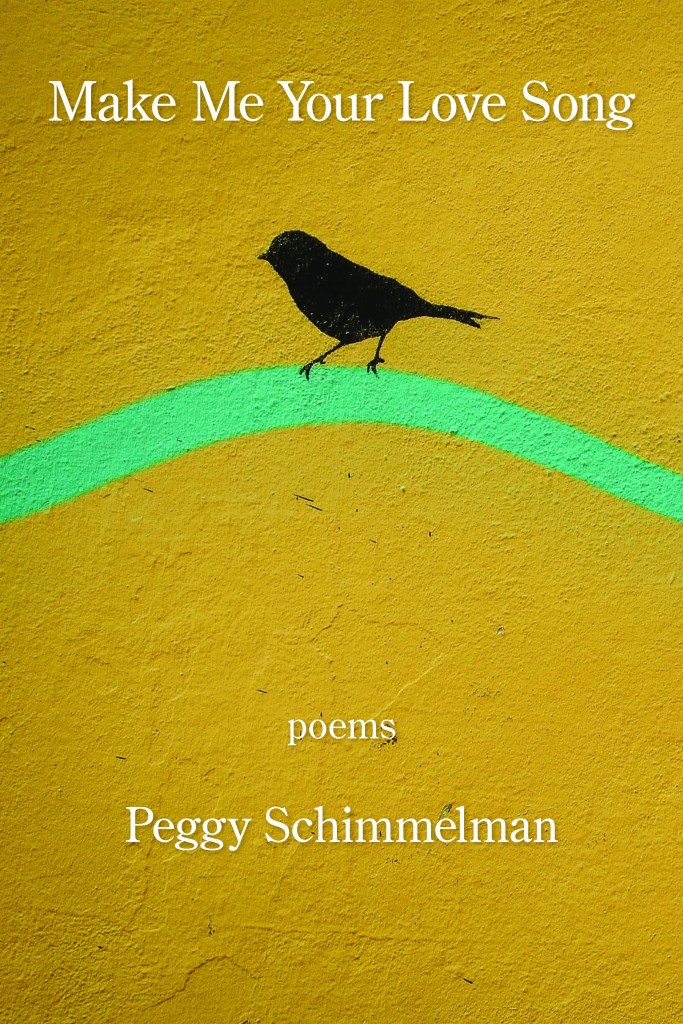
Make Me Your Love Song

by Peggy Schimmelman
Published by Kelsay Books
Review by Julie Orvis

I have been a fan of Peggy Schimmelman’s poetry since we took a writing class together many years ago. I have loved and followed her work as she has grown as a poet and has become the local poet laureate of Livermore, CA.

Peggy Schimmelman’s chapbook, Make Me Your Love Song, is a collection of finely crafted poems that offer impactful reflections on life. Peggy’s work shows intelligence, depth, and accessibility in each poem, exploring the range of human emotions from loss and regret to the joy of living and loving deeply. These poems bear witness to the fact that love is about being human: sometimes romantic, sometimes two people simply connecting, sometimes enduring, other times fleeting. Peggy’s employment of language, line breaks, musicality, and the use of white space are consistently elegant. What I love most about the poems is the feeling that they are paying tribute to that which is human in all of us.

The poem, “Cozumel Moon” captures memories of youth:

… in one of those memories, I wonder, a girl
green-eyed and wild, just this side of crazy
Corona-tipsy and starlight-stoned.

“The Last Lullaby” explores the political realities of our time:

Selam and Adonay, hush now and sleep.
Boat man don’t like it when little ones weep.
Ahead, Europe waits to shelter and feed us—
to welcome us. Children, now listen to me

“Push Through the Night” is a story of facing challenges:

Soon dawn will arrive
in a river of light.
Float into the morning.
Push through this night.

“A Poem in Three” is a romantic ditty that starts with the book’s title:

Make me your love song
in three-quarter time
conjure me, count me in
one-two-three-one-two-three
whisper me whistle me
dance me romance me
woo me infuse me
with rhythm and rhyme.


Peggy Schimmelman is the poet laureate of Livermore, CA. Her work includes the poetry chapbooks Make Me Your Love Song, Crazytown, and Tick-Tock, as well as the novels Insomniacs, Inc. and Whippoorwills. Her poetry and short fiction, heavily influenced by her musical interests and her Ozark roots, have appeared in the North American ReviewNaugatuck River Review, Peregrine, WinningWriters.com, the Aleola Journal of Poetry and Art, Pacific Review, Comstock Review, Wild Musette, 100wordstories.organd other journals and anthologies.


Available at Kelsay Books Website and Amazon.com
Kelsay Books (August 16, 2024) ‎ 68 pages
ISBN-13 ‏ : ‎ 978-1639806126
$20.00


Reviewer Julie Orvis says: “While I have many interests in life, reading and writing have been favorites. I belong to a local writing group, Wild Vine Writers, and have enjoyed writing and contributing to their publications Long Stories Short and Two Truths and a Lie. I’ve also received award recognition for short prose pieces at Pleasanton Poetry and Prose.”

Risa Denenberg is the curator at The Poetry Cafe Online.

Landsickness

Landsickness, by Leigh Lucas
Published by Tupelo Press, 2024
Winner of the Sunken Garden Chapbook Prize

Selected by Chen Chen

Reviewed by Risa Denenberg

Your pain is the breaking of the shell that encloses your understanding.
–Kahlil Gibran

Leigh Lucas, in her chapbook Landsickness, embodies these words of Kahlil Gibran in her response to the death of a lover by suicide. Her world breaks open and makes no sense to her. She shuts down; refuses to change clothes or bathe; crawls under covers; dreams and fantasizes about her lover; and hoards small keepsakes and details about him. None of these behaviors are unusual in someone newly bereaved; but the intensity of anguish in these poems feels urgent and disquieting. The first line in the first of these untitled poems is: “In my new life, I must learn everything again.” There is no going back, no living with the reality of the death. Everything is undone.

There is a certain mood of unreality in the face of any death (“how can the world go on as if …”), but in some situations, there is no capacity for resolution, for moving on. Lucas dwells in a space that is sometimes referred to as “complicated grief,” i.e., grieving that continues to be intense, persistent and debilitating. To offset the collapse of faith caused by the death, Lucas lands in a deeply creative place: in poems.

I seasick between: I knew this would happen (rock). And how could it have (rock). Between: I knew him as well as I could know someone. And I didn’t know him at all. (Rock, rock.)

I identify with Lucas’ predicament, both as a poet and as a woman who has lost her best friend. Grief can be endless; if it ends, the relationship with the deceased is entirely broken. Lucas says, “The final note I hold’s unending.” It changes with time, but the nature of the loss colors the grief forever. There are so many unanswerable questions. In this case, the never-to-be answered question is: Why? And, could I have done something? Lucas gets no certain answers from a grief therapist.

Q: Should suicide be prevented?
A: It depends
.

And yet, she fears that in fact, she will forget: “Here’s the rub. Fickle memory, swirling time, debilitating seasickness.” This leads to obsessive behaviors, “My own complex system of ordering his belongings and memorizing minutia […] mental tests of recalling exact details of his poems, drawings and letters, of his feet, palms, and the curve of his back.”

Lucas searches deeply for answers, for comfort, for a way to understand if not accept. She digs deep searching for some explanation, some theory to account for the loss. She reports findings from a study of rats that offers an eerily cogent explanation:

This only circles the question of why wasn’t this death prevented? And how was I to know the depth of his depression?

Does facing fact help? Lucas mulls over the raw facts:

And then she distances from the facts with the tiniest of minutiae: “The object // descends // leaving air in its wake.” And, “Kerplop.”

Finally, Lucas adds details from the funeral: “Sitting in front of me, and behind me, and also to both sides, are more former girlfriends.” Readers, I never thought of Lucas as a former girlfriend, despite this addendum. She is all in from the moment of his death, to the end of time with her promise (threat): “The world will be unsettled. // I will unsettle them.”


Leigh Lucas is a writer in San Francisco. Her chapbook Landsickness (Tupelo Press, 2024) was selected by Chen Chen for the 2023 Sunken Garden Poetry Chapbook Award. She has been awarded residencies at Tin House, Community of Writers, and Kenyon, and has been recognized with AWP’s Kurt Brown Prize, as well as with a Best New Poet nomination, Best of Net nomination, and multiple Pushcart Prize nominations. Leigh’s poems can be found in Academy of American Poets’ Poem-a-Day, Poet Lore, Smartish Pace, and elsewhere. She holds a BA from Stanford and an MFA from Warren Wilson. 

Screenshot

Landsickness, Leigh Lucas
Winner of the Sunken Garden Chapbook Prize
Selected by Chen Chen
Tupelo Press, 2024


Risa Denenberg lives on the Olympic peninsula in Washington state where she works as a nurse practitioner. She is a co-founder of Headmistress Press and curator at The Poetry Café Online. She has published eight collections of poetry, most recently, Rain/Dweller (MoonPath Press, 2023). She is currently working on a memoir-in-progress: Mother, Interrupted.


Risa Denenberg is the curator at The Poetry Cafe Online.