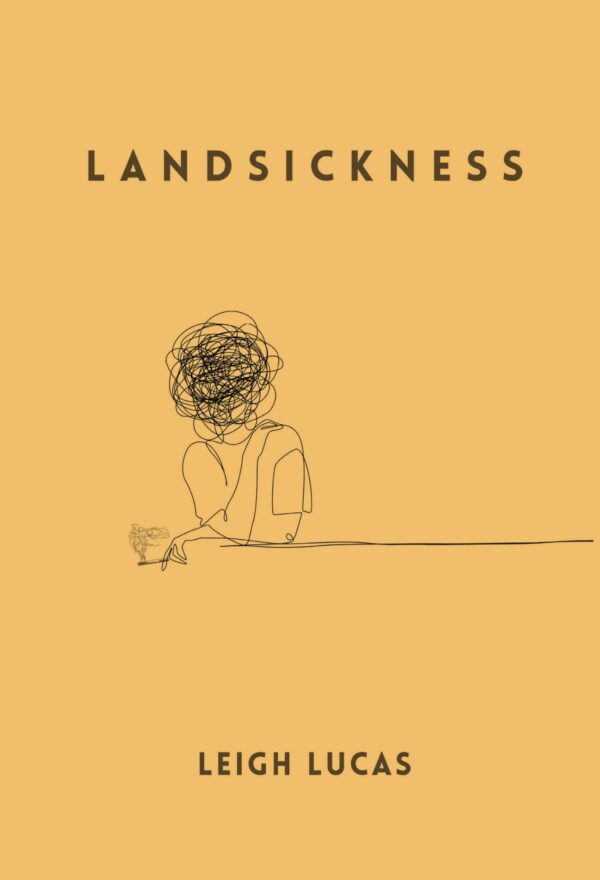
Landsickness, by Leigh Lucas Published by Tupelo Press, 2024 Winner of the Sunken Garden Chapbook Prize Selected by Chen Chen
Reviewed by Risa Denenberg
Your pain is the breaking of the shell that encloses your understanding. –Kahlil Gibran
Leigh Lucas, in her chapbook Landsickness, embodies these words of Kahlil Gibran in her response to the death of a lover by suicide. Her world breaks open and makes no sense to her. She shuts down; refuses to change clothes or bathe; crawls under covers; dreams and fantasizes about her lover; and hoards small keepsakes and details about him. None of these behaviors are unusual in someone newly bereaved; but the intensity of anguish in these poems feels urgent and disquieting. The first line in the first of these untitled poems is: “In my new life, I must learn everything again.” There is no going back, no living with the reality of the death. Everything is undone.
There is a certain mood of unreality in the face of any death (“how can the world go on as if …”), but in some situations, there is no capacity for resolution, for moving on. Lucas dwells in a space that is sometimes referred to as “complicated grief,” i.e., grieving that continues to be intense, persistent and debilitating. To offset the collapse of faith caused by the death, Lucas lands in a deeply creative place: in poems.
I seasick between: I knew this would happen (rock). And how could it have (rock). Between: I knew him as well as I could know someone. And I didn’t know him at all. (Rock, rock.)
I identify with Lucas’ predicament, both as a poet and as a woman who has lost her best friend. Grief can be endless; if it ends, the relationship with the deceased is entirely broken. Lucas says, “The final note I hold’s unending.” It changes with time, but the nature of the loss colors the grief forever. There are so many unanswerable questions. In this case, the never-to-be answered question is: Why? And, could I have done something? Lucas gets no certain answers from a grief therapist.
Q: Can suicide be prevented? A: It depends.
Q: Should suicide be prevented? A: It depends.
And yet, she fears that in fact, she will forget: “Here’s the rub. Fickle memory, swirling time, debilitating seasickness.” This leads to obsessive behaviors, “My own complex system of ordering his belongings and memorizing minutia […] mental tests of recalling exact details of his poems, drawings and letters, of his feet, palms, and the curve of his back.”
Lucas searches deeply for answers, for comfort, for a way to understand if not accept. She digs deep searching for some explanation, some theory to account for the loss. She reports findings from a study of rats that offers an eerily cogent explanation:
Scientists study depression in rats.
How we tell they have it and how bad they have it:
we drop them into a bucket of water and see how long they paddle.
This only circles the question of why wasn’t this death prevented? And how was I to know the depth of his depression?
Does facing fact help? Lucas mulls over the raw facts:
The man I love
Jumped off a bridge on September 30th at 4 in the afternoon.
//
The man I love
taught poetry
to college students and kids at the Y.
And then she distances from the facts with the tiniest of minutiae: “The object // descends // leaving air in its wake.” And, “Kerplop.”
Finally, Lucas adds details from the funeral: “Sitting in front of me, and behind me, and also to both sides, are more former girlfriends.” Readers, I never thought of Lucas as a former girlfriend, despite this addendum. She is all in from the moment of his death, to the end of time with her promise (threat): “The world will be unsettled. // I will unsettle them.”
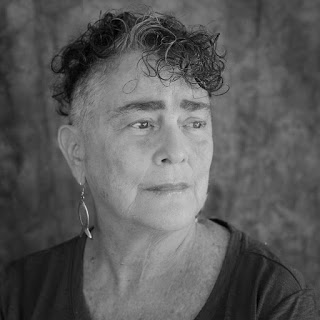
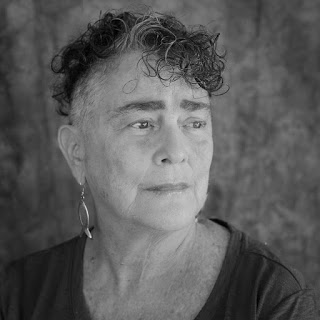
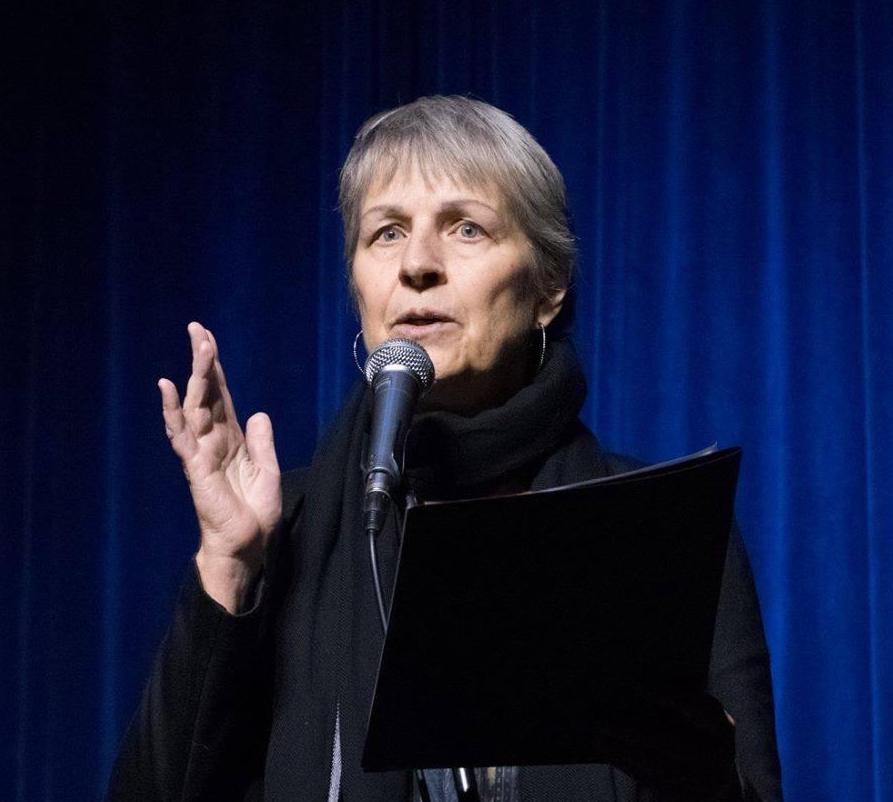
Leigh Lucas is a writer in San Francisco. Her chapbook Landsickness (Tupelo Press, 2024) was selected by Chen Chen for the 2023 Sunken Garden Poetry Chapbook Award. She has been awarded residencies at Tin House, Community of Writers, and Kenyon, and has been recognized with AWP’s Kurt Brown Prize, as well as with a Best New Poet nomination, Best of Net nomination, and multiple Pushcart Prize nominations. Leigh’s poems can be found in Academy of American Poets’Poem-a-Day, Poet Lore, Smartish Pace, and elsewhere. She holds a BA from Stanford and an MFA from Warren Wilson.
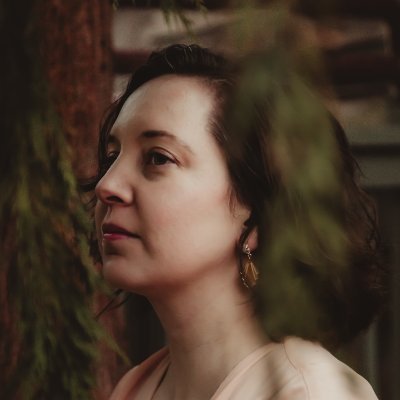
Risa Denenberg lives on the Olympic peninsula in Washington state where she works as a nurse practitioner. She is a co-founder of Headmistress Press and curator at The Poetry Café Online. She has published eight collections of poetry, most recently, Rain/Dweller (MoonPath Press, 2023). She is currently working on a memoir-in-progress: Mother, Interrupted.
Risa Denenberg is the curator at The Poetry Cafe Online.
Sivvy, by Lauren Davis Published by Whittle Micro-Press Review by Risa Denenberg
In her newly released and vividly imagined chapbook, Sivvy, Lauren Davis interrogates Sylvia Plath’s state of mind in the days leading up to her death by suicide in 1963 (with footnotes to 1940 and 1956) by distilling letters she wrote into anagrams of her deepest feelings through erasures. In her note on the text Davis says, “These are erasures of the letters of Sylvia Plath” to which “I have not altered her word order.” Her sources are the two volumes of “The Letters of Sylvia Plath,” published posthumously in 2017 and 2018. This small volume is that rare combination of both the scholarly and the dazzlingly innovative.
Sylvia Plath is and will continue to be a touchstone for so many. I entered her work, and her inescapable and tragic life story as a poet and feminist, but also as a mother. In my case, as a mother who lost custody of her son when he was six. Naturally, I’ve always viewed Plath’s work as a poet who was also a mother.
In fact, Plath has a lot to say about being a being a mother, in both poems and prose. In her poem, “Morning Song,” she describes her newborn as a “fat gold watch” while comparing herself to a biologic function.
One cry, and I stumble from bed, cow-heavy and floral In my Victorian nightgown. Your mouth opens clean as a cat’s. –from “Morning Song” Sylvia Plath
This image is echoed in a letter dated February 4, 1964 in Davis’s Sivvy: “The upheaval—I see the finality, / From cowlike happiness into loneliness.” Could I help thinking of how new mothers so often feel abjectly alone following childbirth?
Another of Plath’s poems points to a newly post-partum mother’s dilemma at the moment of accepting or renouncing responsibility for another human being.
I wasn’t ready. The white clouds rearing Aside were dragging me in four directions. I wasn’t ready. I had no reverence. I thought I could deny the consequence– But it was too late for that. It was too late, and the face Went on shaping itself with love, as if I was ready. from “Three Women,” Sylvia Plath
In her auto-fictional novel, The Bell Jar, Plath describes a college-aged girl who makes a suicide attempt. The protagonist recognizes that her ambitions and dreams will be constrained by the cultural expectations that always seem to privilege marriage and motherhood over career and creativity. There is still strong societal pressure on women to have children, despite the lack of support for raising them or the cost to a woman’s personal goals for herself.
“I saw my life branching out before me like the green fig-tree in the story. From the tip of every branch, like a fat purple fig, a wonderful future beckoned and winked. One fig was a husband and a happy home and children, and another fig was a famous poet and another fig was a brilliant professor. … I saw myself sitting in the crotch of this fig-tree, starving to death, just because I couldn’t make up my mind which of the figs I would choose. I wanted each and every one of them, but choosing one meant losing all the rest.” –-The Bell Jar, Sylvia Plath
Having to choose—or more often, having no choice—between raising children and having a fulfilling career is a quandary faced by many women. Was Plath uncertain if she wanted children at all, knowing it would be at the cost of her writing life? It might seem unfair to question her motives or desires; but such questioning is quite familiar to women, if not always voiced. It seems clear, however, that being a single mother with two young children was an enormous challenge for her. For me, this broadens the too-easy interpretation that Plath committed suicide due to mental illness.
In a letter dated, February 4, 1963, Davis allows Plath (whose death occurred seven days later) to give a nod to her earlier suicide attempt (“I fought my way back—”) in a conflagration of language that perfectly reflects the undoing of Plath’s enormously rich inner life.
I fought my way back— I wanted to get it over with—God is a wish— maybe—I would go—I have been alone I need a tonic—I am dying.
I’m using my entry point into Plath’s work, as well as my entry point into Davis’ Sivvy, to acknowledge how thoroughly and intimately Plath enters the imagination of her readers. One of many ways that Davis expands my way of knowing Plath is how entirely in love she was with Ted Hughes from the beginning (“I can’t be with people // that aren’t you.” … “I don’t want to eat until I taste / your mouth again.” Dated October 1, 1956) to the end (“My husband— // he is beautiful. / The whole world // now has him.” Dated January 22, 1963).
I highly recommend this book to you, reader, that you may enter Plath again and anew.
Lauren Davis is the author of the forthcoming short story collection The Nothing (YesYes Books), the poetry collection Home Beneath the Church (Fernwood Press), the Eric Hoffer Grand Prize short-listed When I Drowned (Kelsay Books), and the chapbooks Each Wild Thing’s Consent (Poetry Wolf Press), The Missing Ones (Winter Texts), and Sivvy (Whittle Micro-Press). She holds an MFA from the Bennington College Writing Seminars. She is a former Editor in Residence at The Puritan’s Town Crier, and she is the winner of the Landing Zone Magazine’s Flash Fiction Contest. Her stories, essays, poetry, interviews, and reviews have appeared in numerous literary publications and anthologies including Prairie Schooner, Spillway, Poet Lore, Ibbetson Street, Ninth Letter and elsewhere. Davis lives with her husband and two black cats on the Olympic Peninsula in a Victorian seaport community.
Risa Denenberglives on the Olympic peninsula in Washington state where she works as a nurse practitioner. She is a co-founder of Headmistress Press and curator at The Poetry Café Online. She has published eight collections of poetry, most recently, Rain/Dweller (MoonPath Press, 2023). She is currently working on a memoir-in-progress: Mother, Interrupted.
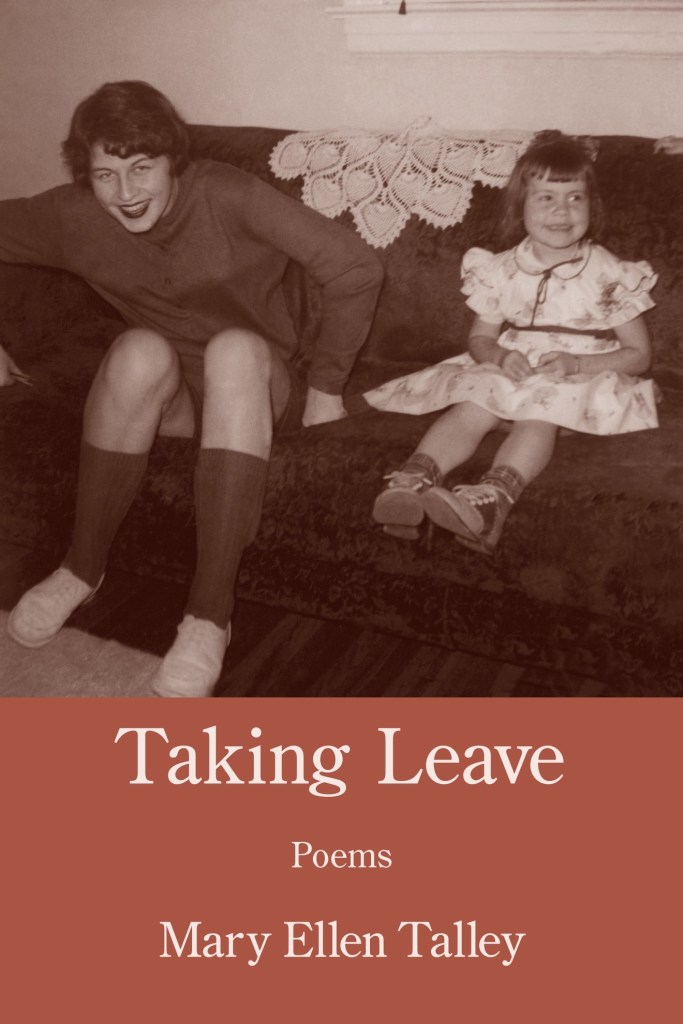
Taking Leave by Mary Ellen Talley (Kelsay Books, 2024) Review by Sylvia Byrne Pollack
I have appreciated Mary Ellen Talley’s poetry since I reviewed her first chapbook, the memoir Postcards from the Lilac City, for The Poetry Café in 2021. Her new chapbook, Taking Leave, is a never-maudlin farewell to her older sister Katherine. This collection—also a memoir—shimmers with two fundamental facets of being human: familial love and death. Yet there is humor and joy in these poems. A variety of forms (villanelle, haibun, palindrome, golden shovel, list), internal rhyme, and unconventional word usage are employed in a fearless and compassionate celebration of the lives of her family members. Talley does not avoid the word death or the circumstances surrounding it.
We first meet Katherine in “You Are From,” an overview of Katherine’s life that concludes with the declaration “You are leaving vital signs.” More details of Katherine’s life flesh out the “Interview.” The spareness of that title contrasts with vivid details as we move back in time from 2023, her final year, to 1937, when she was a fetus in her girdle-wearing Mom. “Call it the cramped circle of my early start.”
This is neither a saccharine nor sentimental description of the relationship between these sisters, twelve years apart in age. “Villanelle to De-Escalate” begins with “affection and grace” but devolves into a question: “Will family ties find harmony that discord can’t erase?”
The cover deserves a special mention–a photo of teen-aged, lipstick-wearing Katherine poised to leap up from a sofa where four-year-old Mary Ellen is perched in a frilly dress. The clothes, the embroidered doily on the sofa back, the girls’ faces capture both bygone days and a lasting vibrancy.
The twelve-year age difference may have meant “We Had Two Different Mothers,” but many shared experiences thread through the poems. In “Glitz,” the sisters agree “we’re like our mother. // This hoarding of desire, this preoccupation with enough.”
In “Ghazal: Unbuckled Shoes” we see an older Katherine whose arthritis prevents her from buckling her shoes and the kindnesses that get those shoes buckled and unbuckled for her. After reading these poems, I think I also would have been glad to give Katherine a hand.
The focus segues from Katherine to her daughter Erin in a series of funny, irreverent, and witty poems dealing with Erin’s cancer diagnosis. From “Erin in Walking Wallenda Mode” to Erin letting her cancer know what she thinks about it in “Texting Cancer” to Athena holding the morphine drip in “Legend of the Fates,” we experience Erin as a feisty, laughter-filled woman. Which makes her death in “Messenger Under Arizona Moon” even more poignant. In the sorrow of a mother–Katherine–losing an adult daughter, Talley deals with her death with a deft hand.
A poem I return to again and again is “Stairway to Hospice Heaven.” It captures so much about the sisters’ relationship while looking unflinchingly at death. It begins and ends with phone calls:
My sister calls to ask if I know about the flight arrangements her son has made, how she tried to call him but his phone went to message. She needs to know how she’ll get to the airport, and whether to bring more than a carry-on bag.
In a few minutes I realize she’s confusing flight time with when she’ll depart this earth – logic blurred by morphine.
What follows in an interplay of Talley’s everyday life with husband and grandkids and asking Katherine if she is afraid of dying. “Well of course, I am. Wouldn’t you be?” In a second phone call Talley reassures Katherine that she’s headed to heaven. A third call is almost not answered – Talley is busy – but she picks up:
I answer to hear Katherine thank me for our prior conversation. And say a quick good night as I stand gobsmacked by the generosity of the dying.
I invite you to be gobsmacked by this bighearted, moving collection.
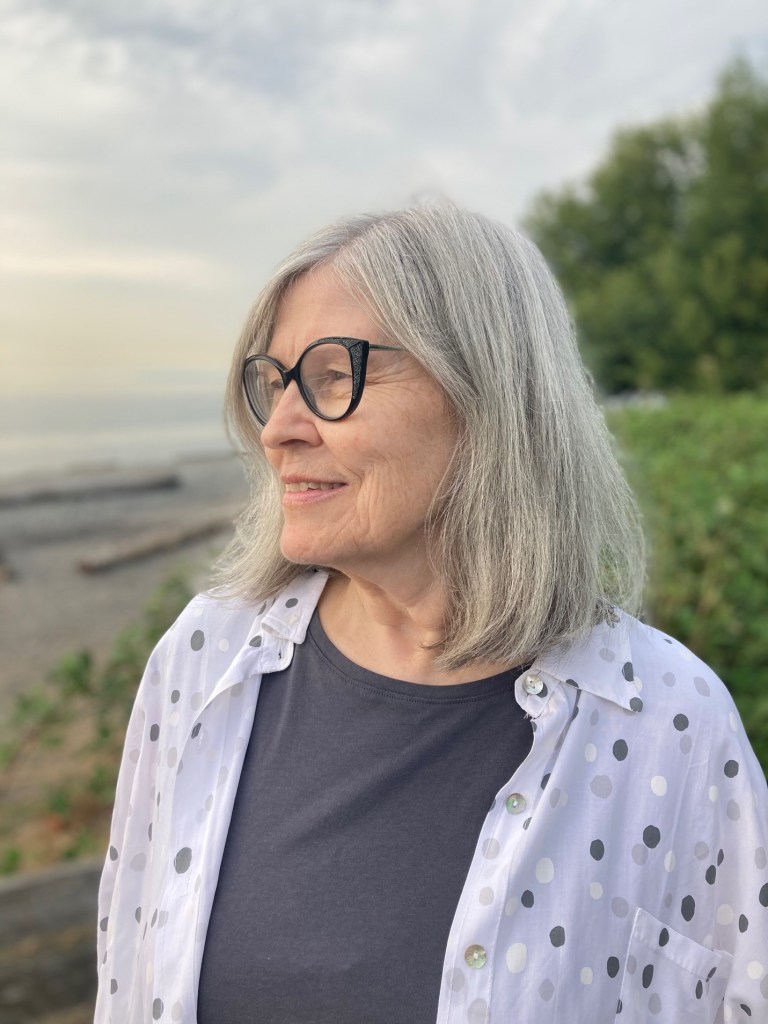
Mary Ellen Talley has published poems in numerous journals and anthologies. Finishing Line Press published her first chapbook, “Postcards from the Lilac City,” (2020) and Kelsay Books published her second chapbook, “Taking Leave,” (2024). She spent many years working with words and children as a speech-language pathologist (SLP) in Washington state public schools and now devotes herself to poetry endeavors. Visit her website at maryellentalley.com.
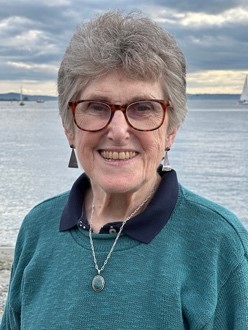
Sylvia Byrne Pollack, a hard-of-hearing poet and retired scientist, has published in Floating Bridge Review, Quartet, Crab Creek Review,The Stillwater Review and other print and online journals. A two-time Pushcart nominee, she won the 2013 Mason’s Road Literary Award, was a 2019 Jack Straw Writer, and a 2021 Mineral School Resident. Both her debut full-length collection Risking It (2021) and her new collection, What Lasts (2023) were published by Red Mountain Press. Visit her at www.sylviabyrnepollack.com
The Poetry Cafe Online is curated by Risa Denenberg.
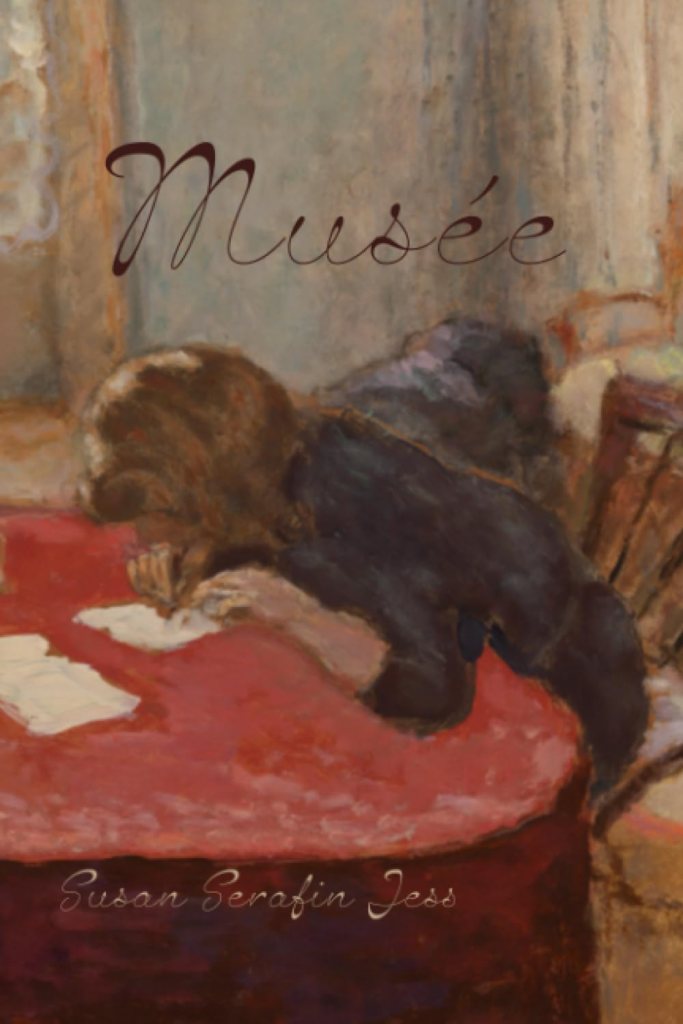
Musée by Susan Serafin Jess Review by Cheryl Caesar
Artifacts beckon to us. They’re visible on the top of the culture iceberg, along with Behaviors and Language, while Values and Beliefs lurk beneath the surface. So writing teachers, like Susan Serafin Jess and me, often call on artifacts in class, as a means to revelation. In her latest poetry collection, Musée, Susan volunteers, like a good teacher, “I’ll go first.” And then opens for us her cabinet of curiosities.
It’s a strong and workable trope. Events, people, and places can be overwhelming and hopelessly complex. But the smell of a fountain-pen nib, the swoop of cursive, the “rather pretty” coffee stain on a student paper (“the color of mourning doves, and heart-shaped”) will fit in our cupped hands. The first six poems read like a bit of memoir—the writer’s life reified through her tools of pen, pencil and paper.
Next the writer turns her gaze to other paper relics: a paycheck, a ticket stub, a telephone directory for the city of Battle Creek. Seeing family from the outside offers a new perspective, and each directory entry is followed by an invocation to the subjects of the listing. Locating the two people who would become her parents, she writes,
My father, Robert L. Mowery, pharmacist, mixes potions and elixirs at Alexander Pharmacy.
My mother, Bettie, teaches home economics at Southwestern Junior High. She describes her students as half man and half child. half tame and half wild.
Oh, domestic goddess and martini shaker, aiming to please, failing to please, how deeply you must regret that tipsy blind date. Already you are pregnant with twins.
Other objects from a Boomer life follow: a spun bottle, a bar of Neutrogena, a transistor, part of the author’s “quest to lead a more analog life.” “Mom’s iron” appears, and Susan’s own “unemployed” iron. Small globes feature fog and rice, instead of snow. Now it is 2023 and the poet lifts a Mason jar, wondering how to fill it, what to take to give pleasure to our friend Rosalie, who died of cancer last summer.
As readers, we too feel the craving for a life that is not a “Second Life”: for solid objects, weighted in the hand. In her final poem, Susan empties her purse for us, like a kindly aunt entertaining us in a waiting room. Although she laments, “Whatever you need most urgently will sink to the bottom,” we are delighted with her finds, feeling that she has indeed found “the pen for the perfect line in the poem.” Like a good museum exhibit, this collection has satisfied our senses, our minds and our imaginations.
Susan Serafin Jess taught writing for many years at Lansing Community College before retiring. She has published four other collections of poetry, and a true-crime/memoir mélange, Wild Horses. Of this most recent collection, she writes of being inspired to follow the theme of artifact by a 2019 exhibit at the Library of Michigan, The Secret Lives of Michigan Objects, and by Pablo Neruda’s Odes to Common Things.
Cheryl Caesar is a writer, teacher of writing and visual artist living in Lansing. She is an associate professor at Michigan State University, and does research and advocacy for culturally responsive pedagogy. Cheryl’s chapbook of protest poetry Flatman is available from Amazon, and some of her Michigan poems, watercolors and charcoal sketches appear in Words Across the Water, volumes 1 and 2, a collaboration between the Lansing and Chicago poetry clubs. In summer 2023, she won first prize for prose in the tri-county My Secret Lansing contest. Cheryl is president of the Michigan College English Association and secretary of the Lansing Poetry Club.
Risa Denenberg is the curator at The Poetry Cafe Online
Mary Warren Foulk has been published in Fjords Review, The Hollins Critic, Pine Hills Review, Palette Poetry, Silkworm, and Steam Ticket, among other publications. Her work also has appeared in Who’s Your Mama? The Unsung Voices of Women and Mothers (Soft Skull Press), (M)othering Anthology (Inanna Publications), and My Loves: A Digital Anthology of Queer Love Poems (Ghost City Press). Her chapbook, If I Could Write You a Happier Ending, was selected by dancing girl press (2021) for their annual series featuring women poets. Her manuscript Erasures of My Coming Out (Letter) won first place in The Poetry Box’s 2021 chapbook contest. Her manuscript Self-Portrait with Erosion was a finalist for the 2021 Gival Press Poetry Award, and the Inlandia Institute’s 2022 Hillary Gravendyk Prize.
Trail of Roots by Gail Thomas Published by Seven Kitchens Press Review by Mary Warren Foulk
I have long been an ardent admirer of Gail Thomas. She has been my teacher and mentor. I return to her poems often for inspiration and guidance— for their stunning craft and for their model of humanity, radical honesty, and brave instructions on how to live, how to be a poet in the world, and how to navigate and face the roots of our ever becoming, no matter how challenging or wondrous.
The reverent poems in Trail of Roots are no exception. They are a deepening of her study and evolution as a poet and as a person. These poems traverse history; they also traverse many landscapes: Scranton; Hawk Mountain; Kittatinny Ridge; landscapes of the human heart; and landscapes of a self in transition and transcendence. A mind actively excavating its past to forge its present and future, no matter where the trail may take her, no matter how uncertain the terrain. These are multifold/multifolding journeys— through spirit, through raw emotion, through the undeniability of aging and mortality. The narrator mines the myriad selves—wife, mother, daughter, lover, witness—against the complex backdrop and realities of such American legacies as patriarchy, homophobia, misogyny, and the fragile states and contexts in which women, in which lesbians, too often find themselves.
In her title poem, “Trail of Roots,” Thomas begins,
After I forget what I know about walking, I hike this trail with my dog who is thrilled
to be free. This is not a time for Shinrin Yoku, forest bathing, where one walks untethered.
The poem continues,
my eyes
focus only on feet, what lies beneath and ahead. Tangled web of roots course
like bruised veins at every angle.
And later, she writes “remember years when I used my body and skin // to feed my children, denied by their father, as if we lived / in a blind alley built of unpaid bills.” Another memory, after a pride march, she:
pushed a stroller and held my other child’s hand while red faced men screamed at us. Later in our garden
a neighbor spit on the ground, the thick clot daring me to protect them.
As she makes her way through the canopy, she “hoists myself over [a white pine’s] rough bulk, balance then straddle // before landing on solid ground.”
And yet despite these obstacles, there is forgiveness, wonder, redemption; there is hope, natural beauty, and love. Earned through the many trials experienced and lived authentically and expressed divinely and masterfully. In “Marriage at 63,” Thomas observes,
With children grown, loves buried, mother and father gone, our bodies maps of countries whose names have been changed […]
And now, this yes
steady as late night coals glowing and banked.
Having taken Thomas’s classes at Pioneer Valley Writers Workshop, I was privileged to read several of the poems in draft form. Thomas is very generous in sharing with her participants her own pages and process. I was astounded by every draft—for their forms, for their lines, for their metaphorical reach, for their rhythms and sonic power, for their breathtaking beginnings and endings. For their never ending surprise. Thomas is triumphant in her ability to hone a narrative, to weave these multitudinous, interconnected histories and stories, these resonant voices. How she evokes such a range of responses from her readers, and evokes such a desire to return, to read again and anew. I am awed by such layering and depth across the page, and how she uses the white spaces and its possibilities (notable in her “Golden Dust Repairs the Cracked Vessel”), their visual design and intrigue. Such richness across the collection, such a riveting whole.
In two poignant poems, she pays tribute to those who have greatly influenced her, from Lucille Clifton to Adrienne Rich, from Ellen Bass to Jane Kenyon, from Ross Gay to Marie Howe, echoes of her poetic forebears and lineage. She honors these influences in “Cento for Women Who Are Not Believed”:
Now you are a voice in any wind a succession of brief, amazing movements, the fragile cases we are poured into, this woman’s garment, trying to save the skein.
And “Pandemic Cento”: “There are days we live / as if death were nowhere in the background. / The life only wants, the fugitive life.”
I linger in the potent “Leaving Paradise, ” where Thomas shares:
Inside my thick- walled house, beams stained with ox blood, tradition echoed in red ware pottery, pierced tin cupboards, blue and white crocks with stiff-necked plump Dutch birds, but there were no women like me.
Lured down the highways splattered with billboards, past the sprawl of malls and smoke stacks, I searched for them in bookstores and meetings, women
who lived in disguise, a man’s wife kissing another man’s wife. Let me be clear about this yearning, its embers stoked by more than a juicy bite,
more than feminist books devoured like bread, more than the company of mothers alone at night, their men working late. Body and mind yoked to this cultivated garden of my own sowing, I chose wilderness.
It’s a gift and an honor to review Trail of Roots, Thomas’s wild sowing and self-assertions, to extol its praises and ensure its broad reception. The gorgeous cover alone, a three-color woodcut by Nancy Haver, invites the reader into discovery and exploration of the reverberant, transformative meanings inside.
Gail Thomas’s previous books are Leaving Paradise (Human Error Publishing, 2022), Odd Mercy (Headmistress Press, 2016), Waving Back (Turning Point, 2015), No Simple Wilderness: An Elegy for Swift River Valley (Haley’s, 2001), and Finding the Bear (Perugia Press, 1997). Her poems have been widely published in journals and anthologies including CALYX, Valparaiso Poetry Review, Beloit Poetry Journal, North American Review, Cumberland River Review, and Mom Egg Review. Among her awards are the Charlotte Mew Prize from Headmistress Press for Odd Mercy, the Narrative Poetry Prize from Naugatuck River Review, the Massachusetts Center for the Book’s “Must Read” for Waving Back, and the Quartet Journal’s Editor’s Choice Prize. She has been a fellow at Ucross and the MacDowell Colony. She teaches poetry, visits schools and libraries with her therapy dog Sunny, and volunteers with immigrant and refugee communities in Western Massachusetts. Read more about Gail and her work at www.gailthomaspoet.com.
Mary Warren Foulk has been published in Fjords Review, The Hollins Critic, Pine Hills Review, Palette Poetry, Silkworm, and Steam Ticket, among other publications. Her work also has appeared in Who’s Your Mama? The Unsung Voices of Women and Mothers (Soft Skull Press),(M)othering Anthology (Inanna Publications), and My Loves: A Digital Anthology of Queer Love Poems (Ghost City Press). Her chapbook, If I Could Write You a Happier Ending, was selected by dancing girl press (2021) for their annual series featuring women poets. Her manuscript Erasures of My Coming Out (Letter) won first place in The Poetry Box’s 2021 chapbook contest. Her manuscript Self-Portrait with Erosion was a finalist for the 2021 Gival Press Poetry Award, and the Inlandia Institute’s 2022 Hillary Gravendyk Prize.
Risa Denenberg is the curator at The Poetry Cafe Online
The Optimist Shelters in Place, by Kimberly Ann Priest
Published by Small Harbor Publishing, Harbor Editions, 2022 Review by Maria McLeod
“The significance of bearing witness“
The Optimist Shelters in Place, a poetry chapbook by Kimberly Ann Priest, is an account of survival during a plague. The mundanity of daily routine provides a setting for existential angst which appears to the reader as universally familiar. Published during the ongoing Coronavirus pandemic, Priest’s chapbook chronicles the early days of isolation as if intent on creating a public and personal record of our adaption to a previously unfathomable circumstance.
The reader can imagine a future historian turning to Priest’s writing to learn the scope of the pandemic’s impact, as it reads as a reliable narrative, an unembellished account. Priest records this new and unwelcome homebound existence—beginning in March of 2020 as a quarantine of unknown duration—in order to signal her intent to the reader through the construction of 24 themed poems, all written from third person point of view, each title beginning with “The optimist” followed by an action taken by the optimist (or someone in her life). For example:
“The Optimist Scrambles Four Eggs for Breakfast” “The Optimist Cuts a New Plant” “The Optimist Takes a Personality Test”
Opening with a scene of a woman (the “optimist”) talking to her plants, Priest places us in that moment—pre-vaccine —when it seemed the only way to survive an isolated present was to hope for an “inhabited future”:
The plants feel it too.
She tells them to think about new sills to adorn in some inhabited future, not to imagine this will be their final resting place. She tells them
what her daughter told her before leaving was deemed essential: this is all temporal.
Although confronting and combating loneliness rides the surface of these poems, the more salient theme expressed is the significance of bearing witness. Evidence is presented to the reader in the form of the book’s dedication, “for the spider,” a reference to the tenth poem in the collection, “The Optimist Leaves a Dead Spider Dead on the Carpet.” Here, the spider serves as a metaphor for our existence as measured by our significance, or insignificance, to others:
From underneath her coffee table a lone spider plans a route of escape.
Quarantine is difficult for all sorts of creatures.
At dusk, when shadows brush the carpet a semi-cloudy grey, he leaps out from under swimming over its follicles, but not fast enough. His smushed dot remains on the carpet for over three days.
The choice of third person point-of-view provides readers with both a comfortable perch and an active part. If one is to transcend loneliness and the resulting feelings of insignificance, one’s existence requires recognition. The reader takes the witness chair.
Amidst the details of daily life—the grocery shopping, the scrolling through Facebook, the phone calls, the tending to (or ignoring) domestic chores—the pandemic facts and stats are placed throughout the book. These are actual news items. Their inclusion provides both a reality check and a foil to the “optimist” whose survival tactics include moments of personal indulgence that allow a form of escape: a glass of expensive wine, a walk on the beach, a hand in the sand.
In North Carolina the Death Toll is 507. But no one is talking much about North Carolina, and she wonders what it’s like not to be talked about so much.
Again, it’s being talked about, being recognized, that Priest asks her readers to consider; this comes not as a directive, but an emphasized remark. It’s as if she’s raising her eyebrows at the end of sentence, inserting a pregnant pause. Descriptions of being seen represent moments that serve to buoy the speaker: the interested glance of a grocery store worker; her daughter’s brief but pleasant visit. But there is also a concern expressed over the opposite, to be unseen, unrecognized:
Not essential, no one has called her in weeks; she’d rather die somewhere else than right here, alone.
Perhaps the most pointed lines in the collection come from the poem, “The Optimist Remembers What is Needed to Feel Essential.” Here the reader learns that a contributing factor to the optimist’s isolation is divorce, the dynamics of which are indicted by the following two lines, “The last thing her husband said to her is no one will want you / after this. Maybe he was right.” It is the words the poet sets in italics, representing the now ex-husband’s stark remark, that lift off the page like a slap, followed not by a refutation but a deflated concession by an omniscient narrator, “Maybe he was right.” These lines double the impact of the loneliness and isolation presented by this collection, an existential crisis expressed in the need to be seen, heard, loved and recognized in order to feel human and present in this world—needs that were challenged during the pandemic.
It makes sense, then, that the last poem, “The Optimist Sleeps Through the Night,” is about survival, focusing on the act of breathing as recognition of one’s existence. The poem’s subject is someone apparently unknown to the “optimist,” someone ailing and hospitalized. The speaker imagines the patient’s revival after what we can only assume has been a harrowing hospital stay, a near-death experience. In doing so, she uses her omniscience as a means of harnessing the power of positive thinking, as if her ability to see him helps bring him to life. Here Priest ends, as an optimist would, on a positive note:
… Somewhere/a fever has broken
Somewhere a young man wakes to discover the sounds of his own breathing—how much like love it is.
An exhale of carbon monoxide and hope.
Kimberly Ann Priest is the author of Slaughter the One Bird, theAmerican Best Book Awards finalist. She is also the author of four chapbooks: The Optimist Shelters in Place, Parrot Flower, Still Life and White Goat, Black Sheep. She is winner of the Heartland Poetry Prize 2019 from New American Press. She teaches writing as an assistant professor for Michigan State University. She also serves as associate poetry editor for the Nimrod International Journal of Prose and Poetry.
Maria McLeod is the author of two poetry chapbooks, Mother Want and Skin. Hair. Bones. She’s won the WaterSedge Chapbook Contest, Indiana Review Poetry Prize and the Robert J. DeMott Short Prose Prize. She works as a professor of journalism for Western Washington University.
Risa Denenberg is the curator of The Poetry Cafe Online.
Maria McLeod, is the author of two poetry chapbooks, Mother Want and Skin. Hair. Bones. She’s won the WaterSedge Chapbook Contest, Indiana Review Poetry Prize and the Robert J. DeMott Short Prose Prize. She works as a professor of journalism for Western Washington University.
Dangerous Women, by Jesi Bender Published by Dancing Girl Press Review by Jennifer Saunders
Patriarchy can transform nearly anything about a woman into a threat. Representative Alexandria Ocasio-Cortez is frequently criticized for paying too much attention to her wardrobe, but when Janet Yellen—secretary of the Department of the Treasury—appeared before Congress wearing a suit she had worn in public five weeks previously, she was criticized for that. Meanwhile, in 2014, Australian TV host Karl Stefanovic wore the same suit on air every day for a year as an experiment, and nobody noticed. Hillary Clinton was regularly criticized for being “shrill” but when she softened one debate appearance with a laugh and a shoulder shake, she was deemed unserious. It’s the classic double-bind: damned if you do and damned if you don’t. Which is why, in Jesi Bender’s poetry chapbook Dangerous Women, the “Married Woman” and the “Unmarried Woman” can both be declared dangerous. The “Young Woman” is a threat, but so is the “Old Woman.” There is either the “Beautiful Woman” or the “Unseen Woman.” The “Woman Apart” is suspect, but so are the “Women Together.” Why, it’s almost as if it’s the fact of womanhood rather than any particular behavior that’s considered threatening under patriarchy.
Too smart dumb blond too pretty what a dog too loud too pushy too bitchy too much. Who does she think she is?
The poems in Dangerous Women pair these archetypal threats with poems inspired by literary and historical figures ranging from Jezebel to Georgia O’Keeffe (who, it should be noted, once said, “The men like to put me down as the best woman painter. I think I’m one of the best painters.”). Bender lays the foundation in her opening poem “Womb Wounds” (archetype, The First Woman) which traces misogyny back to the story of Eve. “All daughters of the same black Eve / she in us birthed sin,” Bender writes. What could have been a source of power—the birthing womb—is reduced to pain, leaving those giving birth to “[b]ear this burden with a grin” and to become “broken bones.”
The line “Now—where is her heart, the core of her flesh” from “JesiBelle Waits For the Hounds” (archetype, The Faithful Woman) strikes me as the guiding thread of this collection. What has happened to these women’s stories? What has become of the core of them? The women in Dangerous Women have either been forgotten, like Maria Sibylla Merian, the German naturalist and scientific illustrator, or flattened into stereotype like Jezebel who is remembered as a harlot rather than as a woman remaining true to her native religion. The core of her gone, all that remains are:
her arms, her legs and her head. They wanted it this way, As far as I can tell, So no one would ever be able to say; “This, this was Jesi Belle.”
Bender writes this of Merian in the prose poem “Soft Egg” (archetype, The Independent Woman):
That was what she wanted to show the world—that deep down where things crawled and clambered, there were insides so beautiful, so delicate and bright, that they mirrored the infinite ecology of the human heart.
Here we see the heart again, the core.
I do feel compelled to mention my discomfort with one of Bender’s poem, “The Portrait My Mother Made,” (archetype, The Strongest Woman) dedicated to Mamie Till-Mobley and written in Emmett Till’s ghost-voice. This image troubled me:
Cradled by silt I came out clean as cotton from the gin released
Is that image one the murdered Till would have used? Coming from Chicago as he did and having been raised by a woman who herself left the South as a very young child, it would not likely have been a natural linguistic reference point of his. More importantly, the cotton gin was the invention that solidified chattel slavery in the South by making large-scale cotton production profitable. In a way, it was contributory to Till’s murder. Placing the image of ginned cotton in Emmett Till’s mouth struck me as a questionable choice.
Bender is on more solid ground when she is shining light on historical figures who should be better known such as the naturalist Merian or Sor Juana Inés de la Cruz, the Mexican writer, philosopher and Hieronymite nun who is considered the first published feminist in the Americas. I was unfamiliar with both these women, and Bender’s poems inspired me to learn more about them. Dangerous Women is at its best when recovering such stories in Bender’s lyrical language. In the “Tenth Muse” (archetype, The Unmarried Woman) she writes in the voice of de la Cruz:
Who promised you Salvation The sky quells and light vibrates against skin
Women fly and fall in this collection, become or give birth to birds. “Last night, I dreamt / I birthed three dead birds,” Bender writes in “Shalosh” (archetype, The Childless Woman) while in “A Poem For Emily” (archetype, The Quiet Woman) Emily Dickinson is described as a “little red wren.” Ada Lovelace, considered the first computer programmer, imagines herself flying in “The Bird Machine,” one of the collection’s prose pieces (archetype, The Intelligent Woman): “In her mind, when she closed her eyes, she pictured that as she spread her arms and pushed the wings against the air, there would be a trail of exultant leaves in her wake. {gold} “ In Three Steps on the Ladder of Writing, Hélène Cixous writes, “What is interesting is that birds, writing, and many women are considered abominable, threatening, and are rejected.” The repeated appearance of birds and bird imagery in a collection about how women are constructed as dangerous and threatening taps into this deep root, but Bender’s poems reject rejection. They reclaim and retell. They restore the core.
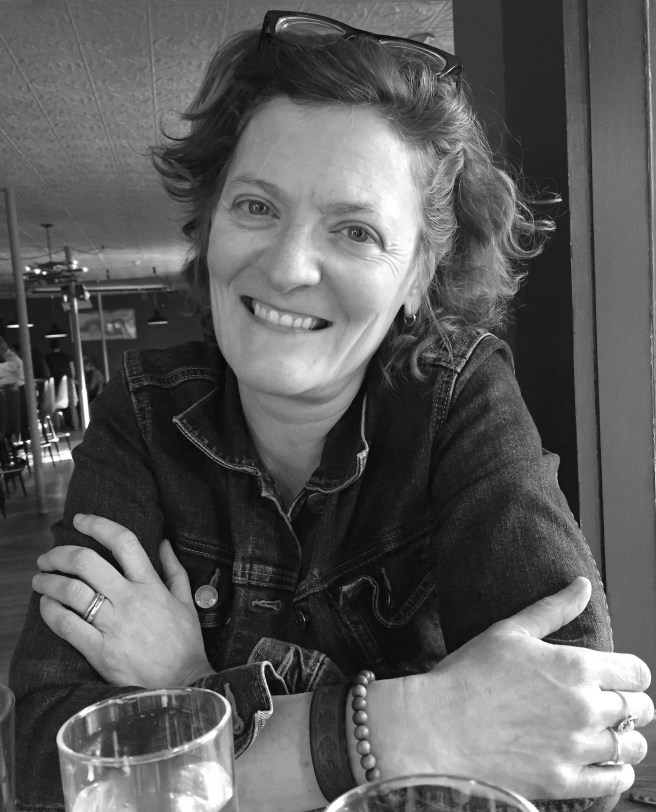
Jesi Bender is an artist from upstate New York. She is the author of the play Kinderkrankenhaus (Sagging Meniscus) and the novel The Book of the Last Word (Whiskey Tit). Her shorter work has appeared in Fence, Split Lip, and Vol. 1 Brooklyn, among other places. http://www.jesibender.com
photo credit: Sarah Tinsley
Dangerous Women by Jesi Bender dancing girl press, 2022 32 pages, $8.00 available here:
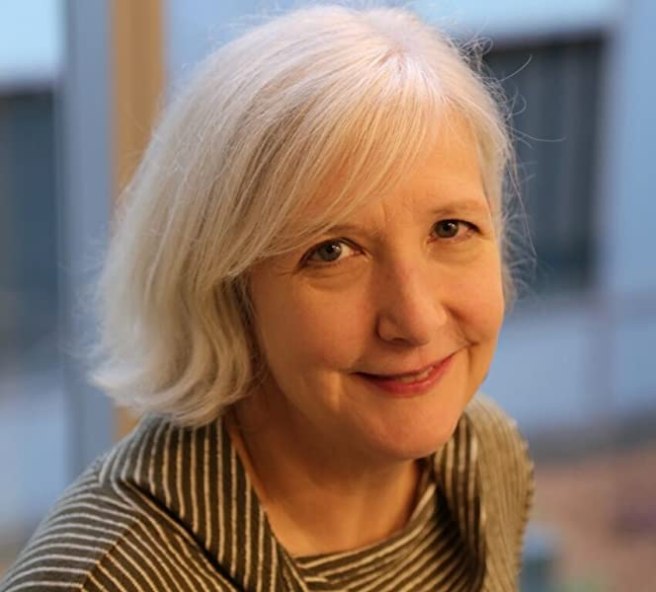
Jennifer Saunders is the author of Self-Portrait with Housewife (Tebot Bach, 2019), winner of the Clockwise Chapbook Competition. Her poem “Crosswalk” won the 2020 Gregory O’Donoghue International Poetry Prize and appeared in Southword. Her work has appeared in The Georgia Review, Grist, Ninth Letter, San Pedro River Review, and other publications. Jennifer holds an MFA from Pacific University and lives in German-speaking Switzerland. photo credit: Denise O’Gorman
Risa Denenberg is the curator at The Poetry Cafe Online.
Jennifer Saunders is the author of Self-Portrait with Housewife (Tebot Bach, 2019), winner of the Clockwise Chapbook Competition. Her poem “Crosswalk” won the 2020 Gregory O’Donoghue International Poetry Prize and appeared in Southword. Her work has appeared in The Georgia Review, Grist, Ninth Letter, San Pedro River Review, and other publications. Jennifer holds an MFA from Pacific University and lives in German-speaking Switzerland.



















 The Poetry Cafe