Lisa Hall Brownell

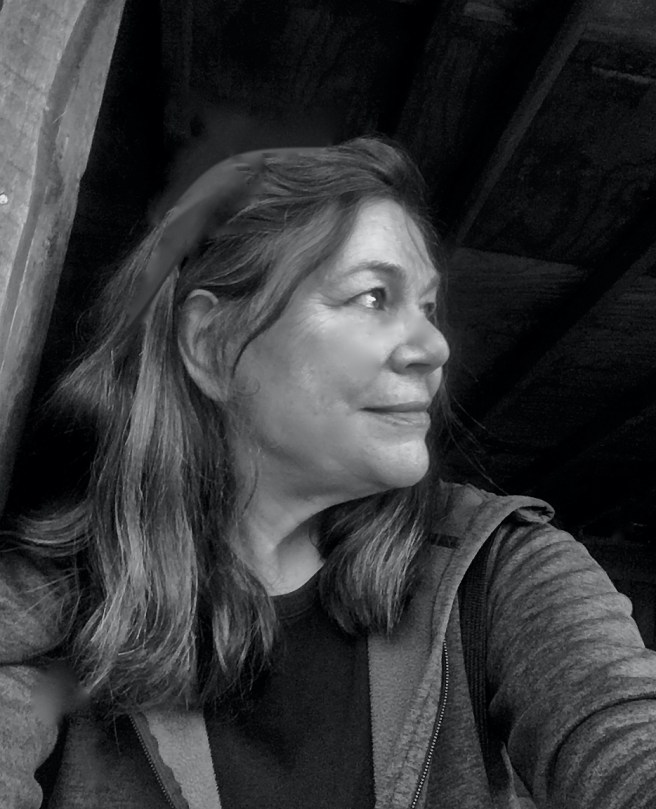
Lisa Hall Brownell is a writer and editor. Her novel “Gallows Road” was published by Elm Grove Press in 2022 and has been featured in Kirkus Review, the Historical Novel Review, Connecticut Magazine, and elsewhere. She is finishing her second novel Vee’s Bracelet and a collection of short stories, Sidetracks. Lisa earned an M.A. in English with a concentration in creative writing from San Francisco State University and edited SFSU’s literary magazine Transfer. She is a graduate of Brown University where she wrote poetry and plays and worked in the university bookstore.

Ellen Miller-Mack

Ellen Miller-Mack

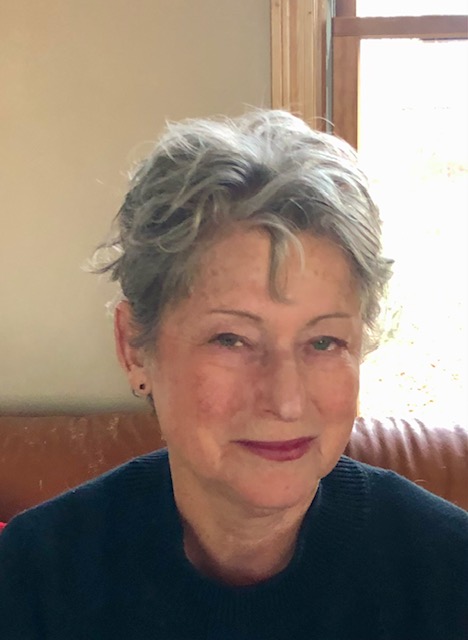
Ellen Miller-Mack is a poet, nurse practitioner, & blues lover. “Hot Tamale Blues” can be heard Tuesday afternoons at WMUA 91.1 FM (www.wmua.org.) Ellen has an MFA in Poetry from Drew University. Her reviews and poems can be found in Lavender Review, Lily Review, Rattle, Rumpus, MER, Affilia, Valparaiso Poetry Review and others. She co-authored The Real Cost of Prisons (PM Press). She co-hosts “Poet Talk” which is broadcast live from WMUA on Thursday evenings . “Poet Talk” is also a podcast on Spotify. Ellen lives in Western Massachusetts.

Nadja Maril

Nadja Maril’s chapbook Recipes from My Garden, a compendium of poems and short essays centered around herbs, a kitchen garden, and family memories, was published by Old Scratch Press, in September (2024). Maril’s prose and poetry has been published in literary magazines that include, Lunch Ticket, Spry Literary Review and Across the Margin. A former journalist and editor, Nadja has an MFA from Stonecoast at the University of Southern Maine. To read more of her work and follow her weekly blog posts, visit Nadjamaril.comhttps://nadjamaril.com/

Mary Warren Foulk

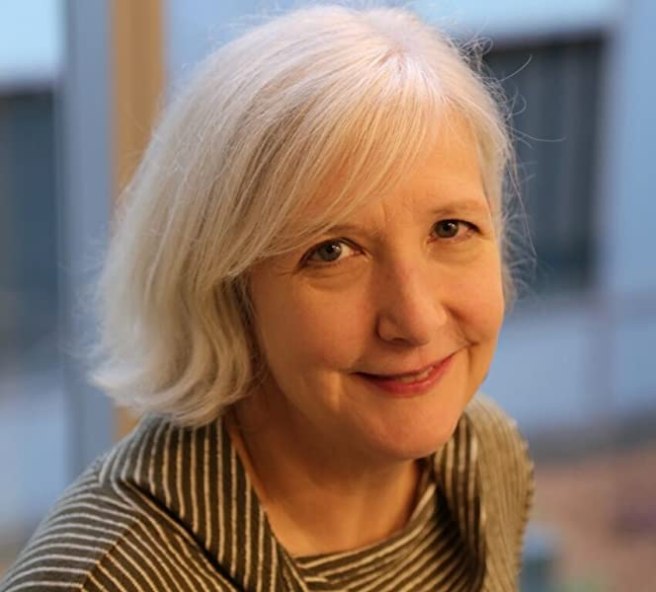
Mary Warren Foulk has been published in Fjords Review, The Hollins Critic, Pine Hills Review, Palette Poetry, Silkworm, and Steam Ticket, among other publications. Her work also has appeared in Who’s Your Mama? The Unsung Voices of Women and Mothers (Soft Skull Press), (M)othering Anthology (Inanna Publications), and My Loves: A Digital Anthology of Queer Love Poems (Ghost City Press). Her chapbook, If I Could Write You a Happier Ending, was selected by dancing girl press (2021) for their annual series featuring women poets. Her manuscript Erasures of My Coming Out (Letter) won first place in The Poetry Box’s 2021 chapbook contest. Her manuscript Self-Portrait with Erosion was a finalist for the 2021 Gival Press Poetry Award, and the Inlandia Institute’s 2022 Hillary Gravendyk Prize. 

Maria McLeod

Maria McLeod, is the author of two poetry chapbooks, Mother Want and Skin. Hair. Bones. She’s won the WaterSedge Chapbook Contest, Indiana Review Poetry Prize and the Robert J. DeMott Short Prose Prize. She works as a professor of journalism for Western Washington University.

Dangerous Women

Dangerous Women, by Jesi Bender
Published by Dancing Girl Press

Review by Jennifer Saunders

Patriarchy can transform nearly anything about a woman into a threat. Representative Alexandria Ocasio-Cortez is frequently criticized for paying too much attention to her wardrobe, but when Janet Yellen—secretary of the Department of the Treasury—appeared before Congress wearing a suit she had worn in public five weeks previously, she was criticized for that. Meanwhile, in 2014, Australian TV host Karl Stefanovic wore the same suit on air every day for a year as an experiment, and nobody noticed. Hillary Clinton was regularly criticized for being “shrill” but when she softened one debate appearance with a laugh and a shoulder shake, she was deemed unserious. It’s the classic double-bind: damned if you do and damned if you don’t. Which is why, in Jesi Bender’s poetry chapbook Dangerous Women, the “Married Woman” and the “Unmarried Woman” can both be declared dangerous. The “Young Woman” is a threat, but so is the “Old Woman.” There is either the “Beautiful Woman” or the “Unseen Woman.” The “Woman Apart” is suspect, but so are the “Women Together.” Why, it’s almost as if it’s the fact of womanhood rather than any particular behavior that’s considered threatening under patriarchy.

Too smart dumb blond too pretty what a dog too loud too pushy too bitchy too much. Who does she think she is?

The poems in Dangerous Women pair these archetypal threats with poems inspired by literary and historical figures ranging from Jezebel to Georgia O’Keeffe (who, it should be noted, once said, “The men like to put me down as the best woman painter. I think I’m one of the best painters.”). Bender lays the foundation in her opening poem “Womb Wounds” (archetype, The First Woman) which traces misogyny back to the story of Eve. “All daughters of the same black Eve / she in us birthed sin,” Bender writes. What could have been a source of power—the birthing womb—is reduced to pain, leaving those giving birth to “[b]ear this burden with a grin” and to become “broken bones.”

The line “Now—where is her heart, the core of her flesh” from “JesiBelle Waits For the Hounds” (archetype, The Faithful Woman) strikes me as the guiding thread of this collection. What has happened to these women’s stories? What has become of the core of them? The women in Dangerous Women have either been forgotten, like Maria Sibylla Merian, the German naturalist and scientific illustrator, or flattened into stereotype like Jezebel who is remembered as a harlot rather than as a woman remaining true to her native religion. The core of her gone, all that remains are:

her arms, her legs and her head.
They wanted it this way,
As far as I can tell,
So no one would ever be able to say;
“This, this was Jesi Belle.”

Bender writes this of Merian in the prose poem “Soft Egg” (archetype, The Independent Woman):

That was what she wanted to show the world—that deep down where things crawled and clambered, there were insides so beautiful, so delicate and bright, that they mirrored the infinite ecology of the human heart.

Here we see the heart again, the core.

I do feel compelled to mention my discomfort with one of Bender’s poem, “The Portrait My Mother Made,” (archetype, The Strongest Woman) dedicated to Mamie Till-Mobley and written in Emmett Till’s ghost-voice. This image troubled me:

Cradled by silt I came out
clean as cotton from the gin
released

Is that image one the murdered Till would have used? Coming from Chicago as he did and having been raised by a woman who herself left the South as a very young child, it would not likely have been a natural linguistic reference point of his. More importantly, the cotton gin was the invention that solidified chattel slavery in the South by making large-scale cotton production profitable. In a way, it was contributory to Till’s murder. Placing the image of ginned cotton in Emmett Till’s mouth struck me as a questionable choice.

Bender is on more solid ground when she is shining light on historical figures who should be better known such as the naturalist Merian or Sor Juana Inés de la Cruz, the Mexican writer, philosopher and Hieronymite nun who is considered the first published feminist in the Americas. I was unfamiliar with both these women, and Bender’s poems inspired me to learn more about them. Dangerous Women is at its best when recovering such stories in Bender’s lyrical language. In the “Tenth Muse” (archetype, The Unmarried Woman) she writes in the voice of de la Cruz:

Who
promised you      Salvation
The sky quells and
light     vibrates against skin

Women fly and fall in this collection, become or give birth to birds. “Last night, I dreamt / I birthed three dead birds,” Bender writes in “Shalosh” (archetype, The Childless Woman) while in “A Poem For Emily” (archetype, The Quiet Woman) Emily Dickinson is described as a “little red wren.” Ada Lovelace, considered the first computer programmer, imagines herself flying in “The Bird Machine,” one of the collection’s prose pieces (archetype, The Intelligent Woman): “In her mind, when she closed her eyes, she pictured that as she spread her arms and pushed the wings against the air, there would be a trail of exultant leaves in her wake. {gold} “ In Three Steps on the Ladder of Writing, Hélène Cixous writes, “What is interesting is that birds, writing, and many women are considered abominable, threatening, and are rejected.” The repeated appearance of birds and bird imagery in a collection about how women are constructed as dangerous and threatening taps into this deep root, but Bender’s poems reject rejection. They reclaim and retell. They restore the core.

Jesi Bender is an artist from upstate New York. She is the author of the play Kinderkrankenhaus (Sagging Meniscus) and the novel The Book of the Last Word (Whiskey Tit). Her shorter work has appeared in Fence, Split Lip, and Vol. 1 Brooklyn, among other places. http://www.jesibender.com

photo credit: Sarah Tinsley

Dangerous Women by Jesi Bender
dancing girl press, 2022
32 pages, $8.00
available here:


Jennifer Saunders is the author of Self-Portrait with Housewife (Tebot Bach, 2019), winner of the Clockwise Chapbook Competition. Her poem “Crosswalk” won the 2020 Gregory O’Donoghue International Poetry Prize and appeared in Southword. Her work has appeared in The Georgia Review, Grist, Ninth Letter, San Pedro River Review, and other publications. Jennifer holds an MFA from Pacific University and lives in German-speaking Switzerland.
photo credit: Denise O’Gorman


Risa Denenberg is the curator at The Poetry Cafe Online.

Jennifer Saunders

Jennifer Saunders is the author of Self-Portrait with Housewife (Tebot Bach, 2019), winner of the Clockwise Chapbook Competition. Her poem “Crosswalk” won the 2020 Gregory O’Donoghue International Poetry Prize and appeared in Southword. Her work has appeared in The Georgia Review, Grist, Ninth Letter, San Pedro River Review, and other publications. Jennifer holds an MFA from Pacific University and lives in German-speaking Switzerland.

photo credit: Denise O’Gorman

Ruth Crossman

Ruth Crossman is a Pushcart-nominated writer whose work has appeared in publications including Litro, Flash Fiction, sPARKLE + bLINK, The Fabulist, and Maximum Rock n Roll. Her auto-fiction collection All the Wrong Places was published by Naked Bulb Press in 2022.

Ruth Crossman

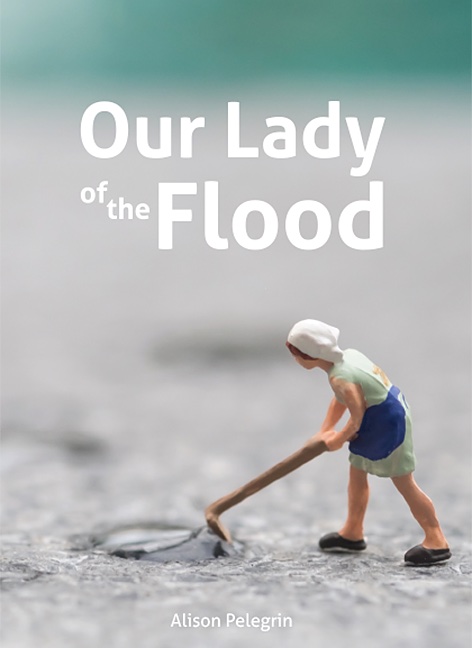
Our Lady of The Flood

Our Lady of the Flood by Alison Pelegrin

Review by Diane Elayne Dees

The entire region around New Orleans embodies a certain sensibility, born of geography and weather and a unique heritage that is hard to define and even harder to translate. When I first moved to the city decades ago, I was both curious about and amused by the many “Our Lady” names of schools and churches. “Can you imagine what their fight song is?” an acquaintance once asked when we drove past Our Lady of Prompt Succor School.

After you’ve lived here a long time, though, Our Lady of Prompt Succor, Our Lady of Good Counsel, Our Lady of Perpetual Help, and Our Lady Star of the Sea (which we called “the tuna fish church”) all become part of the sometimes bizarre linguistic landscape of the city.

I’ve also lived through many Louisiana hurricanes and floods, so I approached reading Alison Pelegrin’s Our Lady of the Flood with relish, and I was not disappointed. In this collection, Pelegrin skillfully cuts through the difficulty of cultural translation with a collection of poems that puts the region’s eccentricity in the colorful and sometimes absurd context that it deserves. Moreover, she does it—often with delicious humor—by using language that gives new life to the tasks and customs that are part of daily life in and around New Orleans.

The collection opens with the eponymous poem, “Our Lady of the Flood”:

Some saints are untouchable behind glass,
but you ride in open boats
with mildew on the edges of your gown,
a calm commander of the Cajun Navy’s fleet.
Your devotees worship outside
in a circle of ruined pews,
no incense but bug spray

This is a perfect introduction to the parade of “Our Lady” poems that are to come, as well as the other poems in Our Lady of the Flood, which include an ode to ambrosia (“confection snubbed by food snobs as a [. . .] meringue of shame”), a meditation on local bridges, and a commentary on the removal of New Orleans’ Lee Circle statue of General Robert E. Lee.

Hurricane Katrina, as one might expect, is an ongoing theme in Pelegrin’s collection. In “Anything We Want,” she expresses the longing of all Louisianans who were displaced by the 2005 storm:

They won’t quit asking, What do you want?
I want to be somewhere besides Mississippi
with its highway that splits fields
of cotton and soy and blackbirds.
I want art supplies and to read a book
in my old bed, to ride the streetcar by myself

//

I want my mom to say something
in the Walmart, where we have gone to spend
a gift card from some church
on anything we want.

And in “Quicksilver”:

[…] quicksilver visions wrinkle
and then they vanish. But
this water is absolute. It remains,
though the hurricane is over.
I have studied from my exile
in this hotel room, witnessed
rooftop rescue, the folly
of mammoth sandbags. This water
is no silvered mirage. It clings like tar.
It swallows everything we are.

The “Our Lady” poems are a special treat. “Our Lady on the Half Shell” celebrates “Bathtub Madonna, Lily of so many gardens, Queen of Heaven in a scalloped shell [. . .]”:

White-washed, with marble chips, or pansies, at your feet,
you have many faces in New Orleans—so many incarnations—
alabaster, hand-painted Creole or coffee or midnight skin,
your ghost eyes peering out and you motionless

And then there’s “Our Lady of ‘No Regerts’ ”:

Our Lady of No Regerts, prevention of bad tattoos
must be your side hustle, a part-time ministry,
because, queen of inky heaven, with respect,

a few too many permanent atrocities
have escaped your intervention

My personal favorite is “Our Lady of Whatever,” in which the poet fantasizes about being one of the many Ladies revered in New Orleans.

So many lakes. So many Ladies of the Lakes.
Maybe I could be Lake Pontchartrain’s Lady
of the Longest Bridge, Lady of Cicada Tea Parties,
of Lighthearted Marvels, of Sand Mandalas,
Reduced to Cerulean Ash. Our Lady of Shrinky Dinks.

A special gem in this collection is Pelegrin’s “Soliloquy against a Kudzu Backdrop”:

 Audience of none, superstition dictates
that I peek through the kudzu curtain
like a starlet before making an entrance
and speaking yet again on the theme
of ignorance observed in waking life.
I would like to believe these are actors I see—
rednecks so loud in their stupidity
that rather than being frightened by their antics
I find myself waiting for the punchline

//

How can we be
so different when the same trees
rustle in all of our dreams?

It isn’t easy to move readers beyond the clichéd images of jazz bands, wrought iron balconies and roaming alligators, to the sometimes painful, sometimes hilarious, and always evocative images that represent what life is really like in New Orleans and its outlying regions. But in Our Lady of the Flood, Alison Pelegrin provides a charmingly authentic portrait of a culture that is like no other in the nation.


Alison Pelegrin’s latest collection, Our Lady of Bewilderment, is forthcoming from LSU Press in 2022. Other books include Waterlines (LSU 2016), as well as Hurricane Party (2011), and Big Muddy River of Stars (2007), both with the University of Akron Press. Pelegrin is the recipient of fellowships from the National Endowment for the Arts, the Louisiana Division of the Arts, and the Louisiana Board of Regents. She is Writer-in-Residence at Southeastern Louisiana University. 


Title: Our Lady of the Flood
Author: Alison Pelegrin
Diode Editions
ISBN: 978-1-939728-16-6
28 pages, $12.00


Diane Elayne Dees is the author of the chapbook, Coronary Truth (Kelsay Books) and two forthcoming chapbooks, I Can’t Recall Exactly When I Died, and The Last Time I Saw You. Diane, who lives in Covington, Louisiana—just across Lake Pontchartrain from New Orleans—also publishes Women Who Serve, a blog that delivers news and commentary on women’s professional tennis throughout the world. Her author blog is Diane Elayne Dees: Poet and Writer-at-Large.


ABOUT THE PRESS: Diode Editions is an independent press based in Doha, Qatar and Richmond, Virginia. Editor-in-Chief Patty Paine founded the press in 2012 as an offshoot of Diode Poetry Journal. To date, the press has published 37 titles of poetry, chapbooks and poetry-related nonfiction works and hosts yearly book and chapbook contests.

Risa Denenberg is the curator at The Poetry Cafe

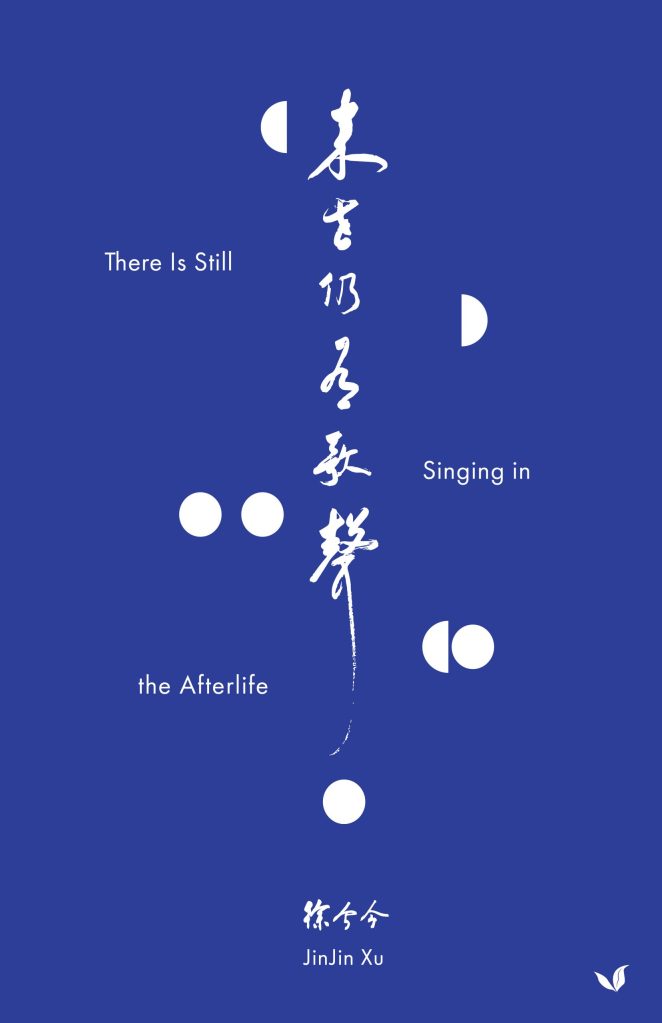
There is Still Singing in the Afterlife

There is Still Singing in the Afterlife, by JinJin Xu (Radix Media, 2020)

Winner of the inaugural Own Voices Chapbook Prize selected by Aria Aber

Review by Jeri Frederickson

There Is Still Singing in the Afterlife drew me in through its imagery and unabashed closeness to intimate loss and historical grief. You may find yourself and echoes of your own family in this debut collection by JinJin Xu. Drawing on personal experiences, playing with language and visual poetry, these poems shine a light for readers to see our own paths in the aftermath of complex family dynamics and loss.

We are in an afterlife of our own in 2021. I imagine this collection was written and set for publication before the Covid-19 global pandemic, and yet it entered the world right in the middle of it. Fortunately for us, as the world tries to find a post-Covid, or a Covid+ world, There is Still Singing in the Afterlife lifts the burden of finding a way. Xu visualizes an afterlife of both global and personal loss, chaos, and misunderstandings. As I read, I kept asking myself how does this collection feel so alive, like a song, despite its often heavy content? Xu shows the reader a way to sing again and a way to live through play, even as we grieve.

As is often the case with a contest-winning chapbook, There Is Still Singing in the Afterlife has already received several reviews; I agree with previous reviews asserting the language’s poignancy and intimate closeness. The language draws us into the longing and hardship inside familial ties in poems like “New Year’s with my Aborted Sister,”

& my poor mother, with only a daughter to her name
             Melts her red tears into the little girl
            I have long searched for.
I am her daughter in this life, her mother in the next.
             I undress her grief, suckle cancer from her breasts

Xu’s precise language affirms and eases the weight of similar grief. Some reviews of this chapbook have pointed to the titular poem or to the “To Red Dust” poems to uplift Xu’s exploration of and confusion with familial bonds. While I find their perspective interesting and certainly relevant to poems like “New Year’s with my Aborted Sister,” I’m most interested in another aspect of this collection. Xu’s playfulness through language and the visual design of the collection includes glossy images that emboss, strike-through, or erase text, and the text moves across the page with a playfulness that first caught my attention when thumbing through the pages. Even before I entered the words as individual units of meaning, this collection took on a sense of play.

“To Red Dust” plays with the book as a physical object, and the reader gets to be part of the play. The words flow in portrait as well as landscape across the pages of this poem. The book’s need to be turned and engaged with as a physical object was a delight as Xu weaves heady ideas and complicated emotions into physical images:

As if I am not of my father’s body, I write
My name into my exhale, please
A swipe of his palm –
Do not leave us in the red dust

“Red Dust” sets the rhythmic pace of the collection, acting as the inhale and exhale while making the reader crane her neck and turns the page around and around even as Xu turns the ideas of family around and around.

At times, I didn’t understand quite what was going on in a poem, and I was surprised to find this never bothered me. Xu interweaves the senses with an emotional understanding even when the logic or narrative seemed out of reach:

unnameable mother
sat gashing fish scales
into the tremble
of a bucket
between her legs,
not yet knowing
the cost
of a bullet fired
at dawn
into the belly
of her
poem –

I didn’t understand all of what was going on in each scene of “Showing my Mother a Censored Film She Cannot Unsee, in Three Acts”, but I loved the playfulness of the poem’s styles and always felt drawn into the poem and landed with the poem’s end. Xu’s ability to play in this weaving creates a sense of trust in the reader to go along with the poem.

Xu plays with form through erasure in “The Revolution is Not a Dinner Party.” This poem of very short lines creates a melody even as it erases its source. Chairman Moa’s Little Red Book is the source material, and the poem lifts extended images such as:

Blind war
xxxxxxin thick ropes.

Ghosts,
xxxxxxa now common

Language. Not
xxxxxxliving. Paper.

We have many personal, societal, and governmental ghosts, and Xu’s deft words slide over playful rhythms and forms to give us a doorway to dance through into the afterlife of those griefs. There Is Still Singing in the Afterlife is a complex and visually compelling debut to hold. Let us look forward to more from JinJin Xu.


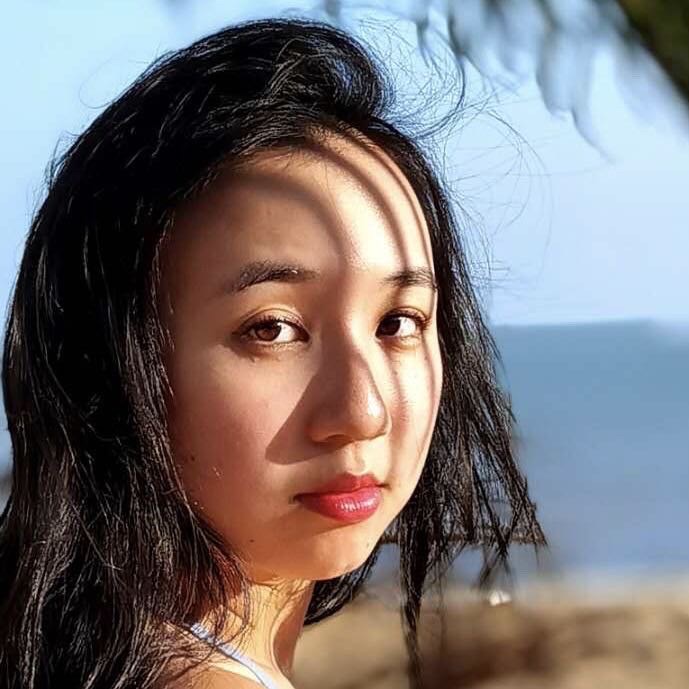
Photograph of JinJin Xu by Xu Xiao Ping.

JinJin Xu is the 2020 winner of the Poetry Society of America’s George Bogin Memorial Award. She has received honors from Southern Humanities Review, Tupelo Press, and the Thomas J. Watson Foundation. Her films have exhibited at Berlin’s Harun Farocki Institute and NYC’s The Immigrant Artist Biennial.
Born and raised in Shanghai, she received her MFA in Poetry from NYU, where was a Lillian Vernon fellow, and now teaches hybrid ballet/poetry workshops through NYU Tisch’s Art of Future Imaginations Grant, and serves as Books Editor of Washington Square Review. Her debut chapbook There Is Still Singing in the Afterlife was selected by Aria Aber for the inaugural Own Voices Chapbook Prize (Radix Media) and was published November, 2020. Her second chapbook This Is My Testimony is forthcoming Fall 2021 from Black Warrior Review. Find more of her work at jinjinxu.com.


Title: There is Still Singing in the Afterlife
Author: JinJin Xu
Publisher: Radix Media: November 20, 2020
ISBN: 978-1-7340487-2-8

$12, 48pp


Jeri calls Chicago home with her two cats and many plants. She dives into literary, visual, and performing art as a channel to nurture love and access beauty while questioning the experiences that hold people together. She graduated from Antioch University Los Angeles with an MFA in Writing. Her chapbook You Are Not Lost is published by Finishing Line Press 2021. IG: @jfredcreates


Risa Denenberg is the curator at The Poetry Cafe.