Music Speaks

Music Speaks, by Bill Cushing

Review by Charles Farmer

Anyone who has spent time making a mixtape understands there is an undercurrent of autobiography threading the song selections. Whether the tape’s intention is to woo a crush or introduce bands to the uninitiated, mixtapes tell the curator’s story.  Bill Cushing’s handsome Music Speaks reads as a reverently annotated playlist, a love letter honoring the music and artists who have provided the soundtrack to his life. While some curators might be more concerned with showcasing their eclectic, rarefied tastes, Cushing’s poems are never pedantic or pretentious; they are tender homages—sometimes exuberant, other times more subdued, depending on their subject—that reveal a mutual appreciation for music and the written word.

So often, critics argue about the use of the word poetry, whether it can be used in a discussion about music. Here, there is no hierarchy, only a mutual appreciation.

Music Speak opens with “On Modest Mussorgsky’s ‘Bydlo,’ ” a response to a piece from Mussorgsky’s 1874 suite, Pictures at an Exhibit, the composer’s sonic interpretations of Viktor Hartmann’s pictures. The piece is especially significant to Cushing as listening to his father’s 1960 LP of Fritz Reiner’s recording of the suite is among Cushing’s formative musical experiences. Mussorgsky’s own work captures the trudge and resiliency of a wagon team, its oxen bearing a load of hay; Cushing’s poem captures the solemnity of music and the picture. There’s something admirable, something worth celebration as

Beast and wagon pass,
processional,
as if solemn
and then recede
slowly
out of sight

Music and images combine as the processional offers its own percussion, a “rhythmic hammering, / dull thunder / as hooves pound the earth”; the organic beat causing the ground to move “to the sound / of these hardened / timpani.”

This opening poem establishes the origins of Cushing’s lifelong relationship with music, a connection that blossoms and intensifies as he moves on from his father’s LP and discovers jazz— the focus of most of Music Speaks. Cushing’s poems conjure images of iconic Blue Note album covers, nightclubs both suspicious and sophisticated, bartenders gracious with heavy pours, the sounds of aural abandon that fueled The Beat Generation.  Jazz, Cushing says in “Jazz Salvation,” is “my country’s / only true art.” It transcends “geometric” pop and “classical’s calculus.” Jazz is “our chance / to dance / in a stereotomy of confusion,” and “a road to refuge— / becoming our savior / from too many / mundane days.”

When he was young, Cushing’s heart was elsewhere. In the fourth grade, “Rock and roll was my world,” he says in, “’Music isn’t about standing still and being safe.’” Cushing, like countless others, eventually discovered Miles Davis’s cataclysmic catalog, its re-imaging of music’s possibilities. Describing his first encounter with Davis, Cushing speaks in the language of revelation:

[…] you brought me back
to music
I walked all the way home

Miles
from that train station
my head pounding with sounds
frantic-fast as the subway

Cushing also writes in awe of Charlie Parker (“Listening to Bird”), who staccato pulse is replicated in two-line bursts:

He founds places
in his search for every note

not imagined:
leaving chromatic gravity,

breaking confines,
shooing up into infinity;

And the in “Ode to Nina Simone,” whose own musical journey resembles Cushing’s, as she “[left] beloved Bach behind.” Anyone who’s seen Simone’s fiery set in 2021’s documentary Summer of Soul will recognize the goddess in Cushing’s poem, who’s “transforming us with blues, boogie-woogie / using training in classics to quash rage.”

Elsewhere in Music Speaks, Cushing writes about the effortless suave of Eubie Blake, whose “long fingers, doing what few can hope to, / creating perfect stops,” propelled classics like “Raggin the Rag” and the essential “Memories of You.” Also subjects of affection are: the contemporary, almost genre-less band, Too Many Zooz (“Three spheres of instruments—percussion, sax, / and trumpet: brass, reed, and skin—become / a discussion of brash banging fun); Dire Straits’ Mark Knopler, who’s always been more than a rock ‘n’ roller; and the recently departed and greatly missed Leon Redbone, eternally cool “decked out in black, Ray-Bans perched on / a Syrid nose,” / “ageless as a harvest moon.” Music Speak fittingly closes with “So Long, Dr. John,” a poem-as-obituary for the late, inestimable Dr. John,

Most interesting is Cushing’s poem to jazz pianist Marcus Roberts, “Singing with Both Hands,” a testament to the mystery behind the creative process. We can try to quantify and analyze creativity, dissect the muse, but creation remains a mystery. Considering the source of Robert’s virtuosity, Cushing asks, “With eight-eight steps to choose, / how do the pianist’s hands / decide which to use?” It could be that “each acts alone: one as the heart” while “the other wanders free.” Yet for of all this analysis, search for a behind-the-scenes explanation, the answer could be a simple, “Or not”—perhaps there is no conscious choice; perhaps it’s a matter of mystical surrender.

Music Speaks is a welcome to addition to my home, where I am often torn between devoting my time and heart to poetry and music. Here, my loves coalesce; there is no guilt trip. The collection succeeds as a testimony to music’s and poetry’s ability to breathe life into the everyday, where notes and words comfort, clarify, confirm, and reassure what it means to be alive.
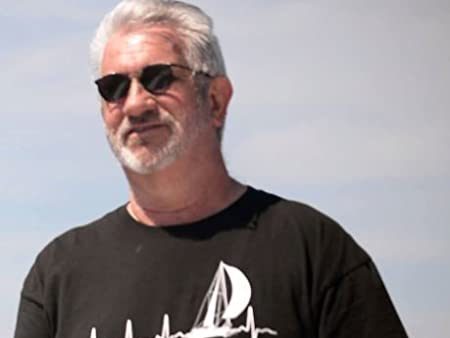

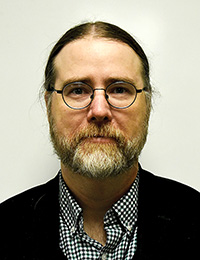
Bill Cushing has lived in Virginia, New York, Pennsylvania, Missouri, Florida, Maryland, the Virgin Islands and Puerto Rico, and currently lives in California. As an undergrad, he was called the “blue collar” poet by classmates at the University of Central Florida because of his years serving in the Navy, and working as an electrician on oil tankers, naval vessels, and fishing boats. Bill earned an MFA in writing from Goddard College in Vermont and has recently retired after more than 20 years of teaching English at East Los Angeles and Mt. San Antonio colleges. Bill was named as one of the Top Ten Poets of L.A. in 2017, and in 2018, he was honored as on the ten poets to watch in L. A. His 2019 book, A Former Life, was released by Finishing Line Press and recieved the Kops-Featherling International Book Award. He won the San Gabriel Valley Chapbook Competition with Music Speaks.


Title: Music Speaks
Author: Bill Cushing

Published by author, printing at‎ lulu.com (October 2, 2019)
32 pp $25
ISBN: ‎ 978-0359827015


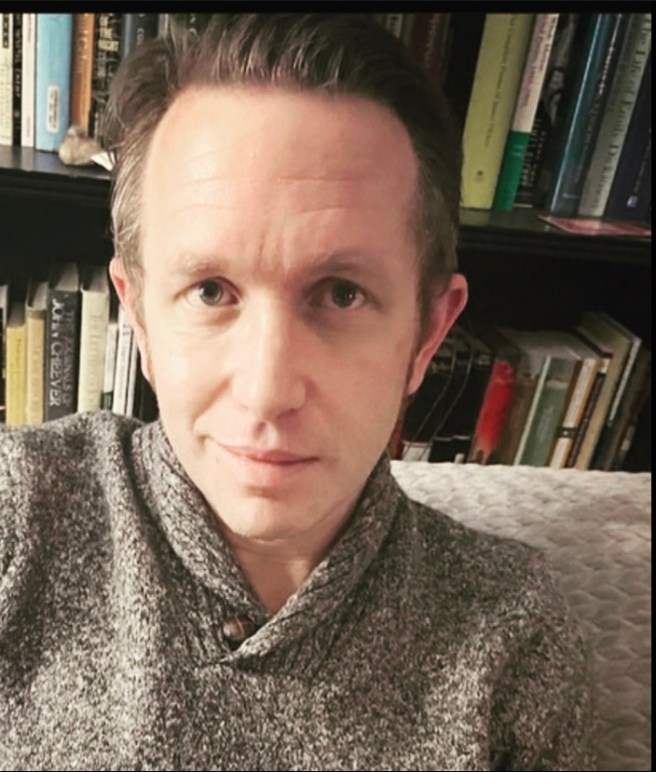
Charlie Farmer is a Georgia poet and professor who loves his wife, Erin, his daughters, his friends, his cats, his students, his books, his LPs, and everything else a poet should love in life.


Risa Denenberg is the Curator at The Poetry Cafe.

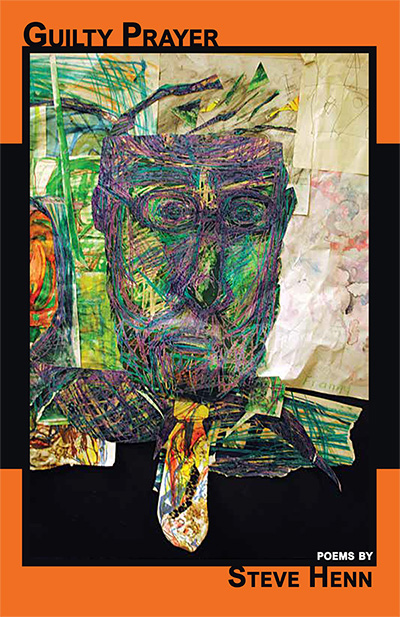
Guilty Prayer

Guilty Prayer, by Steve Henn (Main Street Rag, 2021)

Review by Charles Farmer

Two years ago, I checked into a rehabilitation clinic to kick an alcohol addiction. I brought along a few changes of clothes and some books: the who’s-who anthology, The Vintage Book of Contemporary American Poetry; and some volumes about the writer-as-drinker—Charles Jackson’s harrowing The Lost Weekend; Olivia Laing’s The Trip to Echo Springs; and Leslie Jamison’s The Recovering: Intoxication and Its Aftermath. I hoped I’d have enough down time between counseling sessions to read with a clear head and conscience, something I’d been unable to do for the previous five years. I’d come to romanticize a lonely and calamitous routine of reading at my favorite bar until closing time, my head down in a book with an unspoken agreement with the bartender to refill my vodka sodas. It’d been years since I’d been sober enough to remember what I’d read the previous evening. For years, I’d told my students about literature’s power to restore, affirm, and heal, and settling into my residency, I hoped to validate my beliefs and fall in love again with living. Over time I did, and poetry remains essential to my sobriety. Reading poets—such as Raymond Carver, Nick Flynn, Hala Alyan, and Kaveh Akbar—who have made sense of and survived addiction and ruin provides me a sense of communion that I can’t find elsewhere.

Steven Henn’s latest chapbook, Guilty Prayer, offers me another instance for fellowship. Confronting his ex-wife Lydia’s addictions and eventual suicide, as well as his own drinking and depression, Henn finds life in the aftermath. Honesty is fundamental—Henn eschews the best-seller redemptive narrative arc and the platitudes typical of the language of recovery. Instead, Henn’s poems are unblinking, intimate accounts of a near-recovery. Confessional writing is a loaded term, conjuring accusations of oversharing and exploitation, but Guilty Prayer doesn’t read like an exercise in emotional manipulation. Instead, Henn delivers clear-eyed honesty, tenderness, and vulnerability.

Alcohol’s and drug’s seduction can be painless, effortless: “You can waste your whole cussed life/ Romanticizing the Dark Side,” Henn tells us in “What Darth Vadar Taught Me.” He recognizes a beloved trope: The creator fueled by substances, the artist who can access their creativity only after a few drinks or pills— their wit, sensitivity, and language sharpened by hard living. It sounds almost mystical, like Bukowski giving himself to his muse. Yet the poem ends with the reality: “Then I passed out/ of consciousness, not knowing if or when I would wake.” How do you romanticize that?

Henn doesn’t. Guilty Prayer revisits his traumas under a poetic microscope, one raw crisis, lyric after lyric. Confrontation defeats denial and deflection. In the haunting “Lydia,” Henn recounts the details of Lydia’s suicide and visiting her body with their children before cremation. There is a feeling of ownership as Henn talks to her:

Everybody knows
the trouble you put me through but nobody
says anything, not to me anyway, about how I
could be trouble for you. Nobody sees how I see
me seeing you.

Embracing the particulars in poems like “The Imperial Magisterium of Unrelenting Fortitude,” “Poem for the Mother of My Children,” and “Thank You, Lydia for Our Boy,” respectively, Henn addresses his late ex-wife. These poems aren’t chances for cheap voyeurism; they’re a means of assessing blame and responsibility, reckoning with hindsight, confronting parenthood, post-tragedy.

There’s an unrelenting, impossible wound:

Now I sleep on the lump in the middle,
As if wearing a hairshirt, or slack cloth,
Familiar like an injury that doesn’t heal

The need for explanation, the search for breaking points, reminiscent of Charles Bukowski’s  “The Shoelace”:

I wonder if it was an inability
to cope with 1000 minor disappointments
that drove you to put the belt
around your neck.

And a plea for mercy:

God forgive me for all the things
I blamed [my son’s] mother for.

Elsewhere, there are disenchantment and disappointment with a world that might offer happiness. Poems like “Dank Memes” find futility in friendships; “A Species of Creature” indicts the internet’s lack of humanity; “What I’m All About” and “The Woman Who Got Weirded Out I Wasn’t Eating” find the speaker back in the dating pool, but in a world of online mismatches and scams. Never far from children’s well-being, Henn acknowledges a world that has resigned itself to the normality of school shootings in “Role Playing Games.”

Yet there are reasons for hope. Zeb, an old acquaintance, returns in “Love Letter to an Old Friend,” whose reaching out inspires an urgency: “I want to tell you while I still can/ no gesture from a friend ever meant more to me.” Most endearing is the love letter to Henn’s students, “In the Classroom,” a poem that finds discussions of poetry fostering a community marked by empathy and an affection for the written word.   

Perhaps most hopeful are moments like those in “Still Life with Ceiling Fan and User’s Guilt,” where the speaker longs for lucidity, a release from a past dependent on “hallucinations and buzz.” This cry for clarity is profound, for it’s the recognition that the old life and its habits are unsustainable: “now all I want is to think/ quickly and clearly as possible.”

But what is there to do with newfound sobriety? Henn doesn’t fall back on wholesale redemption and “Lifetime” movie endings promising a return to innocence. The struggle is difficult and tedious, an endeavor full of monotony, down time, and unrest. “Recognition” captures the  initial apprehension of sobriety. Here, Henn is facing a Thanksgiving sober and haunted by Lydia’s presence—no small feat. Without the crutch of substance, what does one do? In this case:

They tell me the only way through it
is to feel it. When I talk to God I say
I’ll accept anything, maybe even death,
dear Lord, but please, not this immense sadness.

Guilty Prayer’s strength is in its ambivalence, its failure to promise miracles.  Yes, it’s a witness to catharsis through confession, sharing, and communion, but there’s always more work to be done. Henn writes that the stars “might be looking out for you./ Might even be editing the final cut,/ your happy ending.”

That’s a big might.


Steve Henn wrote Indiana Noble Sad Man of the Year (Wolfson 2017), And God Said: Let there be Evolution! (NYQ Books 2012), and Unacknowledged Legislations (NYQ Books 2011). For a brief 8 issues he co-edited the defunct Fight These Bastards. He is currently working on a book of overlapping essays he calls a “memoir collage.” He lives and teaches in Indiana. Find out more at therealstevehenn.com.


Title: Guilty Prayer
Author: Steve Henn
Publisher: Main Street Rag, 2021
ISBN: 978-1-59948-854-7, 44 pages, $12


Charlie Farmer is a Georgia poet and professor who loves his wife, Erin, his daughters, his friends, his cats, his students, his books, his LPs, and everything else a poet should love in life.


Risa Denenberg is the curator at The Poetry Cafe Online.