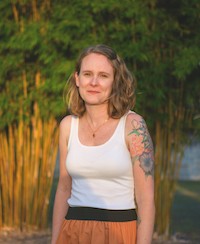
A Conversation with Laura E. Garrard

Lauren Davis in conversation with Laura E. Garrard,
author of Paddling the Sweet Spot Between Life and Death,
Finishing Line Press, 2026


Lauren Davis: Congratulations on the publication of your debut chapbook Paddling the Sweet Spot Between Life and Death (Finishing Line Press, 2026), which the poet Tess Gallagher has called “a true teaching of how to live daily on the shifting edge of our own mortality and that of those we love.” Truly, this is a book that looks impermanence straight on. Can you tell us a little bit about how this book came to be?

Laura E. Garrard: This book is an offspring of a full-length poetry memoir about my initial cancer experience (2020-23) interspersed with nature-focused poems. Poems appear in this book that were not part of the full-length narrative, some of them having been published. A number received repeated comments about how readers related to them, regardless if they had cancer or not. The book begins with the title poem “Paddling the Sweet Spot”—which addresses the fleeting balance of flowing smoothly in life’s waters (“the sweet spot not easy to maintain”) and, I think, the crux of a cancer experience (the balance of being responsible and accepting within the medical realm but also remaining hopeful and true to oneself). From here, the poems proceed according to my emotional progression.

Readers may notice how my thoughts about my own death evolve from shock, to grief, and to acceptance of it as a natural cycle alongside living, playing, and observing. The reader travels with the speaker through this arc of the book and her observations of and participation in nature. Living in the present, sharing grief with one another, and loving, are the speaker’s priorities as a living person who is also dying. We are all simultaneously living and dying, no matter how quickly or slowly death comes. Why fear what is inevitable and spend precious energy on worry? Notice how the barn swallows play as the sun sets, how feeding and nurturing the next generations consume them. Notice how salmon give themselves to death even as they lay and fertilize eggs. Are they focused on birth or death? Most likely birth.

Living in the present, sharing grief with one another, and loving, are the speaker’s priorities as a living person who is also dying.

LD: In your poem “Sailing in the Sunshine,” which explores the “sweet spot of flow called letting go” between will and acceptance, you mention “the peaceful present.” Could you speak to your process of letting go when writing poetry and publishing a book, and how the present moment informed that process?

LEG: Interesting questions. The incentives to submit poems for publication and to present a chapbook are two-fold. I have always desired to be published and share my writing, and I want to provide a voice on behalf of those who face similar challenges. These poems have been instrumental as I learned from indelible moments. I believe others may feel validated.

Launching my work into the public realm is a type of letting go. I had to let go of pride, self-protection, and some of my privacy. I thought long about how I might feel reading these poems to others in person and how others may respond. I tested the waters locally as a featured author for Olympic Peninsula Authors’ Open Mic and determined I could bring these messages without causing myself mental and emotional harm or breaking down while reading them. I found myself resilient and others very receptive. The poems aren’t all tearjerkers, mind you. Some are very uplifting and joyful, strong and irreverent. But I lived through these moments, and they challenged me.

Becoming published is service both to myself (sharing experiences and achieving a dream) and to others (offering my voice and circumstances for a shared identity). Opening myself up to rejection in the submission process requires present-mindedness. The focus needs to be on what comes, not on what doesn’t come. This process of patience isn’t easy, especially with such heartfelt material. Not taking things personally is a form of letting go. This is a lesson I aim to learn.

LD: Where did you find inspiration while compiling these poems? Did you turn to any specific authors or books?

LEG: Inspiration spilled from my cancer experience and the weight of a possible decreased lifespan. Nature and its beings speak to me as well, tell me to become present and turn off churning thoughts. I am living in the moment when I cast my gaze upward, climb into a tree, and seek the sublime, like the joyful antics of dolphins and barn swallows at play. I awoke in the middle of the night composing the poem about the life of a rock, “A Life Worth Remembering.” I wrote the entire poem within my mind before rising from bed and composing it again on the computer. I wrote “The Only Else There Is, the Breath” after crying on my shins on the cold brick, begging healing from God. When the tears dried, I came off the floor and began doing Qi Gong. This was a survival instinct to move past a moment of despair. I have lived these moments, and they seemed important to record.

I have lived these moments, and they seemed important to record.

The poetry muse lives within the poet artist, and I don’t always know how a poem came to me, just that it’s here—a thought, a recognition, a personal revelation. Poems seem to have their own lives that poets capture and hone. Poets don’t create in a vacuum, however. Certainly, my writing groups influenced my work, especially an ongoing workshop with poet Gary Copeland Lilley. This chapbook’s poems are flavored through my mentors from Centrum workshops as well. I have studied with Holly J. Hughes, Tess Gallagher, Alice Derry, Matthew Olzmann, CMarie Fuhrman, Claudia Castro Luna, and others. Their classroom reading selections influenced my work, no doubt, but I haven’t emulated a particular poet or style.

The title, “Homage to My Radiated Hip,” shouts out to Lucille Clifton, whose concise work and hard-hitting subjects I admire. Ultimately, though, I believe these poems are written in my unique voice, an upwelling from personal fear, loss, and relief.

LD: If you could leave your reader with one final thought or word, what would it be?

LEG:  I hope that readers reduce their fear in relation to dying and become inspired to stand against ableism, or discrimination against those with illness or disabilities. I did not share my work to receive responses of “how sad” but for potentially “how inspiring.” I’ve already been through these moments. I do not dwell on my death date, an unknown to all of us. I am not interested in sympathy. I am interested in others receiving validation through reading my collection, and to further understanding of the emotions that come with being diagnosed with a terminal or chronic disease and dealing with the stigmas of having cancer.

I did not share my work to receive responses of “how sad” but for potentially “how inspiring.”

When we share openly, we gain strength in our experiences rather than feeling alone in them. I would encourage readers to embrace trust within the unknown as best they can, and let that steer them rather than fear. This is not an aim toward perfection but a returning to, again and again. My wake-up call may serve others. When I reread this collection and my full-length book, I am reminded of the gift of raw uncertainty, the lack of security, which drives the ability to live in the present through heightened observation.
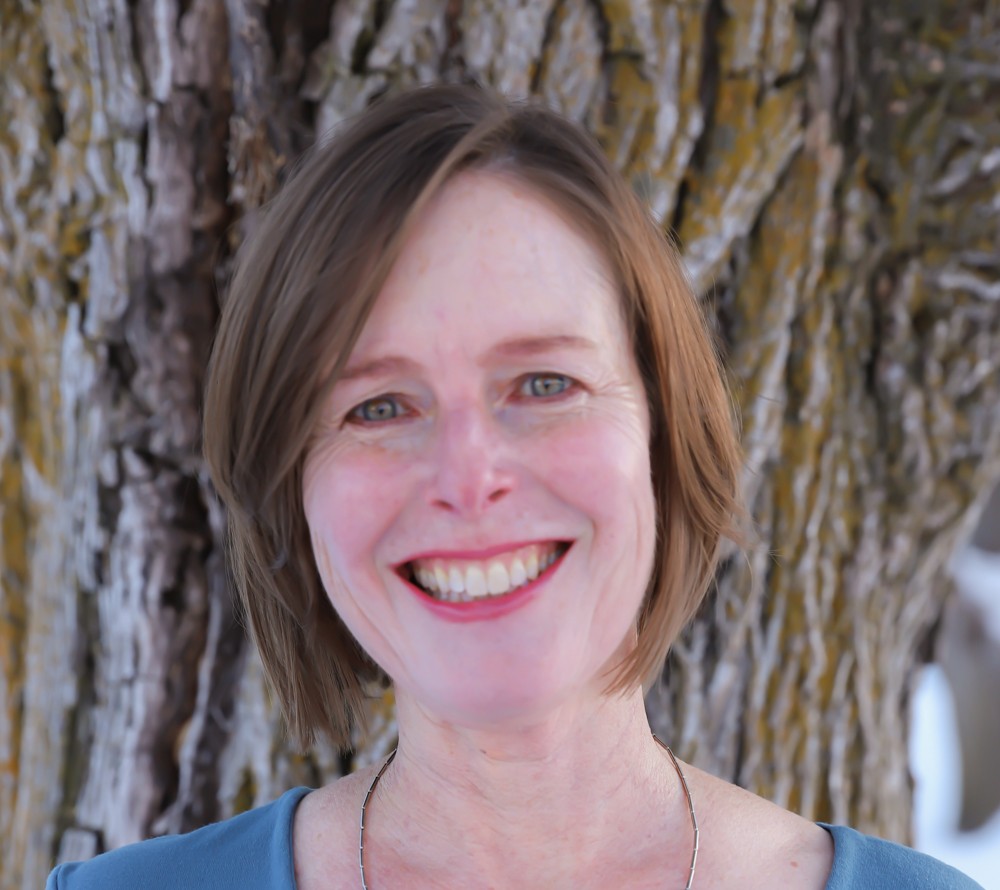

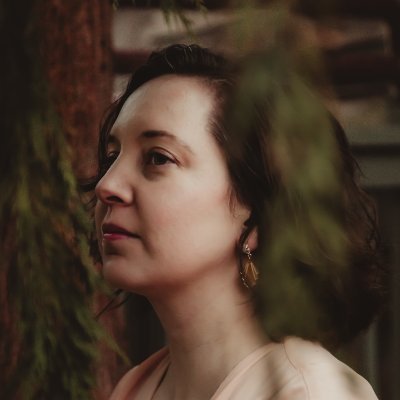
Laura E. Garrard is a CranioSacral Therapist on the Olympic Peninsula. Her poetry has appeared in journals such as Bellevue Literary Review, Amethyst, The Madrona Project, Silver Birch, and TulipTree Review. Her chapbook, Paddling the Sweet Spot Between Life and Death, is available through Finishing Line Press. Winner of the Merit Prize for the 2024 Stories That Need to be Told Contest with TulipTree Publishing, she has also been a finalist for the John and Eileen Allman Prize for Poetry. She writes a series, Poetry That Fits, on Penn Medicine’s OncoLink.org, and she holds a Master’s Degree in Journalism. Learn more at LauraEGarrard.com.
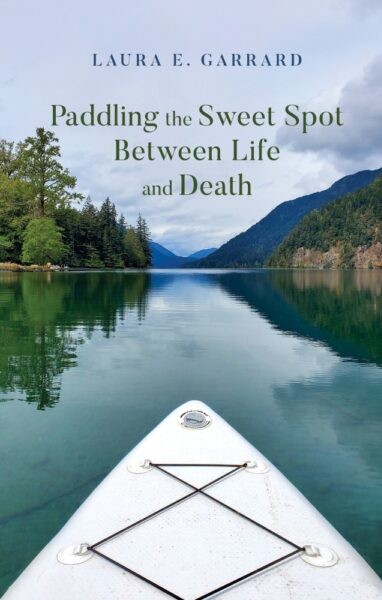
Paddling the Sweet Spot Between Life and Death by Laura E. Garrard
$15.99 Pre-order Price Guarantee until January 30, 2026
RESERVE YOUR COPY TODAY
This title will be released on March 27, 2026


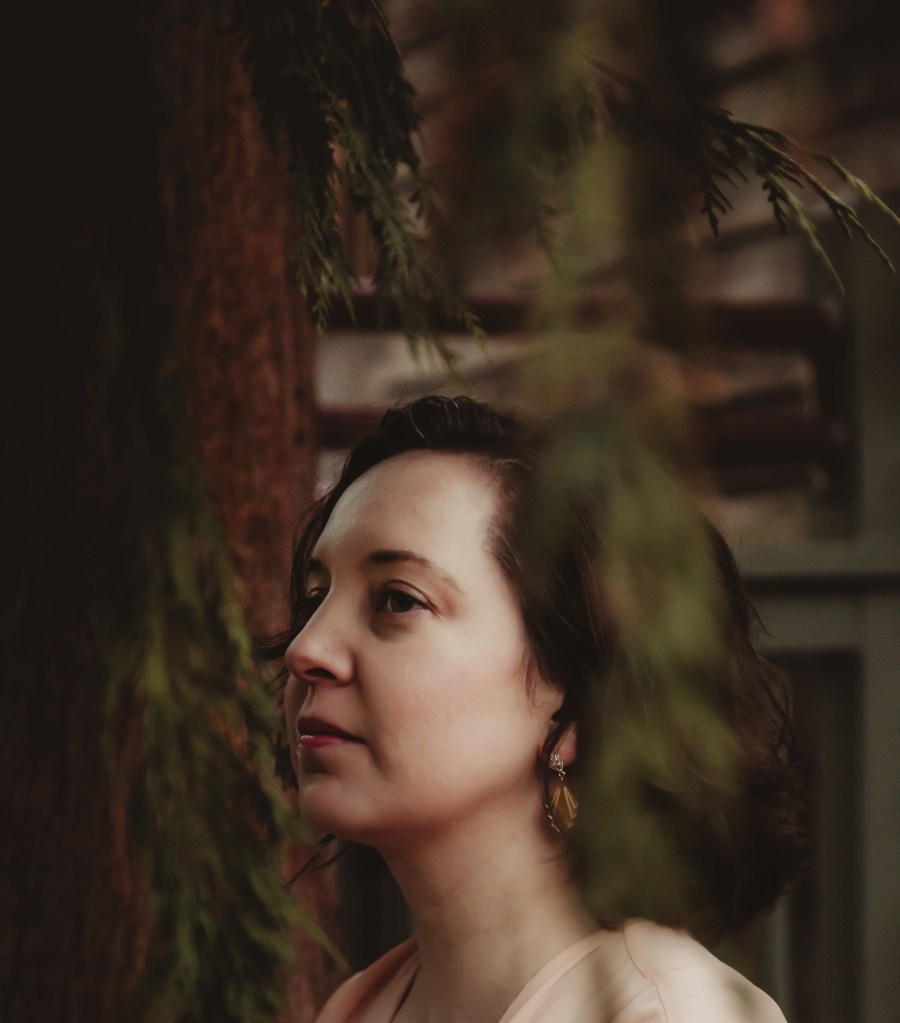
Lauren Davis is the author of The Nothing (YesYes Books), Home Beneath the Church (Fernwood Press), When I Drowned, and the chapbooks Each Wild Thing’s ConsentThe Missing Ones, and Sivvy. She holds an MFA from the Bennington College Writing Seminars.


Risa Denenberg is the curator at The Poetry Cafe Online.

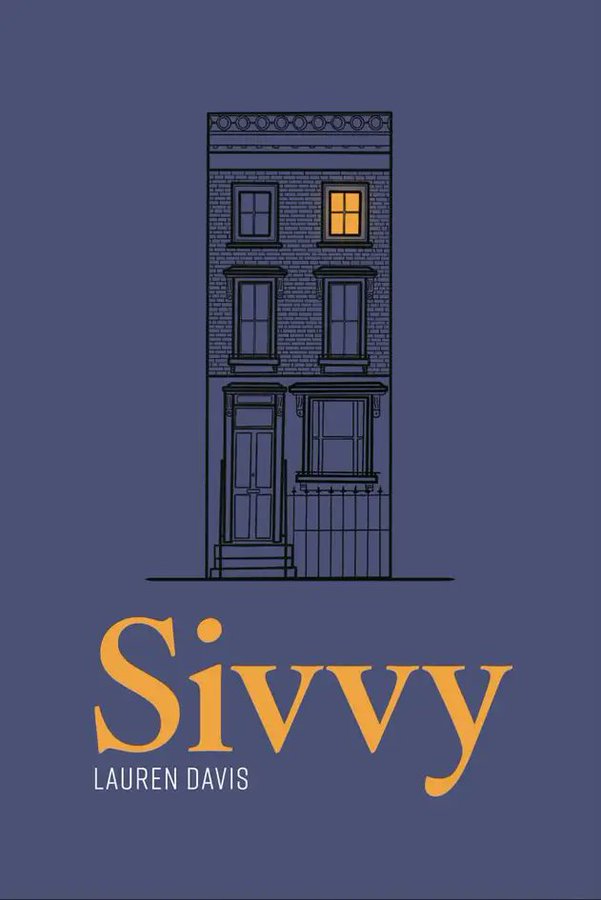
SIVVY

Sivvy, by Lauren Davis
Published by Whittle Micro-Press

Review by Risa Denenberg

In her newly released and vividly imagined chapbook, Sivvy, Lauren Davis interrogates Sylvia Plath’s state of mind in the days leading up to her death by suicide in 1963 (with footnotes to 1940 and 1956) by distilling letters she wrote into anagrams of her deepest feelings through erasures. In her note on the text Davis says, “These are erasures of the letters of Sylvia Plath” to which “I have not altered her word order.” Her sources are the two volumes of “The Letters of Sylvia Plath,” published posthumously in 2017 and 2018. This small volume is that rare combination of both the scholarly and the dazzlingly innovative.

Sylvia Plath is and will continue to be a touchstone for so many. I entered her work, and her inescapable and tragic life story as a poet and feminist, but also as a mother. In my case, as a mother who lost custody of her son when he was six. Naturally, I’ve always viewed Plath’s work as a poet who was also a mother.

In fact, Plath has a lot to say about being a being a mother, in both poems and prose. In her poem, “Morning Song,” she describes her newborn as a “fat gold watch” while comparing herself to a biologic function.

One cry, and I stumble from bed, cow-heavy and floral
In my Victorian nightgown.
Your mouth opens clean as a cat’s.
–from “Morning Song” Sylvia Plath

This image is echoed in a letter dated February 4, 1964 in Davis’s Sivvy: “The upheaval—I see the finality, / From cowlike happiness into loneliness.” Could I help thinking of how new mothers so often feel abjectly alone following childbirth?

Another of Plath’s poems points to a newly post-partum mother’s dilemma at the moment of accepting or renouncing responsibility for another human being.

I wasn’t ready. The white clouds rearing
Aside were dragging me in four directions.
I wasn’t ready.
I had no reverence.
I thought I could deny the consequence–
But it was too late for that. It was too late, and the face
Went on shaping itself with love, as if I was ready.
from “Three Women,” Sylvia Plath

In her auto-fictional novel, The Bell Jar, Plath describes a college-aged girl who makes a suicide attempt. The protagonist recognizes that her ambitions and dreams will be constrained by the cultural expectations that always seem to privilege marriage and motherhood over career and creativity. There is still strong societal pressure on women to have children, despite the lack of support for raising them or the cost to a woman’s personal goals for herself.

“I saw my life branching out before me like the green fig-tree in the story. From the tip of every branch, like a fat purple fig, a wonderful future beckoned and winked. One fig was a husband and a happy home and children, and another fig was a famous poet and another fig was a brilliant professor. … I saw myself sitting in the crotch of this fig-tree, starving to death, just because I couldn’t make up my mind which of the figs I would choose. I wanted each and every one of them, but choosing one meant losing all the rest.” –-The Bell Jar, Sylvia Plath

Having to choose—or more often, having no choice—between raising children and having a fulfilling career is a quandary faced by many women. Was Plath uncertain if she wanted children at all, knowing it would be at the cost of her writing life? It might seem unfair to question her motives or desires; but such questioning is quite familiar to women, if not always voiced. It seems clear, however, that being a single mother with two young children was an enormous challenge for her. For me, this broadens the too-easy interpretation that Plath committed suicide due to mental illness.

In a letter dated, February 4, 1963, Davis allows Plath (whose death occurred seven days later) to give a nod to her earlier suicide attempt (“I fought my way back—”) in a conflagration of language that perfectly reflects the undoing of Plath’s enormously rich inner life.

I fought my way back—
I wanted to get it over with—God is a wish—
maybe—I would go—I have been alone
I need a tonic—I am dying.

I’m using my entry point into Plath’s work, as well as my entry point into Davis’ Sivvy, to acknowledge how thoroughly and intimately Plath enters the imagination of her readers. One of many ways that Davis expands my way of knowing Plath is how entirely in love she was with Ted Hughes from the beginning (“I can’t be with people // that aren’t you.” … “I don’t want to eat until I taste / your mouth again.” Dated October 1, 1956) to the end (“My husband— // he is beautiful. / The whole world // now has him.” Dated January 22, 1963).

I highly recommend this book to you, reader, that you may enter Plath again and anew.


Lauren Davis is the author of the forthcoming short story collection The Nothing (YesYes Books), the poetry collection Home Beneath the Church (Fernwood Press), the Eric Hoffer Grand Prize short-listed When I Drowned (Kelsay Books), and the chapbooks Each Wild Thing’s Consent (Poetry Wolf Press), The Missing Ones (Winter Texts), and Sivvy (Whittle Micro-Press). She holds an MFA from the Bennington College Writing Seminars. She is a former Editor in Residence at The Puritan’s Town Crier, and she is the winner of the Landing Zone Magazine’s Flash Fiction Contest. Her stories, essays, poetry, interviews, and reviews have appeared in numerous literary publications and anthologies including Prairie SchoonerSpillwayPoet LoreIbbetson Street, Ninth Letter and elsewhere. Davis lives with her husband and two black cats on the Olympic Peninsula in a Victorian seaport community.

Sivvy by Lauren Davis
Published June 2024
PDF Micro-chapbook

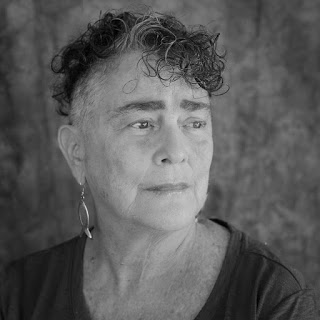
Risa Denenberg lives on the Olympic peninsula in Washington state where she works as a nurse practitioner. She is a co-founder of Headmistress Press and curator at The Poetry Café Online. She has published eight collections of poetry, most recently, Rain/Dweller (MoonPath Press, 2023). She is currently working on a memoir-in-progress: Mother, Interrupted.


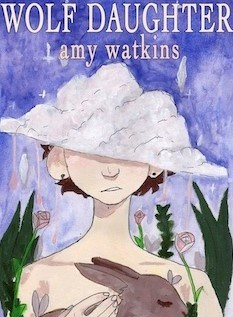
Wolf Daughter

Wolf Daughter, by Amy Watkins

Review by Lauren Davis

Pink roses reach up and around the unclothed body of a girl, her eyes hidden by a thick, tilted cloud. The hare she holds has closed its eyes. It’s a striking image for Wolf Daughter, the latest chapbook by Amy Watkins, and fittingly, the illustrator is Watkins’ daughter, Alice Copeland. The alluring, muted colors may lead you to believe you are entering a realm where young women lack necessary rage. Think again.

The dedication, “for Alice,” is a whisper, and the book is a battle cry. These eighteen poems, neatly numbered, are nothing less than a mother’s love made palatable and exposed for the reader.

The chapbook opens with, “My daughter says, ‘I don’t remember how / not to be a wolf.’” And here we are immediately thrown into the raw extended metaphor where girls grow fangs. The clash of mother/daughter, of animal/social creature, of child becoming an adolescent—this clash tangles throughout lines grounded again and again in the material world of malls and school dances. As a reader, I am brought back to my own struggle as a young girl, when I felt primal and weak and full of an anger I could not name. When the speaker says, “‘I think it’s hard being alive in this world’” there is no explanation needed. I receive the wisdom when Watkins writes, that if all else fails, “Find a mind for violence.”

Watkins is no stranger to the concentrated energy a chapbook creates. Her two previous chapbooks have found publication at the presses Bottlecap Press and Yellow Flag. She has also lectured at Full Sail University on creating and publishing chapbooks. Wolf Daughter proves the ability of a chapbook to construct an entire world. Watkins has distilled and expanded her subject matter simultaneously. We are never lost in her hands.

Wolf Daughter does not apologize for its animal nature. Instead, it ends with, “She comes and goes with such confidence. / Even her long teeth gleam.” Which is what we need—a society where girls can wear their rage proudly, openly. Watkins has given voice to the young girls’ war song. May it be heeded.

Wolf Daughter by Amy Watkins
Copyright: 2019
ISBN: 978-1-939675-96-5  
Published by: Sundress Publications
Cost: Free
Pages: 23
Available: http://www.sundresspublications.com/wolfdaughter.pdf

Amy Watkins is the author of three poetry chapbooks (Milk & WaterLucky, and Wolf Daughter), a graduate of the Spalding University MFA in Writing, and a parent of a human girl. Find her online at RedLionSq.com or @amykwatkins on Twitter. She lives in Orlando, Florida.

Risa Denenberg is the curator at The Poetry Cafe.
She is a co-founder and editor at Headmistress Press and has published three full length collections of poetry, most recently,
 slight faith (MoonPath Press, 2018).