

Load-Bearing Walls, by Linda B. Myers
Published by Finishing Line Press, 2026
Semi-finalist, 2025 Finishing Line Press Open Chapbook Contest
Review by Laura E. Garrard
Linda B. Myers is among the poets in my Port Angeles, Washington circle. Still, we were surprised to learn that we both had entered Finishing Line Press’ 2025 Open Chapbook Competition and were offered contracts. Since then, we’ve learned more about one another, though, honestly, I had appreciated her debut poetry collection, Load-Bearing Walls, before I learned that she is as candid and clever as her poetry. The author of ten novels now gifts readers with this moving, hard-hitting chapbook.
Myers dedicates her book to the “load-bearing walls [that] support one another” but told viewers (during an interview filmed in December 2025), that these supports “may not be the best for you.” This points to the type of stories that show up in this collection of well-crafted, achingly honest poems. The first lines of the title poem read “Consider my starting point: / Body beached wreckage, knee bent as driftwood.”
In Load-Bearing Walls, Myers describes the challenges of caretaking, dealing with dying friends and spouse, bodily and mental disease, environmental fire catastrophes, and aging. Myers uses humor, ire, and wit to breathe into grief. She also includes narratives from earlier times. The poems are free verse except for one stunning, coming-of-age pantoum, titled, “Autumn of ’63,” in which she seamlessly intertwines Kennedy’s assassination with the “innocence that died that day on a grassy knoll.” A young feminist-in-the-making appears in a childhood story about cowboy films in “Saddle Up”; and camaraderie leaning toward “seduction” with a male colleague, shows up in “Rainmakers.”
When I interviewed Myers, I learned that she’d led a successful advertising and marketing career during the Madman era, a time when women more often became teachers or secretaries. This experience appears in “Rainmakers,” a poem with stanzas headed with slogans, such as “Business sense is real.” She writes, “Like traveling preachers we led them to the promised land, / the heights of business class where they so longed to belong.” A physical line isn’t crossed on business trips, but readers feel the tension between the two characters in this line, “Skin electric to each other’s gesture . . .”
Myers’ work speaks to those who’ve been traumatized like myself (I have been dealing with a chronic blood cancer) by affirming that we aren’t alone and using eloquent language, images, and descriptions to do so. I wanted to sit beside “Watermelon Girl” on the concrete and cry with her when, exhausted from caretaking, she opens her car hatch only for a watermelon to roll onto the driveway and split open. In this poem, Meyers writes, “I’m too hot, too tired till crows scold me to move.” Yet, “the storm passes” and she eats the center of the melon with her hands, “sticky juice drizzling down my chin, / consuming the heart like a hunter.” I found Watermelon Girl’s strength to carry on inspiring: “Wiping my fingers on my cotton shirt I bend, / lift the grocery bags and climb the stairs.”
Myers’ collection includes a series of elegies with endearing descriptions such as Barry’s “XL essence” in the poem “Phone Ghost.” Myers further writes,
He was immense
cedar strong
a bellow of laughter
his chosen song.
One of my favorite poems in the book, “21,000 Days,” reflects on the passing of Myers’ mother. In the poem, the narrator visits her mother’s coffin containing the departed’s daily dairies, which speak to her: “She breathes her memories into my heart.” In an action of self-grace, the narrator decides to remove the twelve dairies and “carry her history home,” by saving words that should not “be buried alive, these words that outlast writers.”
Myers elegizes her husband in several poems. A startling confession in the short poem, “Bedtime,” is “If you should die before I wake, / I will not pray for you.” In “An Unkindness of Words,” she offers a rebuttal after the death. To his words, “I don’t love you anymore,” the caretaker retorts, “I am crazed as an old enamel vase laced with blue veins, / but the vessel and I both still hold water.” Finally, the poet tenderly memorializes her husband with the release of his ashes in “Peninsula Currents”:
He dances invisibly in the fiber of this nurturing land.
He’ll not leave nor will I
a place with greater sense of found than lost.
Collectively, these poems show how our support for one another is the most important source of love that we can rely on in a world that is “caging brown babies” (in, “Load-Bearing Walls”). Frustration is evident in the lines, “I shake my arthritic fist until even I / am tired of me.” The poem poses that a “way to someplace new” might be a “Sanctuary for old women” who “listen, / take strength from those overcoming damage.”
Whether found riding on the back of a scooter in Hawaii or attending jury duty in a small town in Washington, the stories in Load-Bearing Walls, light “campfires,” that show how the “rise” of the “thing with feathers … hasn’t flown from us yet.”
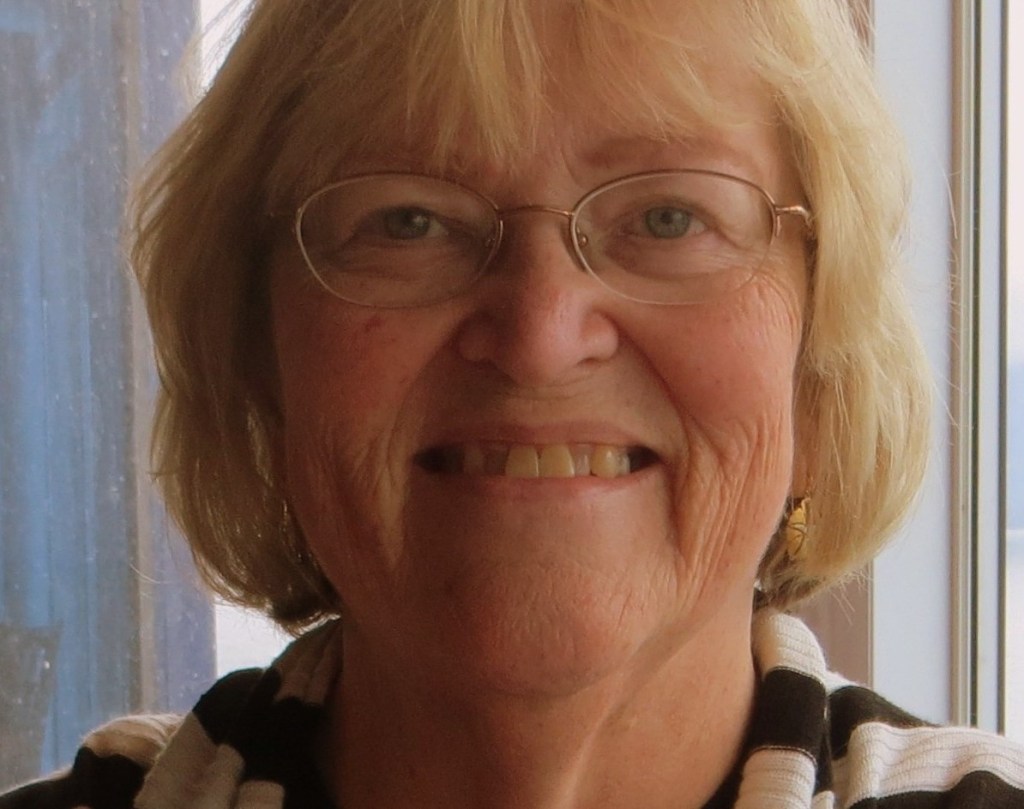
Linda B. Myers traded snow boots for rain boots and moved from a marketing career in Chicago to Washington’s Olympic Peninsula where she is now part of the Old Growth. She has Indy published ten novels, writes a monthly op/ed piece for the Sequim Gazette, and is a co-founder of Olympic Peninsula Authors, a group devoted to promoting the many fine authors out here in the wild. Load-Bearing Walls from Finishing Line Press is her first poetry chapbook. Her poetry has also appeared in Cirque Literary Journal of the Pacific North Rim, Poetry Breakfast, Unleash Lit, Empty Bowl’s Madrona Series, and several other anthologies. Reach her at: LindaBMyers.com. Photo credit: Donna Whichell
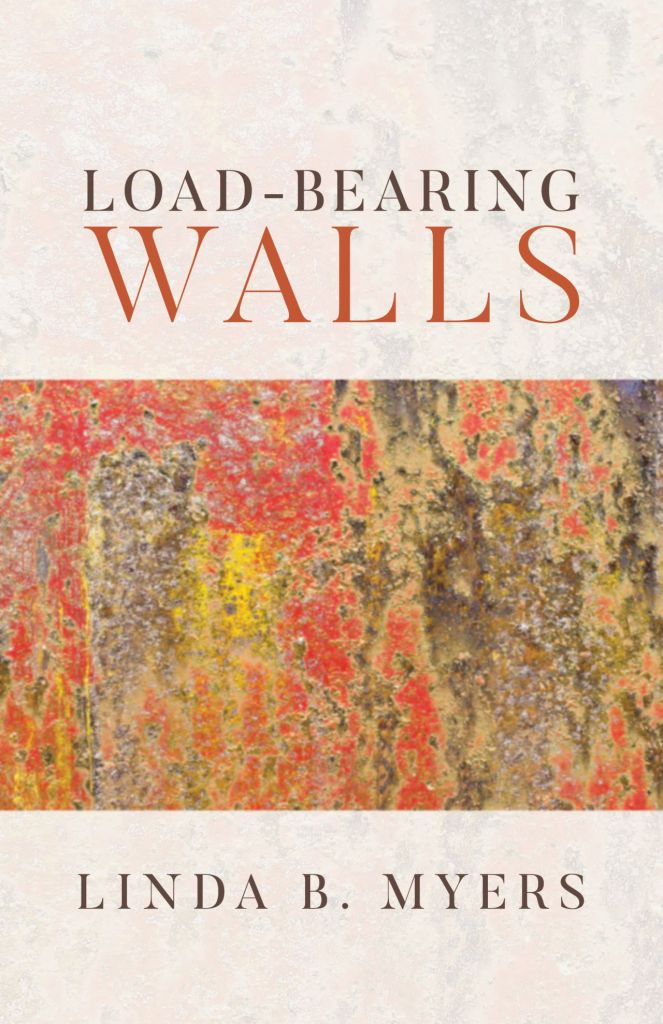
Load Bearing Walls, by Linda B. Myers
Publisher: Finishing Line Press
38 pp., $17.99
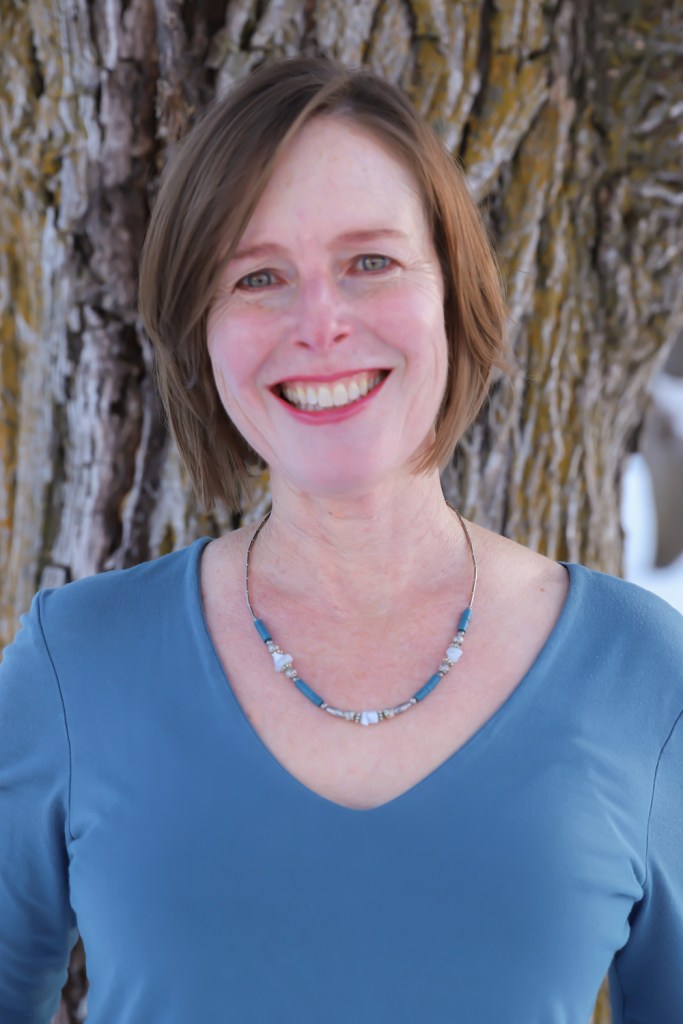
Laura E. Garrard is a CranioSacral Therapist on the Olympic Peninsula. Her poetry has appeared in journals such as Bellevue Literary Review, Amethyst, The Madrona Project, Silver Birch, and Pangryus. Her chapbook, Paddling the Sweet Spot Between Life and Death, is available through Finishing Line Press. Winner of the Merit Prize for the 2024 Stories That Need to be Told Contest and Pushcart Prize nominee with TulipTree Publishing, she has also been a finalist for the John and Eileen Allman Prize for Poetry. She’s written a series, Poetry That Fits, on Penn Medicine’s OncoLink.org and holds a master’s degree in journalism. Reach her at: LauraEGarrard.com Photo credit: Amy Collett
Note: See also “A Conversation with Laura E. Garrard,”
Lauren Davis in conversation with Laura E. Garrard, author of Paddling the Sweet Spot Between Life and Death, Finishing Line Press, 2026
Risa Denenberg is the curator at The Poetry Cafe Online.

