Qasida for When I Became a Woman

Qasida for When I Became a Woman, by Huma Sheikh

Published by Finishing Line Press, 2026
Reviewed by Kubra Nazir

Our Homeland, Kashmir, has a peculiarity about silences. Tales and tragedies rarely culminate there; they return in memories, in flashbacks, in whispers. Among those screaming silences, I once heard the story that lies at the heart of Huma Sheikh’s life, the loss of her father, the tragedy that shaped her becoming. While I was reading Qasida for When I Became a Woman, it felt like stepping into a realm where long-kept silences resurrected as an elegy of endurance. The poems, like a phoenix, emerge from the crevices of memory, transforming grief into poetry and memory into resistance.

As a fellow Kashmiri, I understood how she carried that ache all these years— an ache of a homeland that teaches its daughters to speak through absence. She doesn’t mourn alone, rather she crafts word by word what the past tried to blanket. Qasida, a classical Arabic poetic form of praise or elegy, has been turned into an instrument of invocation here, an unburdening where womanhood emerges through memory and silence.

The title of the poetry collection suggests a transformation of what it means to be a woman, and a reclamation against the silencing of women’s voices. It shows what it truly means to inherit both language and silence.

Each line is layered with so much depth and feels like a threshold between the personal and the collective. It reminded me of how writing poetry becomes the very act of witness not only of suffering but of survival. In the poem, “For Kashmiris, war an everyday meal,” she writes,

How to rebuild
a sense of refuge when hope beans spill and death blooms
for the kin of the slain, memories of dear ones, the
endless crackle of a flesh storm?

In Sheikh’s hands, the Qasida becomes an instrument of dialogue between what was taken and what refuses to be silenced. Throughout the poems, she goes back and forth to that memory of her father that changed the entire course of her life. She remembers her father, not as a figure lost to time but as a presence that still inhabits her silences. Her father, a renowned singer of Kashmir, somehow lives in the cadence of her lines as she pays tribute to him and his memories, echoing his songs through the collection like refrains. In the poem, “Qasida for a woman on a train,” she writes,

A Brooklyn subway’s screech like Father’s last Ghazal
Kam yaar sapidh khwaab jammed into a cassette
recorder.

Throughout the poetry collection, the past peeks into the present, drifting between temporal planes; moments of childhood arise in her present voice, showing how a woman’s silence is the loudest cry. The inheritance of silence is portrayed as imagery that fuses the domestic with the divine. Sheikh’s silence becomes a prayer; her body becomes a landscape of remembrance. Each line is an instrument of reclamation, showing the way for women to respond. Every word feels earned and every pause deliberate.

As I read through the poems, I could sense a quiet ache in the depths of each line. Her poems are a reminder of how survival sometimes lives quietly in long-kept silences. These poems are more of a collective elegy, a shared act of remembrance, where one woman is speaking on behalf of a those who are still in the journey to find a voice.

In this quiet act of gathering sorrows of many, the solitary transforms into a wound others can feel too. A gathering of voices of those who have endured, remembered, and kept speaking even when the world turned away.
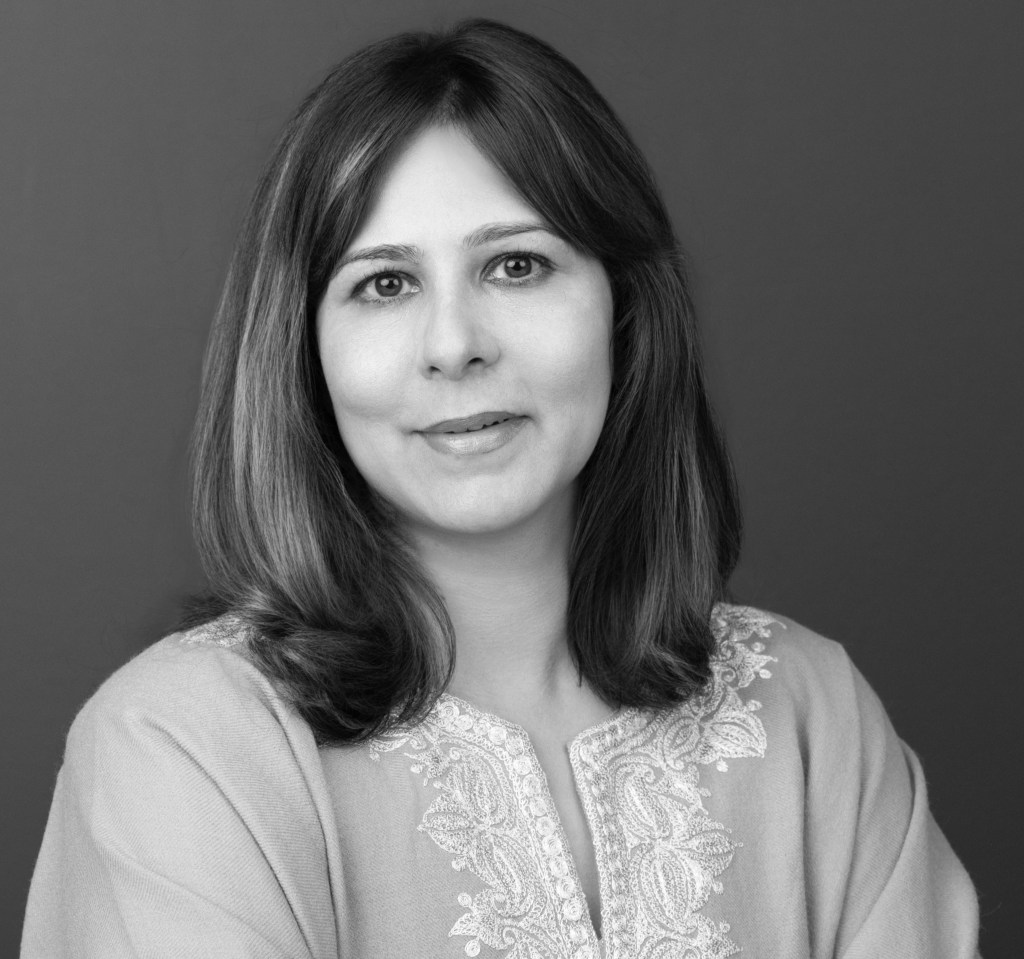

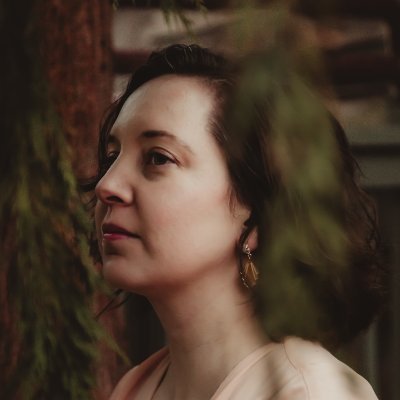
Huma Sheikh is an author, poet, and scholar. Drawing from her Kashmiri roots, her work blends personal narrative with political history. Her writing has appeared in Kenyon Review, The Journal, Consequence Magazine, Cincinnati Review, and Prism International, among others. A finalist for multiple literary prizes, she holds a PhD in English (Creative Nonfiction) and teaches writing at George Mason University. Her poetry chapbook, Qasida for When I Became a Woman, was a finalist for the New Women’s Voices Chapbook Competition (Finishing Line Press) and shortlisted for the Own Voices Chapbook Prize by Radix Media.
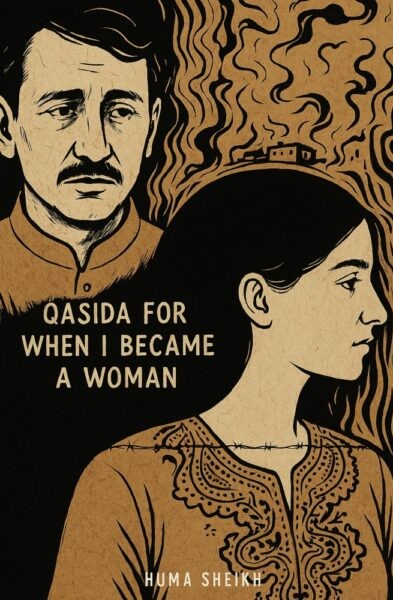
Qasida for When I Became a Woman, by Huma Sheikh
Forthcoming from Finishing Line press in January 2026

Price: $17.99


Kubra Nazir, a seeker of stories, has completed her Bachelor’s and Master’s in English Language and Literature from Kashmir University. Her work across corporate and teaching spaces has enriched the clarity with which she reads and writes. She has taught English Literature at the postgraduate level and contributed to research and editorial projects. In addition, leading a team of creative writers, gave her the fulfilling experience of guiding a diverse group of writers from across the world. Rooted in Kashmir and deeply in love with writing, she dreams of crafting a book someday—one that carries her voice, her memories, and the stories that have shaped her.


Risa Denenberg is the curator at The Poetry Cafe Online.

SIVVY

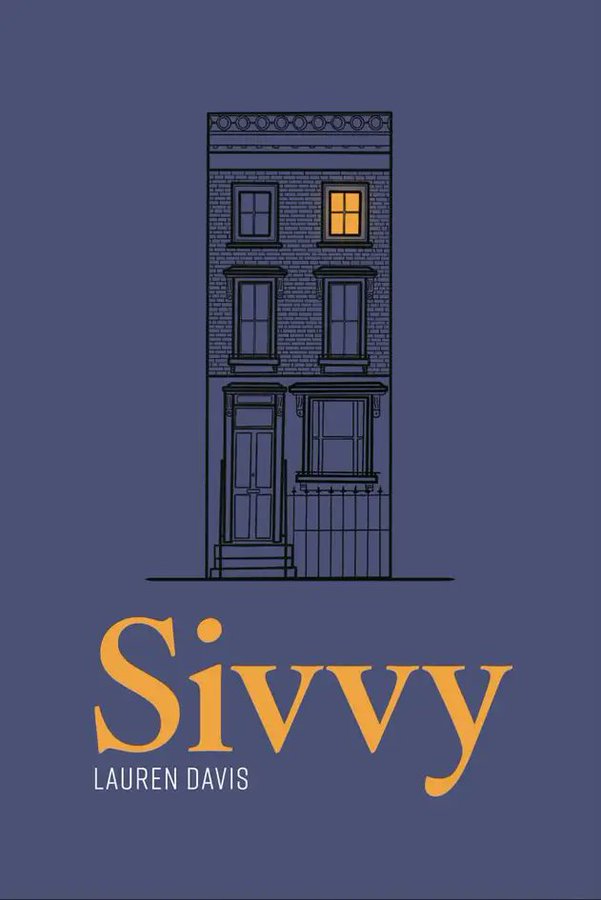
Sivvy, by Lauren Davis
Published by Whittle Micro-Press

Review by Risa Denenberg

In her newly released and vividly imagined chapbook, Sivvy, Lauren Davis interrogates Sylvia Plath’s state of mind in the days leading up to her death by suicide in 1963 (with footnotes to 1940 and 1956) by distilling letters she wrote into anagrams of her deepest feelings through erasures. In her note on the text Davis says, “These are erasures of the letters of Sylvia Plath” to which “I have not altered her word order.” Her sources are the two volumes of “The Letters of Sylvia Plath,” published posthumously in 2017 and 2018. This small volume is that rare combination of both the scholarly and the dazzlingly innovative.

Sylvia Plath is and will continue to be a touchstone for so many. I entered her work, and her inescapable and tragic life story as a poet and feminist, but also as a mother. In my case, as a mother who lost custody of her son when he was six. Naturally, I’ve always viewed Plath’s work as a poet who was also a mother.

In fact, Plath has a lot to say about being a being a mother, in both poems and prose. In her poem, “Morning Song,” she describes her newborn as a “fat gold watch” while comparing herself to a biologic function.

One cry, and I stumble from bed, cow-heavy and floral
In my Victorian nightgown.
Your mouth opens clean as a cat’s.
–from “Morning Song” Sylvia Plath

This image is echoed in a letter dated February 4, 1964 in Davis’s Sivvy: “The upheaval—I see the finality, / From cowlike happiness into loneliness.” Could I help thinking of how new mothers so often feel abjectly alone following childbirth?

Another of Plath’s poems points to a newly post-partum mother’s dilemma at the moment of accepting or renouncing responsibility for another human being.

I wasn’t ready. The white clouds rearing
Aside were dragging me in four directions.
I wasn’t ready.
I had no reverence.
I thought I could deny the consequence–
But it was too late for that. It was too late, and the face
Went on shaping itself with love, as if I was ready.
from “Three Women,” Sylvia Plath

In her auto-fictional novel, The Bell Jar, Plath describes a college-aged girl who makes a suicide attempt. The protagonist recognizes that her ambitions and dreams will be constrained by the cultural expectations that always seem to privilege marriage and motherhood over career and creativity. There is still strong societal pressure on women to have children, despite the lack of support for raising them or the cost to a woman’s personal goals for herself.

“I saw my life branching out before me like the green fig-tree in the story. From the tip of every branch, like a fat purple fig, a wonderful future beckoned and winked. One fig was a husband and a happy home and children, and another fig was a famous poet and another fig was a brilliant professor. … I saw myself sitting in the crotch of this fig-tree, starving to death, just because I couldn’t make up my mind which of the figs I would choose. I wanted each and every one of them, but choosing one meant losing all the rest.” –-The Bell Jar, Sylvia Plath

Having to choose—or more often, having no choice—between raising children and having a fulfilling career is a quandary faced by many women. Was Plath uncertain if she wanted children at all, knowing it would be at the cost of her writing life? It might seem unfair to question her motives or desires; but such questioning is quite familiar to women, if not always voiced. It seems clear, however, that being a single mother with two young children was an enormous challenge for her. For me, this broadens the too-easy interpretation that Plath committed suicide due to mental illness.

In a letter dated, February 4, 1963, Davis allows Plath (whose death occurred seven days later) to give a nod to her earlier suicide attempt (“I fought my way back—”) in a conflagration of language that perfectly reflects the undoing of Plath’s enormously rich inner life.

I fought my way back—
I wanted to get it over with—God is a wish—
maybe—I would go—I have been alone
I need a tonic—I am dying.

I’m using my entry point into Plath’s work, as well as my entry point into Davis’ Sivvy, to acknowledge how thoroughly and intimately Plath enters the imagination of her readers. One of many ways that Davis expands my way of knowing Plath is how entirely in love she was with Ted Hughes from the beginning (“I can’t be with people // that aren’t you.” … “I don’t want to eat until I taste / your mouth again.” Dated October 1, 1956) to the end (“My husband— // he is beautiful. / The whole world // now has him.” Dated January 22, 1963).

I highly recommend this book to you, reader, that you may enter Plath again and anew.


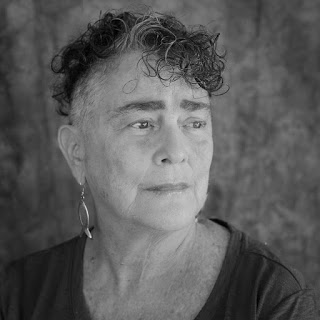
Lauren Davis is the author of the forthcoming short story collection The Nothing (YesYes Books), the poetry collection Home Beneath the Church (Fernwood Press), the Eric Hoffer Grand Prize short-listed When I Drowned (Kelsay Books), and the chapbooks Each Wild Thing’s Consent (Poetry Wolf Press), The Missing Ones (Winter Texts), and Sivvy (Whittle Micro-Press). She holds an MFA from the Bennington College Writing Seminars. She is a former Editor in Residence at The Puritan’s Town Crier, and she is the winner of the Landing Zone Magazine’s Flash Fiction Contest. Her stories, essays, poetry, interviews, and reviews have appeared in numerous literary publications and anthologies including Prairie SchoonerSpillwayPoet LoreIbbetson Street, Ninth Letter and elsewhere. Davis lives with her husband and two black cats on the Olympic Peninsula in a Victorian seaport community.

Sivvy by Lauren Davis
Published June 2024
PDF Micro-chapbook

Risa Denenberg lives on the Olympic peninsula in Washington state where she works as a nurse practitioner. She is a co-founder of Headmistress Press and curator at The Poetry Café Online. She has published eight collections of poetry, most recently, Rain/Dweller (MoonPath Press, 2023). She is currently working on a memoir-in-progress: Mother, Interrupted.