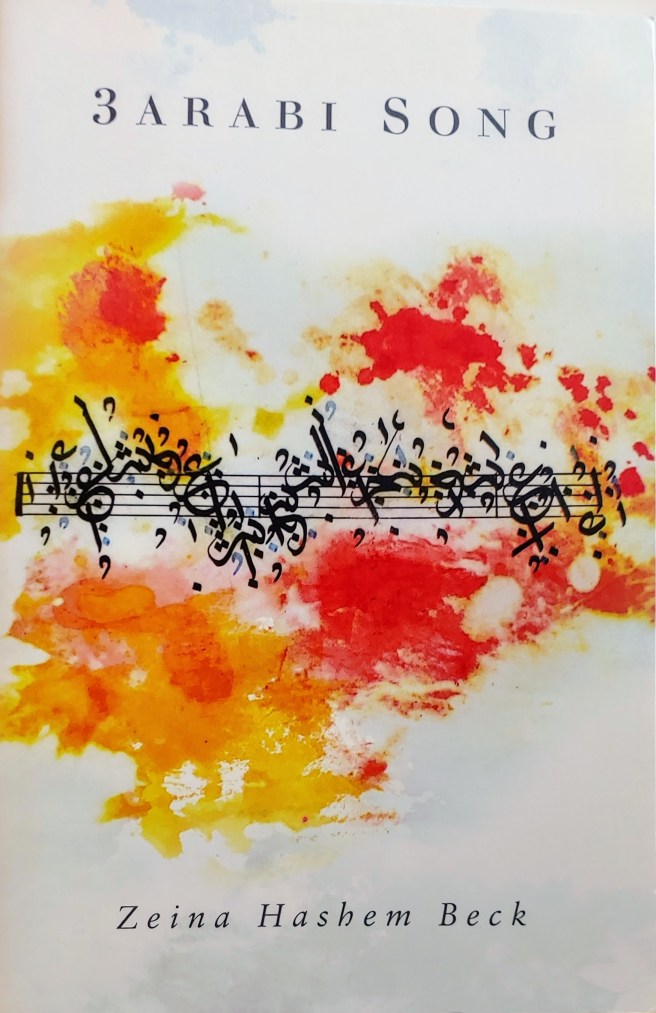
3arabi Song

3arabi Song by Zeina Hashem Beck


Review and Interview
by Issam Zineh

Zeina Hashem Beck’s 3arabi Song is a collection of 17 poems of deep intimacy.  The individual poems come together as an exploration of grief and joy.  There is a tremendous sense of place and our relationship to it: longing, homecoming, comfort, exile, return.  There is a specific version of discovery in this work.  It is not quite sudden revelation.  It is more closely what song often reveals as completely understood truth, if not yet articulated until that exact moment of utterance. 

The collection opens with “You Fixed It,” a kind of ode that introduces key themes which appear throughout the remainder of the book.  These issues—familial intimacy; private and collective sorrow; a distinct and simultaneously equivocal sense of identity (for example, in terms of relationship to one’s country); a very particular kind of steadfastness; the power of music to sustain (and subvert)—are only some of the vast richness that gets treatment throughout this engaging book. 

These ideas are quietly but fully on display as the poem lists the ways in which the unnamed “you” overcomes the most existential of difficulties (often disguised as the domestic and the mundane).  It is no accident that the first challenge is fundamentally one of orientation:

And if the compass broke you fixed it, fastened
the pencil to it with a rubber band

The struggles of daily living accrue, and it is in the how of this accumulation where Hashem Beck’s genius lies—the musical coexistence of beauty and struggle brought to bear on the page (and through the spoken word).  The poem’s ending is the point of departure for everything that comes in later poems:

and if your sorrow hardened you fixed it
by dipping it in sea water, and if your country
hardened, if your country hardened you fixed it by dipping it in song.

3arabi Song not only rewards through its language and imagery, but in its poetic forms.  The collection’s five ghazals skillfully contend with ancestry and remembrance (“Ghazal: The Dead”), displacement (“Ghazal: This Hijra,” “Ghazal: Back Home”), and personal and national identity (“This Country: Ghazal for Abdel Halim Hafez,” “Ghazal: Samira Tawfiq Sings a Love Poem”).  Hashem Beck beautifully memorializes the renowned Arabic singer and actress Sabah (“…Not mourning with a ‘u’.” Yes, the thing that shines.”) in “Pantoum for Sabbouha,” one of several poems in which she pays tribute to divas of the Arab world, including Fairuz, Umm Kulthum, and others:

I imitated the walk, the hands
back then, the way she dared to say batata.
‘I had no fear of age, of death,’
she could’ve said in an interview, ‘No fear of men.’

3arabi Song is enhanced by, but not beholden to, the traditional forms.  Perhaps two of the most interesting poems in the collection in terms of both content and structure are “Listen” and “Naming Things.”  In “Listen,” we find ourselves part of a family dealing in real-time with the possibility their son and brother has been killed by an explosion at the local mosque.  The imagery is stunning:

It explodes,
the mosque, this Friday,
the laundry, the domes of
boys’ arms, the sumac … The Chiclets in the street.

… The sea, still. The children, the figs almost bursting.

Additionally, the power of the poem generates in no small part from its form.  Centered on the page, the poem’s two sections appear as two hourglasses stacked upon one another, each mirroring the other, each section narrowing to a point and expanding again.  The composition excellently serves as visual metaphor for the pinpoint focus that can occur during the instant of tragedy, while symbolizing the disintegration of time and the vacillation and alternative realities we create during times of trauma to avoid acceptance.

In “Naming Things (for refugees, September 2015),” Hashem Beck deals with the issue of our times, the “our” being at minimum the global diaspora, a population that continues to grow predominantly due to ravages of endless war and the climate crisis.  Formally, this long poem centered on the refugee crisis connects its stanzas through repetition.  Lyrical power and drama are amplified by this approach (below are the first and last lines of the initial stanzas):

Angels—
we saw them on the railway,

[. . .] on their wings.


Wings—

[. . .] about our cat


Cats—

[ . . .] refuge refuse bins

Country—

It also uses English, written Arabic, transliterated Arabic, and “Arabizi”, which reinforces the inextricable relationship between the multiple cultures and sensibilities in these poems:

My hips—
are heavy
are child-bearing
child-killing
are lover
do not fit those
train windows
these fences
this escape this

Ra7eel
so much in my 3arabi depends
on ra7eel on

3awda
a5 ya baba

And while not radically experimental in form, “Naming Things” is innovative in how it brings together formal elements and languages to create an unrelenting litany of harmony and disruption that undergirds the subject matter. 

As I read and re-read 3arabi Song, I found it to be so many things simultaneously.  I wondered about the collection’s origin story, its idiosyncrasies, its original reception, and its relevance several years after publication.  I had a chance to sit down with Zeina Hashem Beck virtually to exchange on some of these questions.

Please click here to read the conversation between Zeina Hashem Beck and Issam Zineh . . .

Title: 3Arabi Song
Author: Zeina Hashem Beck
2016 Rattle Chapbook Prize Winner
Cover art by Yazan Hallwani
ISBN: 978-1-931307-30-
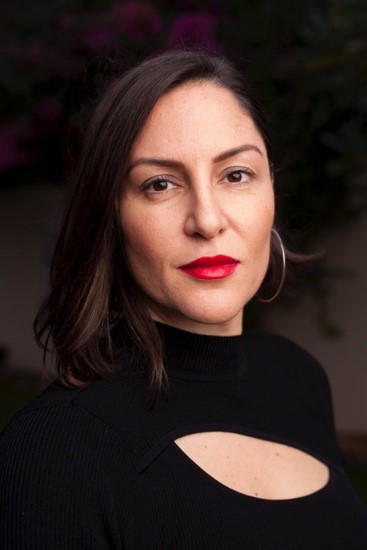
Zeina Hashem Beck is a Lebanese poet. Her second full-length collection is Louder than Hearts (Bauhan Publishing, 2017).  She’s also the author of two chapbooks.  Her poetry has appeared in Ploughshares, The New York Times, The Academy of American Poets, Poetry, Southeast Review, The Adroit Journal, and elsewhere.  She lives in Dubai. www.zeinahashembeck.com
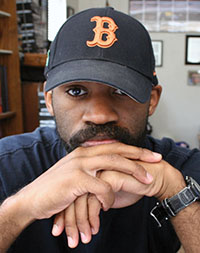
Issam Zineh is a Los Angeles-born, Palestinian-American poet and scientist.  He is author of the forthcoming chapbook “The Moment of Greatest Alienation” (Ethel Press, Spring 2021).  His poems appear or are forthcoming in Clockhouse, Fjords Review, Glass: A Journal of Poetry (Poets Resist), Nimrod, Poet Lore, The Seattle Review, and elsewhere.  He also reviews for The Poetry Café (https://thepoetrycafe.online).  Find him on Twitter @izineh.

Risa Denenberg is the curator at The Poetry Cafe.

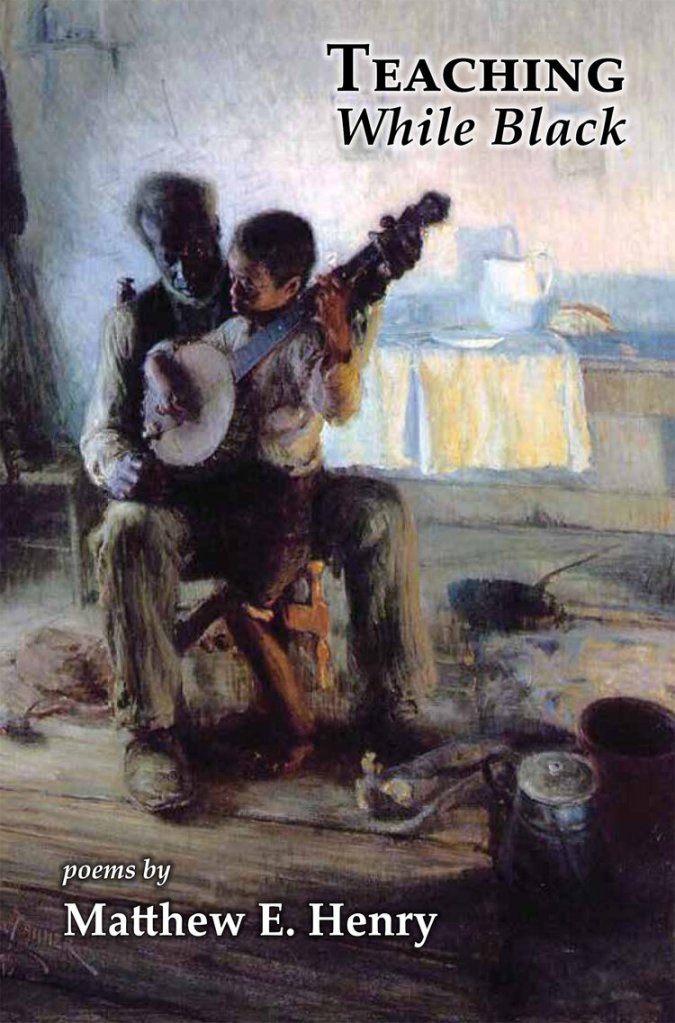
Teaching While Black

Teaching While Black, by Matthew E. Henry

Review by Risa Denenberg

We teachers of color can feel so torn, so defeated, so at a loss to reach some of our children and parents that we sometimes forget why we decided to teach in the first place […].
Teaching While Black: A New Voice on Race and Education in New York City —Pamela Lewis

After reading Matthew E. Henry’s poetry chapbook, Teaching While Black, I came across a number of articles and essays by Black educators regarding the experiences, longings, and burdens they confront working in public education in America. The problems are vast, exacerbated by poverty, racism and cultural ignorance; by undervaluing and underpaying educators; by underfunding public schools and diverting educational dollars to private schools; by abandoning arts education; and by being forced to “teach to the test” rather than being freed to teach students how to think and problem-solve for themselves. In the quote above by Pamela Lewis, she answers the question of “why we decided to teach” with these words,

[ . . . ] to uplift the people of our communities, to make students who feel invisible feel visible again, and to give them the confidence they need in order to want to achieve.

While Lewis is advocating on behalf of children of color in classrooms in New York City, she also speaks for teachers’ highest aspirations for all students in classrooms everywhere.

Henry is an educator with such aspirations, who also feels deeply the frustrations incumbent upon being a Black teacher working in schools with a majority of white educators and students. God bless him for that, and even more so, for the frank, humorous, and compassionate poems in his memorable chapbook, Teaching While Black.

The preface poem, “my third grade teacher,” places the daily experience of a Black child front and center. This is where invisibility begins, Henry tells us, as a teacher “explained skin” to him by stating that his face “lacked / the ability to bruise or blush.”

Growing from child to teacher in the classroom, Henry wonders how it is possible that he has “only been called “nigger” once by a student—at least / in my presence—and that under his breath.”  He wonders facetiously “if I’m doing something wrong” if “I may need to make them more / uncomfortable with my skin.” The poem ends with this musing:

so it was surprising, struck me as odd,
that it only happened when I told a while boy to put his phone away—
the straw that broke his fragile back. deferred his dreams.

The second section of the book is mainly devoted to a dissection of sexism by a compassionate and knowing witness of the pervasive sexual abuse experienced by girls. Overheard in the classroom, someone says: “I don’t understand why a woman would wait / 36 years to say something.”

In “little red,” Henry portrays how futile are parents’ warnings, and simultaneously, how this works to stifle girls’ curiosity without protecting them. We can only nod and sigh, as “little red,”

rides through her hood
her mama’s words in mind:
keep to familiar, well-lit roads
and don’t talk to strangers,
wolves wear any disguise that fits—
a badge, a stiff white collar.

While teaching Roethke’s “Waltz” to his class, exploring the tension between two possible views of the drunk papa, Henry notices a student who is silent in the classroom. He reports,

Katherine’s stillness split my heart.

Later she explained her stepfather’s demand
of a demon’s dowry: how she nightly endured
his endless gropes and gasps, in a silence
which left her sister untouched.

The poems in Teaching While Black are brim-full of compassion for students’ palpable tragedies, despite their often ignorant and arrogant ways. One girl recounts how she mops up after her drunk mama in “happy birthday for Ashley,” while another girl’s “cotton sleeves conceal hash marks of silence” in “show, don’t tell.” A boy,

finds
his father’s body
just where the old man left it
note pinned to the coat
hung limp around his shoulders,
final spasms timed
for an after school arrival

In the final section, there are more harrowing narratives including the time “the school resource officer […] almost shot me in my class.”  The final poem in the chapbook, resets the clock from teacher back to childhood, in “when asked what I learned in in elementary school being bussed from Mattapan to Wellesley.” Among the lessons learned, Henry recounts:

what they think is appropriate: to treat Black hair
like a pregnant woman’s belly,

//

how to be a chameleon: to code-switch;
to bite my tongue instead of theirs;
to make excuses for them

 //

to endure the cultural appropriation of slang.

I applaud Henry’s humanity, his decision and dedication to teaching; and his ability to write about these experiences so forcefully and with so much grace.

TEACHING WHILE BLACK
Matthew E. Henry
Mainstreet Rag Publishing Company, 2020
ISBN: 978-1-59948-785-4
52 pages
Price $13

PURCHASE HERE!

Matthew E. Henry (MEH) is a multiple Pushcart and Best of the Net nominated poet and short story writer. His works have appeared in various publications including The Anglican Theological Review, Kweli Journal, Poetry East, The Radical Teacher, Rhino, Spillway, and 3Elements Literary Review. MEH received his MFA from Seattle Pacific University yet continued to spend money he didn’t have completing an MA in theology and a PhD in education. An educator who has taught at the high school, college, and graduate levels, he will most likely die in a classroom. This is his first collection of poetry.

Risa Denenberg is the curator at The Poetry Cafe.
She is a co-founder and editor at Headmistress Press and has published three full length collections of poetry, most recently, “slight faith” (MoonPath Press, 2018).

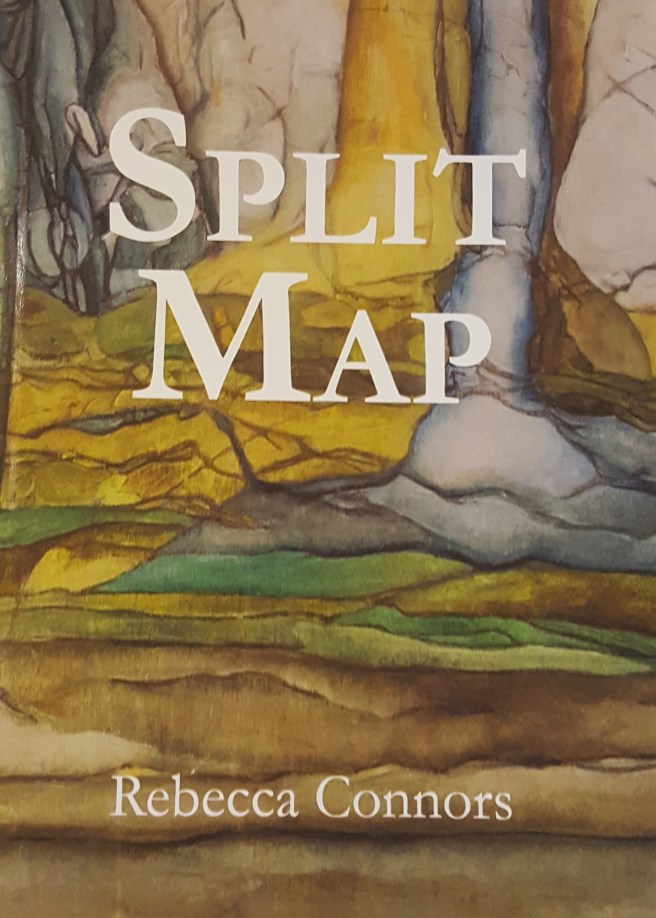
Split Map

Split Map, by Rebecca Connors

Review by Arya F. Jenkins

In Split Map (Minerva Rising, 2019), her first collection with 22 poems, poet Rebecca Connors revisits the past, exploring the landscapes of the American South and of her girlhood, and along with these, the fear and anxiety which follow her into adulthood as she searches for a sense of place and identity.

From the beginning, the reader is steeped in a sense of the American South. In “A Lifting Force,” the poet describes “caramel stillness. Roses, cut grass.” In the South, the very air seems at times stagnant, at other times, suffused with heat, sorrow, fear, and expectation. Revisiting memory, the poet observes how even silence, arising from that heat, can be wielded as a weapon: “Your silence makes him sharp like an insult.”

“Anthem of the Elementary School Girls,” one of the strongest and most evocative poems in this collection, pays homage to the rich lives of young girls whose creativity, sense of power, and whimsy threaten to burst at the seams:

Imagine our sarcophagus–
stickered notebooks, mixtapes, ChapSticks crammed
into back pockets—testaments to our empire.

In “The Intruder’s Home,” the narrator explores a girl’s pervasive fear of her alcoholic father, “What is the word for when the beast / turns away? It doesn’t matter—you are // never not prey.”

In “Climbing Magnolia,” the reader is again surrounded by the feeling of what it is like to grow up in the South. There is mention of “summer heat,” “fragrant bloom,” the ever present “magnolia,” “honeysuckle,” and “rose bloom,” from which the poet herself seems to literally emerge, remembering experiences as a girl. Here, the experiences of girlhood are intense, speaking equally to a girl’s vulnerability and power:

I scramble
my way down trunk-smeared
bruises on my thighs. Emerging
from the forbidden boundary,
I am almost lost.

A sense of lost-ness pursues the narrator, although the world’s surprises, inherent in language and nature, feed and empower her. Sometimes that sense of lost-ness is shared, as in “Origin of Coordinates” in which the narrator reminisces about her brother. In “Ordinary Girl,” another extraordinary poem, the tools of the poet are shown early on:

She cradles a jar in her chest filled
with pebbles, alphabet magnets, a broken
harmonica, pencil nub. She glows
when the world appears cherry-lipped
beside her with all the stories
she could ever want.

Another theme evolves as the stories of these poems unfold—the surprise, shock and fear of the body—one’s own and that of others, what happens to it growing up and when encountering varieties of experience in the world. In “Corpus,” the poet announces,

I am
weight-bearing not up to code
here’s the library: finger the worm-eaten plans my wings admired but never constructed

In “To the Inspector” the poet connects language, the past, geography and nature, affirming her most empowering source: “atlas and magnolia / forsythia and sepulcher”

In the final poem of the collection, “These Ghosts are Home,” the poet elucidates how memory, the experiences that pass through us that we must let go, also remain like notches marking pain and wonder, offering proof of our existence with all its inglorious struggles. Traversing memory is risky, the poet seems to say, even as she journeys through it determinedly.

These poems reach deep and fearlessly into the past, into trauma and joy, fear and rapture which entwine like vines on the way to adulthood and awakening.

Split Map by Rebecca Connors
Published by Minerva Rising Press, 2019
ISBN: 978-0-9990254-9-9
Cost: $10
Order from Minerva Rising Press: https://minervarising.com/purchase-books/

Rebecca Connors graduated from Boston University with a BA in English. She is currently an MFA candidate at the Solstice MFA program at Pine Manor. Her work has recently appeared in Tinderbox Poetry JournalMenacing HedgeInk & Nebula, and elsewhere.  Her poems have been nominated for the Orison Anthology and the Pushcart Prize. Her chapbook, Split Map, won the Dare to Speak Chapbook Contest and was published by Minerva Rising Press in Spring 2019.

Arya F. Jenkins is a Colombian-American poet and writer whose work has been published in numerous journals and zines, most recently, IO Literary Journal, Rag-Queen Periodical, and The Ekphrastic Review. Her poetry and fiction have been nominated for the Pushcart Prize. Poetry is forthcoming in Poetica Review. Her poetry chapbooks are: Jewel Fire (AllBook Books, 2011), Silence Has A Name (Finishing Line Press, 2016), and Love & Poison (Prolific Press, 2019). Her short story collection Blue Songs in an Open Key (Fomite Press, 2018) is available here: www.aryafjenkins.com.

Risa Denenberg is the curator at The Poetry Cafe.
She is a co-founder and editor at Headmistress Press and has published three full length collections of poetry, most recently,
 slight faith (MoonPath Press, 2018).