

Retracing My Steps by Jayne Moore Waldrop
Review and Interview by Arya F. Jenkins
Jayne Moore Waldrop came late to writing, in mid-life, and has much to say about her life and past in her strong first chapbook of poetry, Retracing My Steps, which was a finalist in the 2018 New Women’s Voices Chapbook Series Contest. The narrative poems hark to the hardworking legacy of her Appalachian forebears who farmed, and of women, especially the women in her family. One has the sense when finishing this collection of having completed several journeys, that of the poet and of other members of her family: mother, father, great grandmothers.
Intimate themes—what we feel and what has formed us as human beings—have always informed the writing of women. In much recent poetry by women, one sees the pull to reach back and plumb the past to get a sense of the self in the present. The work of Waldrop and other poets such as Cynthia Atkins seems to say that we are at a juncture in which learning from the past and recognizing mistakes become a key to help us heal and move forward. The great danger lies in separating ourselves from history, both familial and collective, and from one another and the earth, to which we are all rooted and belong.
In “The Other Side,” the narrator speaks to the loss of a sense of identity and origin that comes with displacement: “I am from the other side, / hybrid native and alien, / neither us nor them.” A loss of roots can threaten the sense of self, but so can divides imposed by those who need to create boundaries between people. In “The Wall: Haiku from a Gated Community,” the poet rues the idea of a fence having become a brick wall of defense: “Is the ten-foot fence / not enough to protect you / from those outsiders?”
Separation, displacement, and the longing for home are themes that run throughout this poignant collection. Waldrop ponders them and offers them up to the reader, often in the form of questions. In “What Am I to Do Now?” the narrator wonders, “How hard it must be / when one’s work is over / and there’s nothing left to do.” It is something Waldrop, who is also a mother of grown children and a lawyer, has surely also asked herself.
In the following email interview exchange Waldrop discusses her journey as a writer and the themes that drive her poetry.
Arya F. Jenkins: You came to writing late. What launched your journey into poetry? What have been the pitfalls and high points of that journey?
Jayne Moore Waldrop: I guess I’ve always been a writer, but I’ve taken a long path to get to poetry. In college I studied English literature and journalism. At the time journalism seemed to be the way to make a living as a writer. I worked as a newspaper reporter and editor for four years then went to law school. Language is important in law practice, too. Lawyers need to be effective communicators to advocate for their clients.
I practiced law for several years. After taking time off when our younger son was born, I knew I didn’t want to go back to practicing law. I wanted to write, but I never seemed to make time for it. I didn’t know where to start or how to build a writing life. I had a few creative nonfiction magazine pieces published, and at age 55 decided to apply for a low-residency MFA in fiction. I wanted to learn but needed the discipline that comes with deadlines and assignments. And even though it was daunting to go back to school and join an incoming MFA class of writers mostly the age of my own kids, I loved it. I like change. I like to think of life in seasons that provide different opportunities throughout a lifetime. And periods of change are particularly creative times, I’ve found.
I finished my MFA in 2014. My journey into poetry came later, inspired by time spent at the 2016 Appalachian Writers Workshop, where I listened to several acclaimed prose writers read their poetry. It was eye opening. I wanted to try poetry. I was especially interested in poetry by writers like Wendell Berry, Gurney Norman, bell hooks, Ron Rash, and Silas House, all of whom I knew primarily as prose writers. Their poems have great narrative power.
During a residency at Rivendell Writers Colony, I read a lot of poetry, studied several craft books, and started writing. At the time I felt like a switch had been flipped in my brain. Writing poetry felt like writing distilled short scenes, like trying to capture a closely observed moment. A common theme appeared in some of the poems, one of reflection on the different seasons in life and paths chosen over generations of time. A line from All About Love by bell hooks really spoke to me: “Mindful remembering lets us put the broken bits and pieces of our hearts together again.” I used it as my book’s epigraph.
After I had a stack of poems written, I learned of a writing competition called New Women’s Voices Chapbook Contest sponsored by Finishing Line Press. I assembled the poems and submitted the manuscript called Retracing My Steps. To my great surprise it was a finalist in the 2018 contest and was selected for publication. To me the book is the high point so far in my writing journey and tangible proof of the old saying, “It’s never too late.”
AFJ: From the outset of Retracing My Steps, you stress the importance of an observed life, knowing from where you came—I would imagine in order to know where you are headed in life. When did you first decide you wanted to write about Kentucky and your family? Did you have to do research, or did you grow up knowing the stories of your ancestors?
JMW: Writing what I know always includes Kentucky. My family came through Cumberland Gap more than 200 years ago, but I hope the poems reflect a more expansive view than the story of one family’s journey. Many families share the story of coming to a new, unknown place and trying to find a better life, whether that was 200 years ago or last week. The search for home is a human condition that connects us all.
I grew up hearing family stories – both of my parents were wonderful storytellers – and I’ve done my own research, including hiking the Wilderness Road through Cumberland Gap to retrace my ancestors’ steps.
AFJ: Another theme in Retracing My Steps is that of impending invisibility, the struggles of women as they let go—in birth and middle age, for example. “Mantle of Invisibility” is a powerful poem about the progress toward anonymity women face as they age: “She transformed into Invisible Woman and reset / her filters to block earworms like “Anti-aging,”/ “granny arms,” and “looking good for her age.” How does that struggle impact your life now, if at all?
JMW: Thank you for your kind words about “Mantle of Invisibility.” For years my best friend and I have laughingly talked about becoming invisible. It stings when you realize how our society diminishes people as they age, especially women. We don’t respect the wisdom that comes with experience as many cultures do. In fact we’re expected to fight getting older with everything we can throw at it from artificial hair color to wrinkle injections to plastic surgery to remake ourselves into something that lives up to societal expectations. It seems like such a superficial way of judging people and their worth, and it’s such a waste of precious time. The flip side of that looming redundancy is that there is power that comes with letting go of societal expectations. In the poem I decided to turn it into a superpower.
AFJ: In “Coming Through Cumberland Gap” you relay the fragile self-consciousness of modernity with all its privileges, and in “Pie Plate,” refer to your mother as made-from-scratch / woman, a farm-to-table / cook before that was a thing,” and to yourself growing up as wanting “to live the processed American dream.” As a woman and writer, in what ways have junctures between your mother’s life and your childhood dreams severed further, or healed?
JMW: I think many of us see our parents differently when we reach adulthood. As a child I just wanted to be like everyone else living that “processed American dream.” I wanted to fit in. I wanted to live in cookie-cutter tract housing like most of my friends and eat frozen TV dinners like the ones advertised in commercials. I wanted to fit in. But my parents didn’t automatically fit in. They had moved from Appalachia. They were different than most people in the small western Kentucky town where I grew up, a boomtown that grew exponentially in the 1950s when a uranium enrichment plant was built. They had made their own journey to make a new home in a new land. As displaced Appalachians, they were like refugees looking for a better life than the cyclical poverty in the coalfields of eastern Kentucky. They had to have land to have a garden and livestock. They couldn’t have survived in a subdivision or separated from the land. As an adult I’m very proud that they maintained their mountain identity. They kept the culture alive for us with stories, music, and tables laden with fresh food from the garden instead of those lousy TV dinners. What was I thinking?
My mother didn’t have the opportunity to get a college education, but she worked hard to make sure her children did, especially her daughters. I’m also grateful to her for passing along her love of nature and being outdoors. She noticed the beauty of the natural world until the day she died.
AFJ: You also mourn the loss of dignity in the American dream, the building of walls, the sense of displacement and simultaneously the need for a sense of home. Can you expand on this concern?
JMW: Home is an important theme in my writing, both poetry and prose, and I think that relates to my family’s experience as displaced Appalachians. I’m intrigued by how people are connected to a place, even if that place no longer exists. Edward Abbey wrote in Desert Solitaire that “Every man, every woman, carries in heart and mind the image of the ideal place, the right place, the one true home, known or unknown, actual or visionary.” I’m fascinated by that idea. I’ve seen the force of this “one true home” in my family and others. After they left the mountains, my parents lived in their adopted city for fifty-plus years and built a good life, yet when they spoke of “home” they always meant the mountains. And when they visited the mountains, it seemed like they were forever disappointed that the place they remembered no longer existed. I’m working on a linked story collection based on a similar theme but in a different setting.
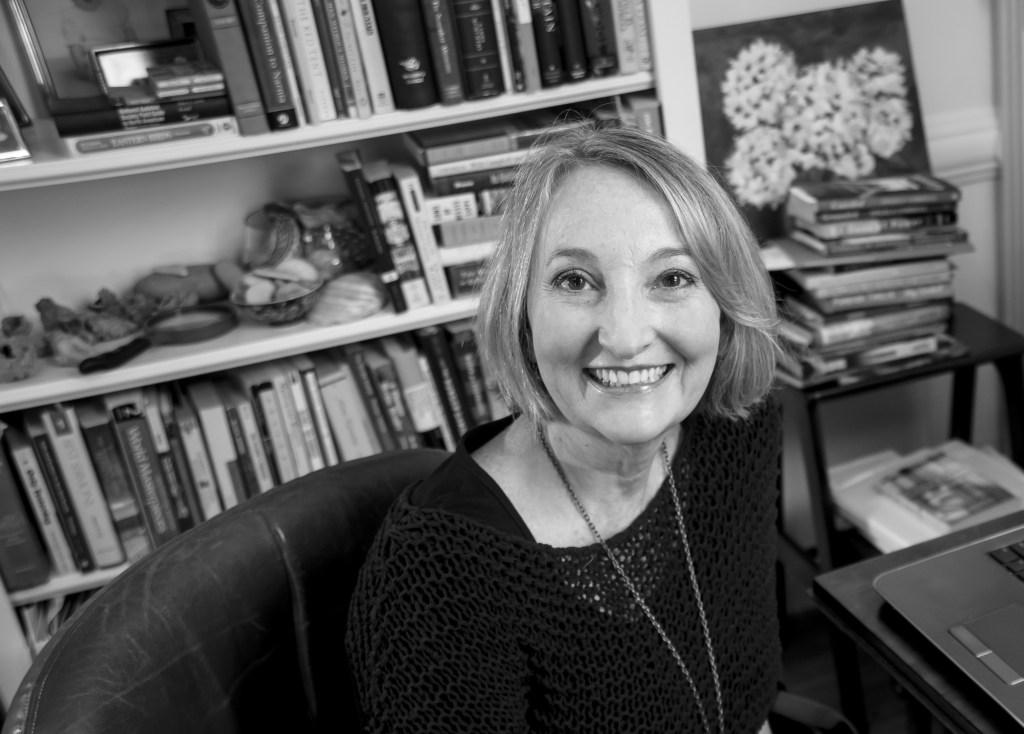
Jayne Moore Waldrop is a writer, attorney and author of Retracing My Steps (Finishing Line Press 2019), a finalist in the New Women’s Voices Chapbook Contest.Her prose and poetry has appeared in the Anthology of Appalachian Writers, Still: The Journal, New Madrid Journal, Appalachian Heritage, Minerva Rising, New Limestone Review, The Paddock Review, Sequestrum, Heartland Review, Luna Station Quarterly, Kudzu, and Deep South Magazine. Her stories have been selected as Judge’s Choice in the 2016 Still Journal Fiction Contest; finalists for the 2015 International Literary Awards Reynolds Price Short Fiction Prize, the 2016 Tillie Olsen Fiction Award, and 2017 Still Journal Fiction Contest; and honorable mention in the 2014 AWP Intro Journals Project. A 2014 graduate of the Murray State University MFA in Creative Writing Program, she served as literary arts liaison for the Carnegie Center for Literacy & Learning in Lexington, Kentucky, and book columnist for the Louisville Courier-Journal.

Title: Retracing My Steps
Author: Jayne Moore Waldrop
Series: New Women’s Voices Series (Book 144)
Paperback: 40 pages
Publisher: Finishing Line Press (April 5, 2019)
ISBN-10: 1635348463
ISBN-13: 978-1635348460
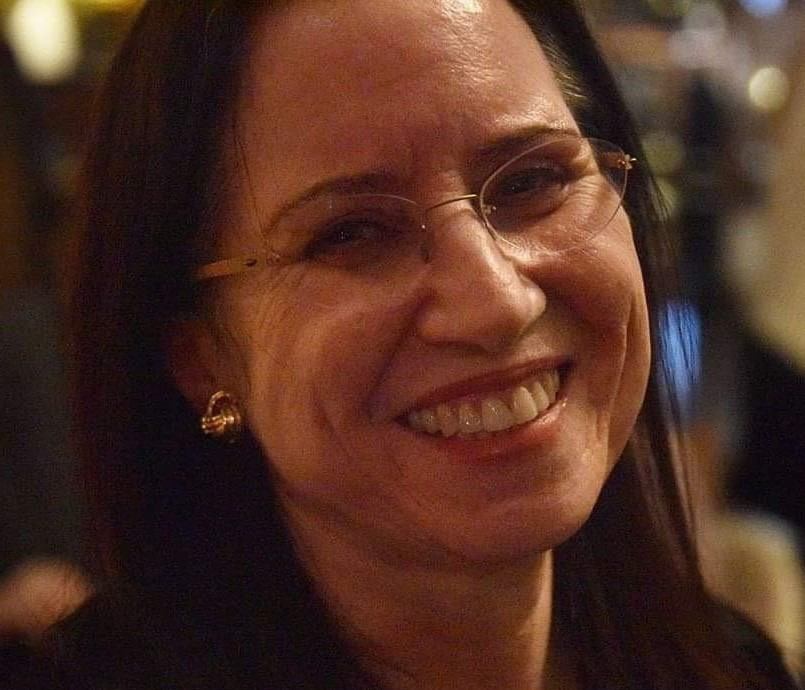
Arya F. Jenkins is a Colombian-American poet and writer whose work has been published in numerous journals and zines, most recently, IO Literary Journal, Rag-Queen Periodical, and The Ekphrastic Review. Her poetry and fiction have been nominated for the Pushcart Prize. Poetry is forthcoming in Poetica Review. Her poetry chapbooks are: Jewel Fire (AllBook Books, 2011), Silence Has A Name (Finishing Line Press, 2016), and Love & Poison (Prolific Press, 2019). Her short story collection Blue Songs in an Open Key (Fomite Press, 2018) is available here: www.aryafjenkins.com.
Risa Denenberg is the curator at The Poetry Cafe.



 The Poetry Cafe