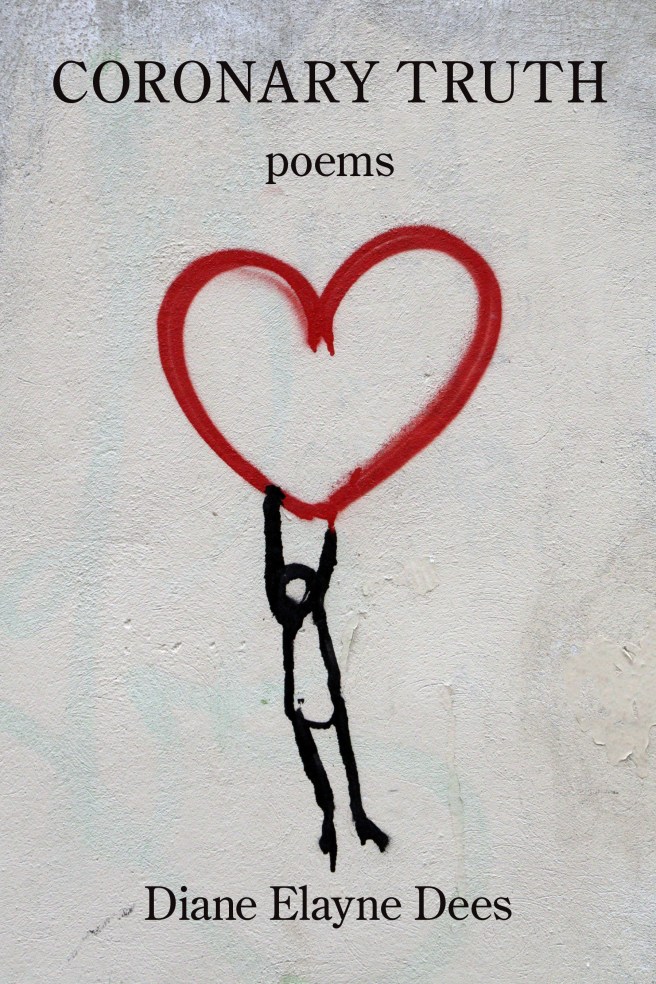
Passing Through Blue Earth

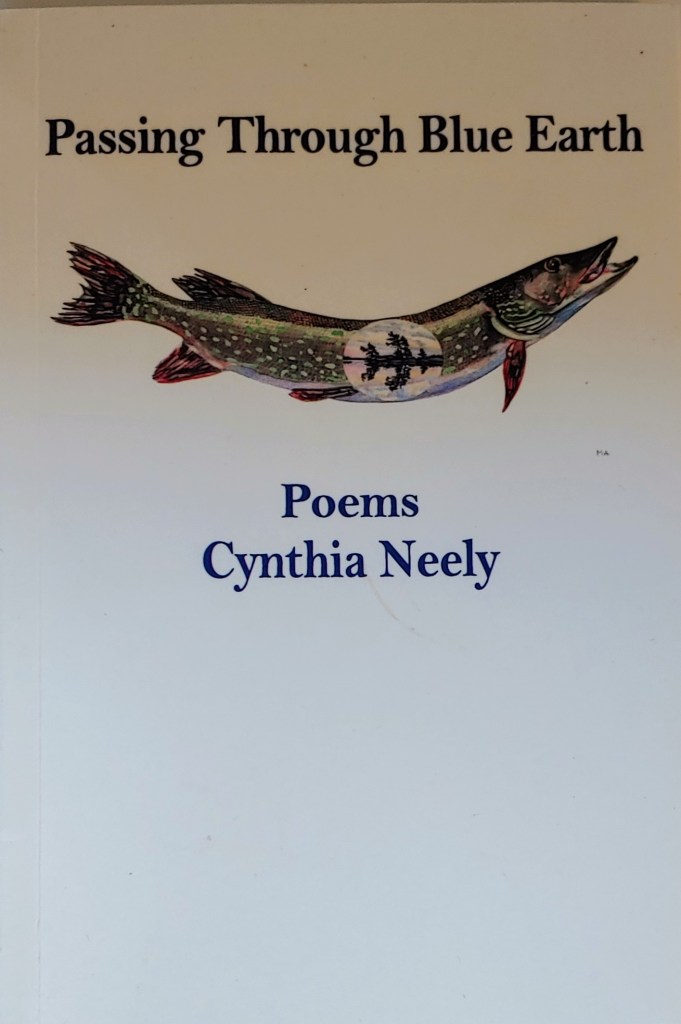
Passing Through Blue Earth, by Cynthia Neely

Review by Mary Ellen Talley

Caught up in the mishmash of creation, humans and animals arrive on this earth with natural proclivities of caring and of cruelty. Cynthia Neely begins her third book, Passing Through Blue Earth, with the poem “Hunger” which takes on this theme directly. Sometimes a hunger that leads to cruelty takes precedence. Neely is descriptive rather than accusatory when she acknowledges instinctual hungers that lead to cruelty. Stark images arise as we consider the “vultures // whose shadow-wings / mark the earth.” With Neely, vultures could be real or metaphorical. The last lines of the poem foreshadow grief to come in later poems: an “absence hollowed out / from a fullness in my throat.”

In the same poem, Neely’s frequent use of imagery stands out, such as “quills white as rib-bones”; a cougar’s tail “black and shivering”; “stubborn aspen leaves”; and how “ice gnaws the riverbank.” She gives a literary nod to William Carlos William’s “The Red Wheelbarrow” with the creation of what could be an adage, “So much / depends on hunger.”

What a fitting introductory poem to this pocket-sized gem of a book!

Arranged without section breaks, the poems in this chapbook move as a river of connections from words in one poem to similar wording in adjacent verses or poems. Neely finishes two back-to-back poems, “Tonight a Blue Moon Rises” and “Bone is Bone,” mentioning variants of time ticking.  Later in the chapbook, we feel there is real and metaphorical “Crazy weather” in “Forecast” with the last lines, “The storming / off. We are altogether too much / weather.” In the next poem, “Home and Here,” Neely writes of fog and place, noting that “These are the places / that pull me by each arm / like quarreling parents.” The connections resonate because they are straightforward and there for the taking. In the end, the speaker reports wandering with the Mother, “over moss and waves / and [I] wonder how I will find my way back.”

Water and grief traverse the long poem “Hopewell Bay” in its thirty-one numbered free verse stanzas. Besides being a writer, Neely is also a noted Washington State painter, so she comes naturally to using color to depict emotion. In #5, she asks,  “What if green (blue and yellow) expressed all grief?” Before naming colors, #4 describes how water flows and literally takes on “the color of its surroundings.” Presenting other reflections on the physical properties of water, Neely reminds us that we swim, we float and we are buoyed up in water before birth.

The poem “Hopewell Bay” describes and explores grief. We are given personal narrative verses with Latinate medical vocabulary not typically part of a poem. Whenever Neely does this, she offers enough surrounding information that the reader gets the gist, as in  25: “Dysgerminomas are extremely sensitive to / chemotherapy, as are all fast growing cells.” In #26, Neely adds:

This summer’s in a hurry
moving off on a gust. My only son
wants to swim to Hopewell Bay.
Today. A round trip of a thousand breaths.
Alone. And I don’t want to let him go
though I should know
no rotating prop will dice him up
slice those lovely legs, render him.
He wants this test, his will
against my own. Still
most days I would go
match him stroke for stroke
breathe his breaths if I could,
swallow air for him.

Neely’s use of Latinate words juxtaposes emotion and image with medical complexities that will give rise to grief. Laminaria is a seaweed that has uses both in cancer prevention and terminating a pregnancy. In #2, cysplatinum is “iridescent, lovely and cool as water.” It also triggers “cell death.” It becomes evident why this long series begins with “I fell in love with grief.”

The poem has a universal perspective, but I wondered if it was grounded in the personal, since Neely often writes in first person. A quick search led me to her poem/bio online at “Survivor’s Notebook,” which suggests that this long poem reflects the poet’s experience with ovarian cancer and an associated pregnancy termination.  

A lover of the environment who resides in the Cascade foothills and summers on an off-grid Canadian island, Neely excels at using nature metaphors to suggest the human condition, as in, “Some ecosystems have evolved with fire as necessary for / habitat renewal.”

The speaker in the long poem is a mother who has studied grief. In #13, she writes, “There are five stages to grief. Once through each / stage we are ready to let go. / This is myth.” There is the personal in #29, what a mother might have told an unborn child. There is also the sense of an end to grief, “now that I have almost stopped / mourning for what’s been lost.” We note a nod both back to hunger and to Emily Dickinson that arrives in the same verse:

If hope’s a finch
that lightly touches down
and leaves the earth for sky
then grief must be a hungry thing
that suckles and suckles
and leaves its mother dry.

Neely’s long poem satisfies all our senses. Her aural imagery rings true in #14, “Sorrowing I love best. It sings like a / saw – a poor man’s viola.”

Cleverly, we are given an entry to resolution with a poem that acts as a transition to the final poems.  In “Hope’s a Transitive Verb” Neely welcomes Emily Dickinson again, as hope becomes a “feathered shaft / air filled wing.”

When we arrive at the next poem, “What This House Knows,” we sense a shift, a door swinging open on a hinge to poems of place and to poems that move toward healing. There is a vacant house to leave, a dwelling that can be an empty house or a metaphor for moving psychologically toward resiliency and/or resolution. Neely has already stated that it is a myth we “let go” of all grief. This poem acts as a hinge poem in the chapbook. The subsequent poems are reflective and move toward hope.

“The Wrecked” continues the poet’s reflection on loss by way of metaphor, “You search for wreckage / then search the wreckage for clues.” In “Since the Return of the Massasauga,” the speaker is more aware of dangers behind her and the possibilities of future pain. But she is determined to move forward, “Give me something / I can face head-on, a black bear in the trail.”

This small book will grow on you. Loss and grief are described briefly and reflected upon. But the book again addresses hope, what Dickinson calls “a the thing with feathers.” After all, hope is another thing we all hunger for.

Who would have suspected that the “Blue Earth” of the title is a town in Minnesota that the poet passed through? The first line of the final poem, “Passing Through,” reminds us that our planet Earth is just another place. Neely has written a linear trajectory reconciling the particular with an existential grief.

This chapbook includes a mother’s worry for the natural and for her personal world. Neely alludes to climate change, aging, and pain while focusing on nature, the personal, and the strong pull of DNA. She admits to worrying about nature and her son. This small book is packed with lyric wisdom and is spoken in the voice of a mother who knows and loves nature. The speaker could be Mother Nature considering her planet as well as a human mother who is programmed to worry about her children.

This poet knows where she has been and where she is going, even as she knows we are mere blips in the currents of time as we respond to our hungers and pains. In her final poem, Cynthia Neely speaks of and to creatures, events, and places that literally and metaphorically become part of a life journey. With reflective precision, the final lines of this final poem hold the key to the book’s title:

this blue planet
this perfect earth
we are all
only passing through
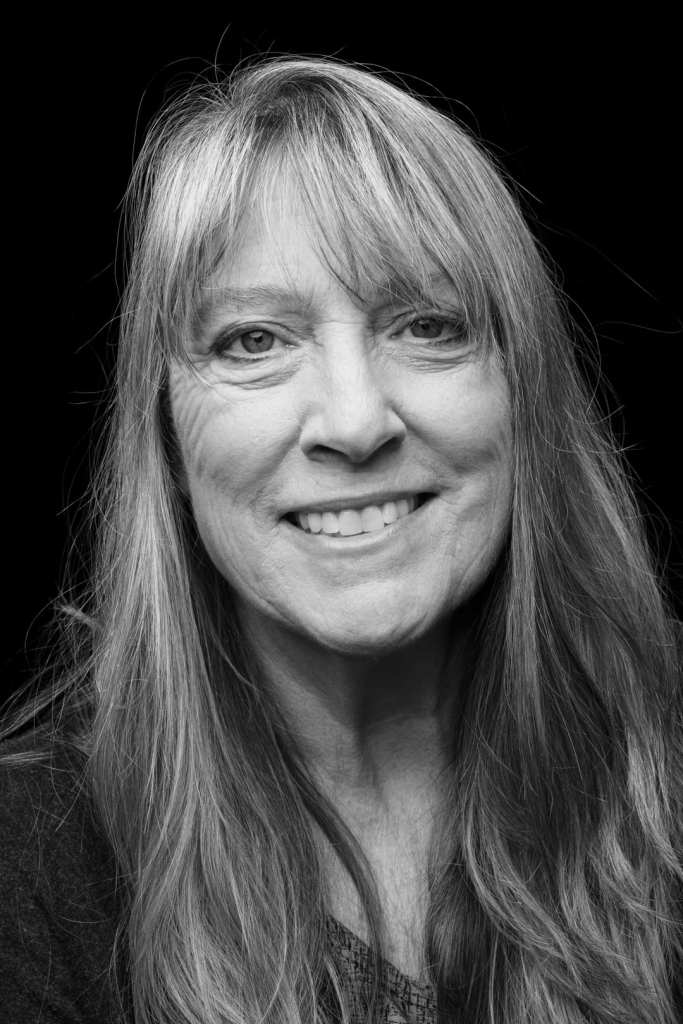
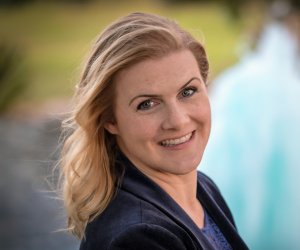
Cynthia Neely is a poet and a painter. She lives with her husband and son up an unmaintained mountain road in the Cascade foothills of North Central Washington and spends her summers on an off-grid island in Georgian Bay, Canada. These places have been indelibly etched into her persona and so into her poetry and paintings. The natural world and her place in it have always been important to her and to her work. When she travels from these areas she invariably heads north. Neely is the 2011 winner of the Hazel Lipa Poetry Chapbook Prize for Broken Water published by Flyway: Journal of Writing and Environment. Her critical work has appeared in The Writers’ Chronicle, and her poems in numerous print and online journals including Bellevue Literary Review, Crab Creek Review, and Terrain.org, and in several anthologies. Her full-length book of poetry, Flight Path, was published in 2014 as a finalist in the Aldrich Press book contest. She received an MFA in Creative Writing from Pacific University.
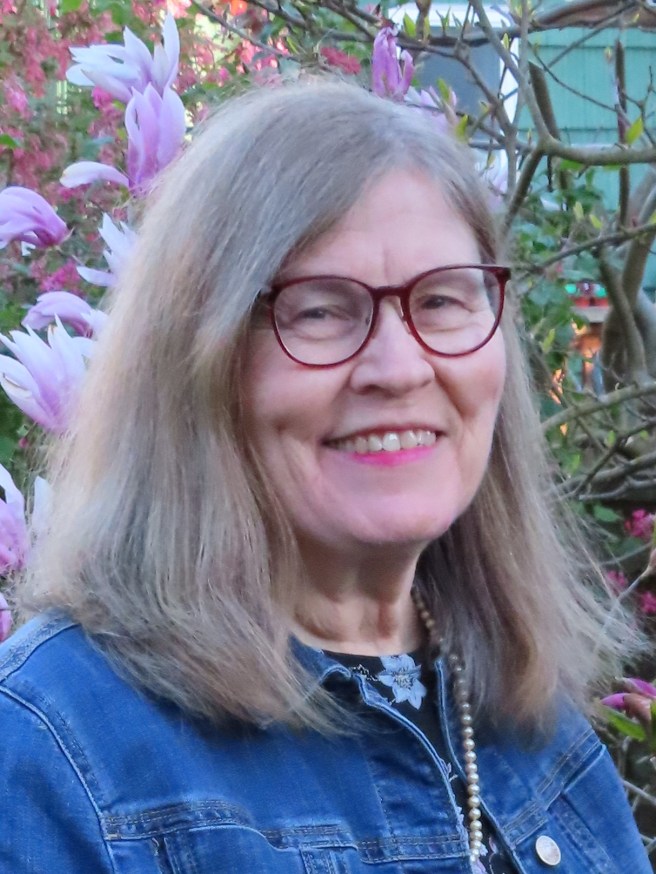

Mary Ellen Talley is a former speech-language pathologist. Her poems have appeared widely in publications including Raven Chronicles, Flatbush Review, and Banshee, as well as in several poetry anthologies. Her poems have received two Pushcart nominations. Book reviews by Talley appear online and in print journals, such as Compulsive Reader, Crab Creek Review, Entropy, Sugar House Review and Empty Mirror. Her chapbook, “Postcards from the Lilac City,” was published in 2020 by Finishing Line Press.


Risa Denenberg is the curator at The Poetry Cafe.

Self-Portraits

Self-Portraits by Susanna Lang

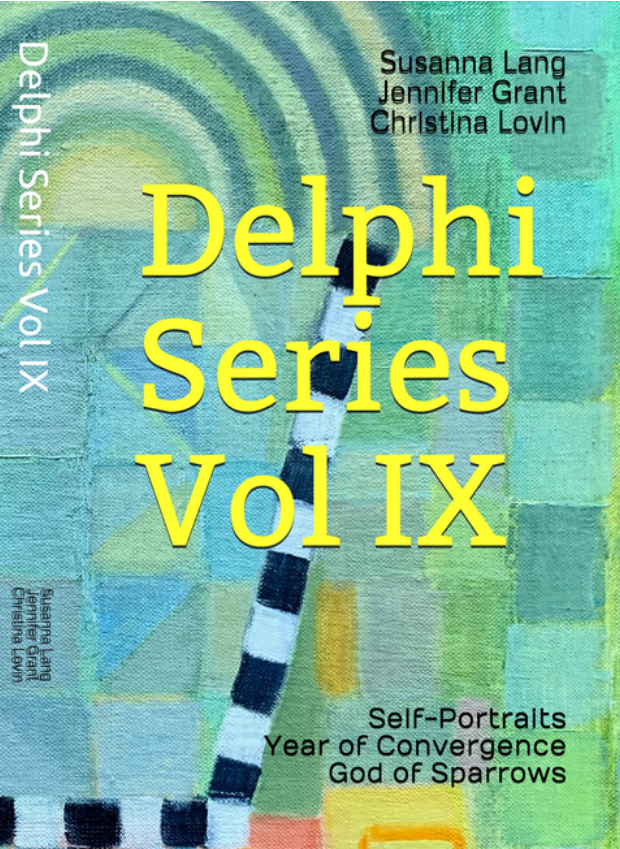
Susanna Lang’s Self-Portraits is one of three poetry chapbooks included in a single Delphi Series volume from Blue Lyra Press.  Delphi Series Vol IX also includes the chapbooks Year of Convergence by Jennifer Grant and God of Sparrows by Christina Lovin.

Review by Albert DeGenova


I have been acquainted with and have respected Susanna Lang’s poetry for a long time.  As the publisher and editor of After Hours, a journal of Chicago writing and art, I have included her work in our pages several times and Lang’s poem “Shelter” was the winning entry for After Hours’ inaugural Mary Blinn Poetry Prize.  In her new chapbook, Self-Portraits, Lang presents an all-ekphrastic collection based on the work of 24 women artists across creative disciplines—painters, a sculptor, photographers, a designer, and writers.  Succeeding in the true spirit of the ekphrastic poem by going beyond a description of the subject work of art (where much ekphrastic poetry begins and ends), Lang powerfully offers her reader a physical sense of the artist with her own personal reaction and acute insight.  Indeed, Self-Portraits allows readers to see the inner self of the subject artist as strongly as that of the poet.

Ekphrastic poetry is a type of translation. Translating poetry effectively is an act of absorption by the translator.  To absorb the words, emotions, music and intention of the poet in her original language is only the beginning; the translator must then channel the original into the poetry of a new language with visceral understanding and craft.  Reading Self-Portraits I could not help but think of Susanna Lang as a translator (which she is) taking a work of art, absorbing it completely into herself, and offering us a new experience of that art through a fresh and personal re-seeing: a re-saying.

I have a longstanding habit of bending the corners on the pages of books that I read; with poetry, these are the poems in a collection that render a gut punch, poems I am moved by and will return to again.  Considering this chapbook’s size, my copy of Self-Portraits has more than a few bent corners and I felt that punch with each poem. Lang has the skill of nailing endings—knowing when to stop with an image that will not be soon forgotten.  This is where Lang most often lands her punches.

The first poem in Self-Portraits, “Terra Incognita,” opens with an epigraph that is a poem by the late poet Helen Degen Cohen (another Chicago poet with whom I am very familiar).  Cohen writes about the act of creating: “And I’m generating. I’m generating. / oh my babies by the millions where / will you sleep?” Lang reacts, echoing the etymological meaning of “poetry”:

we make things, as if we’d suddenly remembered
their flickering images projected on the walls of a cave.
(But we never entered the cave.)

Some of these things we make
inhabit our bodies,
then learn how to breathe on their own.

Some glow in the dark, poisoning our blood;

Lang closes the poems with:

the urge to put things together like red and blue Legos,
to make something not in the instructions that came with the box.

All of the poems here stand on their own without a reference to the original art. However, understanding the references (which I was able to do with most by using Google), of course, strengthened my experience of the poems even further.  This was the case with “Icarus” which is a reaction to the sculpture of a naked torso (without legs, arms, head) by Jyl Bonagura.  Lang begins with the images of failed refugee crossings (first a man and then a toddler, both washed up on beaches), and imagining the torso on a beach, she asks: “What if it were // my son, nails gritty with sand and hair slicked back by the sea?”  From there she moves to the Icarus legend:

________He’d wanted everything, as every boy does.

The sculptor has felt that desire,

 //

_____________A light wind feathered his arms as he rose
Into the welcoming air, never doubting that it would carry him

home, to the arms that waited to draw him close and then
release him into the rest of his life, that expanding vista.

One of the Self-Portraits‘ poems most memorable for me is “Lost,” inspired by poet/singer/musician Patti Smith.  I am honestly not sure of the ekphrastic reference.  It may be the song by Smith titled “Sometimes Love Just Ain’t Enough.” Or it may be the story of a Smith reading/performance when someone in the audience returned sentimental personal items of Smith’s that had been stolen out of her tour van years before.  The gesture brought Patti Smith to tears.  But here is proof of the power of Lang’s writing, the ekphrastic reference is not necessary.  I found “Lost” to be haunting:

But neither the dead nor my dreams will stay with me,
and there are friends I have not seen in years.

            ****

Our lost do not come back like the cats
that walk into the next room in order to cry out

and wait for us to call.  It is tempting to think
that the lost return to the places we found them:

a favorite earring into the hands of the woman
who made it, the book with its marginal notes

to the dusty corner of a second-hand bookstore.

One of the starker poems in this collection, “Self-Portrait at 80,” after painter Alice Neel, may also be one of the richest.  Lang describes the artist’s self-portrait, “Yes, her breasts sag. / Her belly sits in her lap like a child.”  But Lang sees the artist in the image beyond the moment of sitting, sees her leaning forward eyes on her canvas ready to paint.  Viewing the actual painting online, I would not have seen life in this painting, but sadness.  Now, with gratitude to Lang, the painting and poem will stay with me as a testament to the unflagging “living” in art and the artist:

Even though everyone’s gone.
Left her with this body in its chair,

//

The work heals and heals
until it can’t.


Susanna Lang’s chapbook, Self-Portraits, was released in October 2020 by Blue Lyra Press, and her translation of Baalbek by Nohad Salameh is forthcoming in 2021 from L’Atelier du Grand Tétras. Her third full-length collection of poems, Travel Notes from the River Styx, was published in 2017 by Terrapin Books. A two-time Hambidge fellow, her poems and translations have appeared or are forthcoming in such publications as Prairie Schooner, december, Delos, The Literary Review, American Life in Poetry and The Slowdown.  Her translations of poetry by Yves Bonnefoy include Words in Stone and The Origin of Language, and she is now working with Souad Labbize on new translations. She lives and teaches in Chicago. More information available at www.susannalang.com.


Title: Self Portraits
Author Susanna Lang
Publisher: Blue Lyra Press, Delphi Series Vol IX (2020)
ISBN: 978-17338909-6-0
Price: $13.99


Albert DeGenova is an award-winning poet, editor, teacher, and blues saxophonist.  He is the author of three books of poetry and three chapbooks. His most recent collection, Black Pearl, was published by Purple Flag Press in 2016.  In June of 2000 he launched the literary/arts journal After Hours, for which he continues as publisher and editor.  DeGenova received his MFA in Writing from Spalding University, Louisville. 


Risa Denenberg is the curator at The Poetry Cafe Online.

Albert DeGenova

Albert DeGenova is an award-winning poet, editor, teacher, and blues saxophonist.  He is the author of three books of poetry and three chapbooks. His most recent collection, Black Pearl, was published by Purple Flag Press in 2016.  In June of 2000 he launched the literary/arts journal After Hours, for which he continues as publisher and editor.  DeGenova received his MFA in Writing from Spalding University, Louisville. 

Herman Sutter

Herman Sutter (poet, librarian and volunteer hospital chaplain) is the author of the chapbook The World Before Grace (Wings Press) and a long-time reviewer for Library Journal. His work has appeared in: Saint Anthony Messenger, The Ekphrastic Review, tejascovido, The Langdon Review, Iris, Benedict XVI Institute, Touchstone, i.e., The English Review, The Merton Journal, blonde on blonde, as well as the anthologies: Texas Poetry Calendar (2021) & By the Light of a Neon Moon (Madville Press, 2019).   His narrative poem Constance, received the Innisfree prize for Poetry, and The World Before Grace, a poem for voices (about a survivor of the Bataan Death March), was honored by the Texas Playwrights Festival.

He is also the author of the blog: The World Before Grace (and after) in which he contemplates the counter-cultural paradox of finding grace through the loss of self.

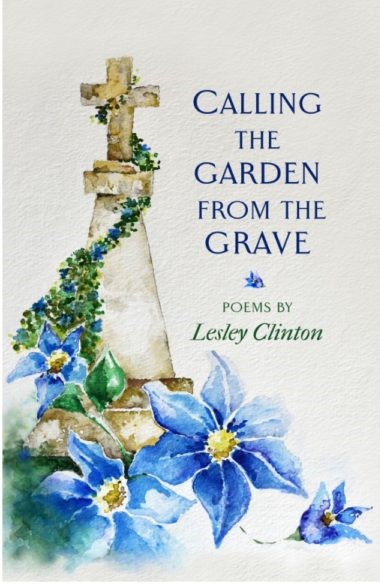
Calling the Garden from the Grave

Calling the Garden from the Grave by Lesley Clinton

Review by Herman Sutter

Reading Lesley Clinton’s exquisite first chapbook, I was struck by the breadth of her vision–the feeling of scope and magnitude radiating from her poems, but even more by the simultaneous intimate intensity of her focus. And I was reminded of two of the 20th century’s finest poets: Elizabeth Bishop and Jane Kenyon.  Clinton clearly walks a similar path, a razor’s edge between a kind of ordinary grace and something like sourdough surrealism, evoking a very appealing sense of vertigo. Through her transcendent shifting of focus from the dry rot of an old rubber band to the starlit wonder of a desert night, she gleans the fine dust of the infinite in even the simplest and most earthbound moments. As she writes, despite the fact that so much of our life seems wasted puttering around, there comes a moment when we lean horizonward and catch a glimpse of something more.  This book is wonderfully full of those glimpses of that something more.  Including the “fossil drama” found in a paleontology exhibit case in the poem, “Contingency”:

Here, a fossil drama, cast
in Paleozoic throes.
A horseshoe crab trenched
in mire. Its death march kept

pristine. 

Clinton, an award-winning Texas poet, and celebrated English teacher, writes often of her daily life as a wife and mother; but–as in the brief and quietly intense, “Careful,”–she is always aware of the risks lurking just beneath that apparent stillness:

A rare ice day.  We tend to things
gone still or stuck, add heat—but slowly,
or a crack might burrow in
and root apart what’s whole
//
_______________________Night frost
 has punched the windshield white. You run
a tepid lip of water
on the glass to clear a vision
of the road ahead. But we don’t speak–

I find that some of her most powerful writing comes in poems where she takes on a persona. Poems like “Cabeza de Vaca Weathers the Gulf,” “Jacal Mother,” and “Rothko Paints the Central Triptych,” where she adopts the persona of the suicidal painter, the lost explorer, or the indigenous mother. Through these voices, she is able to give us glimpses into a world that feels both foreign and familiar. 

Pushing away from the kitchen table, she leans horizonward and fearlessly explores the pain, the loss, and the sacrifice and discovers in it moments of courage and hope, truth and grace that expand our gaze, open our hearts and inspire us to look up and see the glorious and uncertain world around us.  With “Cabeza de Vaca Weathers the Gulf” she comes to see that perhaps survival itself is something worthy of wonder and praise.  The explorer in search of a new horizon, new worlds, loses almost everything only to discover something stranger.  Broken, he rises from the swelling surf, realizing suddenly that:

I’m no part of the swell
after all   maybe churned
in its maw all this time
but now beaded away
like loose mercury
on a mad roll

And rising from the waves, he finds that, though he may be “marrow formed,” he “can’t go back.” There is only one way and it is forward:

I heed the drum    its pulse
writhe self from selfish germ
and rise   go forth   made new

I find myself returning again and again to the poem, “Jacal Mother.”  It is a poem that reminds me of Tolstoy. (Which may be one of the highest compliments I can pay any writer.)  In it, Clinton imagines life as a primitive woman living in a wattle-and-daub hut in the deserts of the Southwest, evoking a life lived in the inescapable shadow of loss. Life and death walking always hand in hand,

______________________________ The baby
roots for milk. Another labor
gathers within.  One day

the stepchildren will whisper
rain and gardens to my babies.
A woman will braid my orphan’s hair.

//

The fourth wife’s daughter. Now my daughter.

In a year, whose?”

In the character’s quiet acceptance, I hear an echo of Tolstoy’s peasants, especially the quiet and simple Nikita from Master and Man

One of her finest poems, “Undying,” is a brief narrative about the last two people on earth.  In some obvious sense, it is a poem of catastrophic loss, and yet feels not oppressive nor elegiac, but lit by a spark of hope that arises out of what Keats called “negative capability,” which simply means the ability to contain contradictions without feeling the need to justify them.  This poem never addresses why these are the last two survivors, a kind of mythical bookend to Adam and Eve, if you will.  Nor does it assert any new Eden to come; but she acknowledges the human drive to assert itself, to always and everywhere leave a mark:

___________________ Survival on his breath,
he exhales into her hair, a gesture
wholly human—the last of such,
of saying, wanting to say.

The veins teem with a drive to build,
to knead from the sand one last civilization
even as the foundation caves–

for something always lasts,

That phrase, that hopefulness, the belief that “something always lasts,” could be the key to her poetry, to entering into these splendid pages; we must open our eyes and see that despite all we think we know of life and loss, there is always something more to learn, another song to hear, another hand to hold, another sky to ponder, another dance to step into as we leave our longings behind and discover that there is a tenderness in the hand that guides our lives; the hand that holds all history is the same hand that invites us to come and join the dance.

I have known Clinton for a few years now and seen a handful of these poems in their nascent state, watched them develop under her tireless scrutiny and dogged efforts.  She is a writer of such energy and insight that I am humbled every time I approach her work.  When I compare her to Kenyon or the wonders of Bishop, I don’t do so lightly.  In Clinton’s lyrical narratives, I sense an echo of Kenyon’s stories of hardware stores, dog walks and doctor visits. And her verbal juxtapositions create the kind of off-kilter surrealism that one discovers in Bishop’s strange fable-like pieces or her quietly transcendent “The Moose.”  What amazes me, though, is how Clinton’s work stands up to such comparisons. She is already a skilled and polished writer, accurate and honest in her observations and keen in her sense of details.  She has a musical ear for language that is at home as easily in formal works (whether in the sonnet: “Mother’s Reply,” or the lovely blank-verse: “The Sure Roots”) as it is in free verse meditations like “Engulfed” or the gorgeous imagistic “The Cathedral Sees Morning,” from which are the last lines that are the book’s title.

I would venture to say that someday not too far hence, when people talk of Texas writers, they will mention Clinton’s name alongside Vassar Miller, Larry McMurtry, Horton Foote, and Katherine Anne Porter as one of our finest writers, and when someone in that distant conversation begins to recall a line from one of her poems, the others will pause and listen and all will feel the warmth of “holding the horizon close” and the gathering soft-light of solitude rising as the word itself takes flesh and steps from the page.

Read these poems, experience the beauty of their mysterious calm, their contemplative peace and the radiance of their incredible artistry. These are poems to contemplate and to nourish the soul, but they are also poems to delight and inspire.  Open this book anywhere and you will find genuine poetry, and the voice of a great writer discovering her art.

Lesley Clinton, a Board Member of Catholic Literary Arts, has won awards from the Poetry Society of Texas and Press Women of Texas. She has been a Juried Poet at the Houston Poetry Fest three times and in 2019 received the Lucille Johnson Clarke Memorial award. Her poetry and prose have appeared or are forthcoming in publications such as America Magazine, Mezzo Cammin, The Windhover, Texas Poetry Calendar, Ever Eden, Ekstasis Magazine, Radiant Magazine, Sakura Review, Literary Mama, Euphony Journal, Gulf Stream Magazine, and By the Light of a Neon Moon. Her chapbook of poems, Calling the Garden from the Grave, is available from Finishing Line Press. Lesley has a Master of Arts in Teaching. She teaches at Strake Jesuit College Preparatory and is Assistant Editor of the Crusader Chronicle. Her husband and three children keep her smiling with game nights, backyard s’mores, and general adventuring. The family pet hermit crab has grown shockingly large over the years and is hatching an elaborate scheme to take over the house.

Title: Calling the Garden from the Grave
Author: Lesley Clinton
Publisher : Finishing Line Press (October 30, 2020)
Paperback : 40 pages
ISBN-10 : 1646623312


Herman Sutter (poet, librarian and volunteer hospital chaplain) is the author of the chapbook The World Before Grace (Wings Press) and a long-time reviewer for Library Journal. His work has appeared in: Saint Anthony Messenger, The Ekphrastic Review, tejascovido, The Langdon Review, Iris, Benedict XVI Institute, Touchstone, i.e., The English Review, The Merton Journal, blonde on blonde, as well as the anthologies: Texas Poetry Calendar (2021) & By the Light of a Neon Moon (Madville Press, 2019).   His narrative poem Constance, received the Innisfree prize for Poetry, and The World Before Grace, a poem for voices (about a survivor of the Bataan Death March), was honored by the Texas Playwrights Festival. He is also the author of the blog: The World Before Grace (and after) in which he contemplates the counter-cultural paradox of finding grace through the loss of self.


Risa Denenberg is the curator at The Poetry Cafe

Readers and Writers ALERT!

A few announcements!

Thanks to the ever-on-top-of-it Trish Hopkinson, I would like to refer you to her Daily Digest updated listing of free chapbook contest presses! Support the presses that support you!

I’m looking for some help with The Poetry Cafe Online, in the following areas:

1) Reviewers. I have received so many wonderful chapbooks and cannot review even a small percentage of them. I welcome guest reviewers. You can choose a book from the listings, and I will mail it to you with guidelines for writing the review. Newbies are welcome, I’m happy to mentor you in the art of poetry reviewing! Interested? Let me know!

2) Features. Since the inception of this site, I’ve wanted to feature the wonderful small presses that publish chapbooks, but I honestly haven’t had time to do it. I’m looking for someone who would like to write features of small presses for publication here at The Cafe. Interested? Let me know!

Thank you! Thank you! Thank you!


Diane Elayne Dees

. . . . in conversation with Randal Burd

Memoirs of a Witness Tree by Randal Burd was reviewed at The Poetry Cafe by Diane Elayne Dees, and, in turn, Dees’s chapbook, Coronary Truth, was reviewed by Burd. These two poets found that they had much in common, as you will see in this interview between them.

[M]y love of formal poetry—which I often write—is probably somewhat inspired by some of the poets, especially the Victorian poets, I studied in school.

Diane Elayne Dees

Randal Burd: I was recently privileged to have the opportunity to interview Diane Elayne Dees via email regarding her latest poetry collection, Coronary Truth (Kelsay Books, 2020). That conversation informed a review of her chapbook, but her answers to my questions are illuminating in their own right.

RB: What inspired you to become a poet; to decide to write poetry and have it published?

Diane Elayne Dees: I always enjoyed writing, but didn’t start doing it seriously until later in life. I did political and tennis writing, and I wrote and published a lot of creative nonfiction and short fiction. Then, suddenly, I went dry—I ran out of story ideas. I began to write poetry because I was frustrated and wanted to write something creative. To my surprise, I took to it almost immediately and have written little else, in terms of creative writing, for several years now. And since I was already a published nonfiction and fiction author, it didn’t even occur to me not to seek publication of my poetry.

RB: Who are some of your favorite poets? Which poets have inspired your writing?

DED: My very favorite poet is Edna St. Vincent Millay. I also like reading Rumi, Emily Dickinson, Matthew Arnold, and Mary Oliver. Two of my favorite contemporary poets are Jennifer Reeser and Allison Joseph. I’m not aware of my own poetry having been directly inspired by any poet in particular, but I think that my love of formal poetry—which I often write—is probably somewhat inspired by some of the poets, especially the Victorian poets, I studied in school.

RB: What is your process for writing poems? Is it deliberate and scheduled or as the inspiration comes?

DED: It’s generally as the inspiration comes. However, I recently participated in two projects which required the scheduled writing of poems, and I was amazed at what that bit of pressure produced. I’ve no doubt that scheduling writing time would be a good idea—I just need to find the discipline.   

RB: I notice you draw a lot of inspiration from nature. Do you spend a lot of time outdoors?

DED: I grew up near a lake, with woods right beyond my back yard, and I now live in a natural setting. Just about every day, I go outside to observe the birds and insects and other creatures, and to photograph them. I don’t garden as much as I used to, but I still tend to a number of plants. Also, my house is filled with images of the natural world.

RB: Is the reader wrong to assume many of these poems have an autobiographical element to them?

DED: Many of them are indeed autobiographical.

RB: Do you personally find writing poetry to be a cathartic process?

DED: I do! I find several different kinds of writing cathartic, but the poem—by virtue of its distillation of thought, melded with sound and rhythm—creates a total body experience of satisfaction/relief that is hard to explain to someone who has never created a poem. My hope is that the reader will also experience some of that.

RB: You have published a “progressive” blog, written for Mother Jones, and authored political essays, yet your poetry does not seem to be overtly political. What do you think of politics as poetic muse?

DED: I write and publish a lot of political poetry, but none of it appears in this chapbook. For me, social/political issues provide an endless supply of topics for poems, and writing about topics important to me is now my way of contributing to the conversation. However, those topics about which I’m the most passionate remain difficult poetic subjects for me to write about; my emotions get in the way. And—to return to the last question—writing poetry about social issues is quite cathartic.


Diane Elayne Dees’s poetry has been published in many journals and anthologies. Diane is the author of the chapbook, Coronary Truth (Kelsay Books) and the forthcoming chapbook, I Can’t Recall Exactly When I Died. Diane, who lives in Covington, Louisiana, also publishes Women Who Serve, a blog that delivers news and commentary on women’s professional tennis throughout the world. Her author blog is Diane Elayne Dees: Poet and Writer-at-Large.


Randal A. Burd, Jr. is an educator and the Editor-in-Chief of the online literary magazine, Sparks of Calliope. His poetry has received multiple awards and has been featured in numerous literary journals, both online and in print. Randal’s 2nd poetry book, Memoirs of a Witness Tree, is now available from Kelsay Books and on Amazon.


Risa Denenberg is the Curator at The Poetry Cafe.

Coronary Truth

Coronary Truth, by Diane Elayne Dees

Review by Randal A. Burd, Jr.

I was recently honored to be asked to write a review for Coronary Truth (Kelsay Books, 2020), Diane Elayne Dees’s latest poetry collection. She reviewed my latest collection, Memoirs of a Witness Tree (Kelsay Books, 2020), in kind, a situation we each found a tad awkward. But as we were acquainted with each other’s work beforehand, it was not as awkward as it could have been. This is an honest review, and I am delighted to have the opportunity to write it.

I first encountered Diane through her submissions to the online literary magazine, Sparks of Calliope, where I am editor. Her poem, “Playing Tennis with My Ex,” which is not included in Coronary Review, stood out. It not only demanded to be published, but was one of six poems in our inaugural selection of Pushcart Prize nominations. Her poems have since graced the pages of our lit magazine on multiple occasions.

Diane Elayne Dees is a person with diverse interests and experiences; her writing draws attention to her impressive treasury of knowledge and insights extending from, but not limited to, personal experience and astute observations about the human condition.

Coronary Truth feels like a new journey of self-discovery, and the first poem, “Preparing to See the Shaman,” perfectly describes the beginning of an earnest quest:

Should I fast and pray and drink a lot of water,
or ask for dreams? By nature, I’m a planner,
though I’ve never sought assistance in this manner.
Yet, late in life, I’m still the wounded daughter
who’s missing parts that others take for granted;
specifically, the parts that make me feel
alive and whole, a woman who is real
and not a she-ghost, fragmented and haunted.

In this poem, the speaker presents as a woman who is strong yet vulnerable, wise with years of experiences, yet still seeking answers. I love that the speaker is relatable and approachable while not wallowing in self-pity or despair; this is a positive quest to achieve enlightenment. The speaker demonstrates that one can assertively reflect on unpleasantness in the past while moving forward in a meaningful way. The choice of a shaman for a guide foreshadows the multiple motifs found in this collection, from the archetype of a wounded healer (in this case, someone who has spent much energy “fixing” others but has failed to fully fix their self), to the important roles of nature (i.e., to impart understanding) and the spirit world (i.e., to confront aging, difficult relationships with deceased loved ones, and mortality). 

I find the isolation (if not ostracism) of formalists, and even sometimes-formalists, in current literary circles to be profound at times, so encountering rhyme and meter, and even the sonnet form, as an introduction to this collection struck a positive chord with me. Dees has no trouble at all communicating her message through traditional form, which enhances and elevates the language rather than forcefully constricts and simplifies it.

The poem, “My Mother’s Remains,” speaks of the death of a parent with whom the speaker shared a complicated relationship.  This poem reminded me of other poems that are similarly themed but tend to portray a pervasive loneliness. Dee’s offers an intricate web of emotions and experiences that bind us in the human condition. These lines feel like a remedy for loneliness:

My mother seemed heavier dead than alive.
Her burned remains, barely fitting
into the sturdy funeral home cardboard box,
occupied a corner space next to the piano,
in the formal dining room near the tiny cabinet
that protects what is left of her crystal.

The ashes, heavy and immobile in death, sit surrounded by man-made objects until the speaker says, “I took most of her to a garden,” where she releases some of them to nurture “an old found rose” and then, “a bit of her I took to London, her home / and tossed it into the Thames” to be carried away by running water. The speaker returns these inanimate remains of the dead to the cyclical motion of the living (the life cycle and the water cycle), which can be viewed as disrupted by the removal from nature of human life. The speaker had the option of storing the ashes to be forever kept with the remaining possessions but chose instead to return them to the motion of nature, and appears to move herself forward through the grieving process and out the other side.

Dees uses the imagery of nature frequently throughout these poems, to effectively illustrate feelings of grief, depression, and anxiety in the face of aging and death. The eponymous poem, “Coronary Truth,” deals with facing mortality when a friend calls the speaker to report having had a heart attack.  The speaker’s emotions are described with metaphors, for example, “while a chickadee / checks out an abandoned bluebird / nest.” The poem expresses universal fears:

My friend makes heart attack jokes,
but I know he’s afraid. I am afraid: for him,
and for our hearts, no longer protected
by pure being, but rendered fragile
as hummingbird eggs by a lifetime
of confinement in human cages.

Finding the natural world as a major motif in this collection brings me to my favorite poem in the collection, “Master Class”:

Several decades in, I’ve gathered much advice.
Some of it was good, most of it was useless.
People see us through distorted mirrors,
and send themselves desperate warnings
in the guise of helpful suggestions. Most of what
I learned came from other sources—the cats
who taught me how to work a room, how to pose,
how to die. From the houseplants, I’ve learned
to quietly drop leaves when in distress, cut back
when I’m diseased, and purify surroundings simply
by existing.

The poem continues to describe lessons “learned in the garden,” profound insights gathered from a lifetime of experience. Throughout these poems, nature faces off against the worst of the human psyche: anxiety and fear, depression and despair. There is comfort in the fact that time and time again, nature provides answers even when the question may not be perfectly clear. Like Henry David Thoreau, Dees looks to nature for answers and is richly rewarded for the effort.

I admire the way Dees presents relatable human emotions in Coronary Truth, including universally experienced fears and misgivings, as seen through the eyes of a strong yet vulnerable speaker. The wounded healer who shares this quest with her readers does not only provide the solidarity of shared pain, but also guides kindred souls on a worthwhile journey of hope and restoration. 

Diane Elayne Dees’s poetry has been published in many journals and anthologies, and she is the author of the forthcoming chapbook, I Can’t Recall Exactly When I Died. Diane lives in Covington, Louisiana and also publishes Women Who Serve, a blog that delivers news and commentary on women’s professional tennis throughout the world. Her author blog is: Diane Elayne Dees: Poet and Writer-at-Large.


Title: Coronary Truth
Author: Diane Elyane Dees
Publisher: Kelsay Books, 2020
Price: $16.00


Randal A. Burd, Jr. is an educator and the Editor-in-Chief of the online literary magazine, Sparks of Calliope. His poetry has received multiple awards and has been featured in numerous literary journals, both online and in print. Randal’s 2nd poetry book, Memoirs of a Witness Tree, is now available from Kelsay Books and on Amazon.


Risa Denenberg is the curator at The Poetry Cafe.
Diane Elayne Dees

Diane Elayne Dees

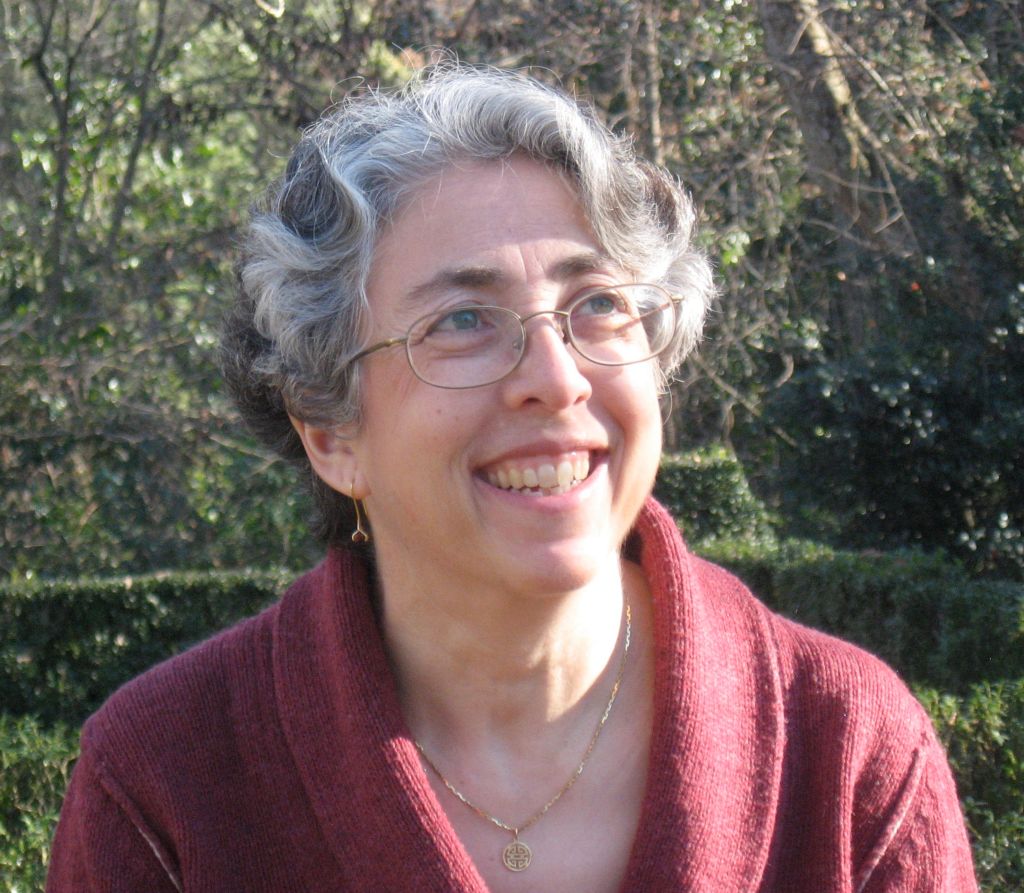
Diane Elayne Dees’s poetry has been published in many journals and anthologies. Diane is the author of the chapbook, Coronary Truth (Kelsay Books) and the forthcoming chapbook, I Can’t Recall Exactly When I Died. Diane, who lives in Covington, Louisiana, also publishes Women Who Serve, a blog that delivers news and commentary on women’s professional tennis throughout the world. Her author blog is Diane Elayne Dees: Poet and Writer-at-Large.