“…where a man’s wound is, that is where his genius will be. Wherever the wound appears in our psyches, whether from alcoholic father, shaming mother, shaming father, abusing mother, whether it stems from isolation, disability, or disease, that is precisely the place for which we will give our major gift to the community.” ― Robert Bly, Iron John: A Book about Men
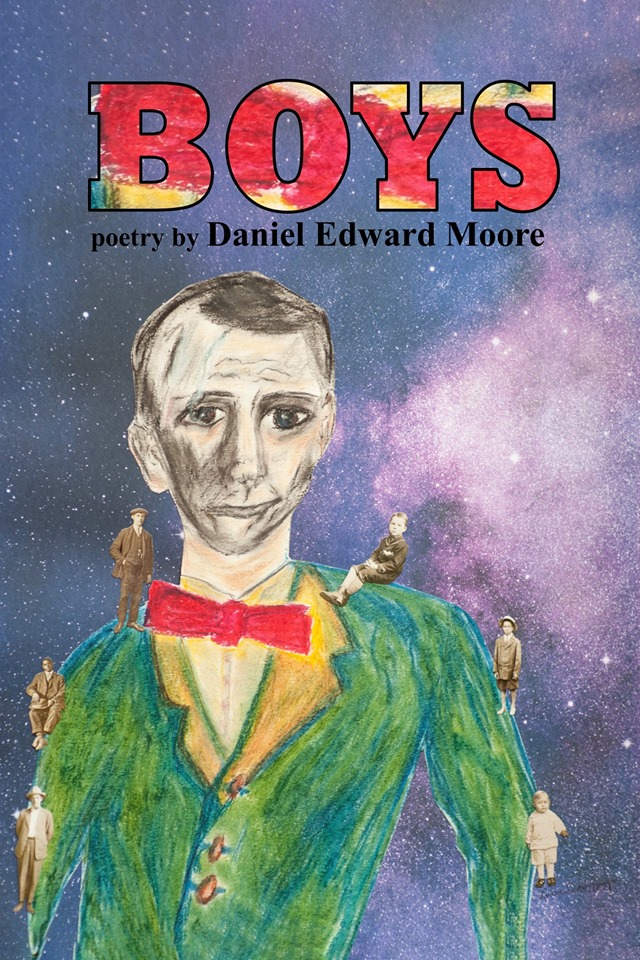
The cover art of Daniel Edward Moore’s debut chapbook Boys will make you instinctively take a deep breath. It warns you that you are about to descend not into flat reality, but further into one man’s psyche with all its spirals and shadows. The cover reminds me of a David Lynch piece—part surrealist daymare, part hypnotic and dark nostalgia. What makes this art even more powerful is that Moore’s wife, Laura Coe Moore—the woman who likely knows Moore best—created it.
It seems fitting, then, that the first poem would be “The Architect’s Son,” a piece where “Leather is the love, you thought was a hand, / she said was a dragon’s tail.” An unnerving juxtaposition of rage and fathers and baseball gloves—we have entered the world of boyhood. And this is how we move forward as readers, into the darkness that will show us the light.
It is hard, while reading Boys, to come up for air. This is not a criticism. Instead, these poems create a landscape that so perfectly encapsulates what I can only imagine to be a frightful appointment—to be raised a boy in a society of anger and expectations and “Never Enough.” These are poems where the religions that are meant to give direction create their own trauma and end up leading us further away from our truth.
The universal father, a bloodied Jesus, the boy—together these personas create a peculiar type of trinity. And in doing so, they form a faith more likely to restore the soul, “a cathedral of gnashing teeth.”
The title poem (originally published in Hot Metal Bridge), in its violence and restraint, encapsulates the innate spiritual struggle weaved throughout the entire chapbook. The poem begins:
It sounded like boys in the woods kicking a dying wolf.
They called him faggot and his eyes rolled to heaven.
They called him hungry and his face ate the earth.
Moore’s exploration of queerness against the backdrop of brutality is a long look at “men wearing crowns of bloody tiaras” while “rejecting the soul of a boy.” So when the chapbook closes with the last line, “birds become hymns of smoke,” we are reminded that even in the worst of circumstances there is hope that we can rise above our struggles.
It is apt that one
poem in Moore’s chapbook would be dedicated to Paul Monette, author and gay
activist who died from AIDS. Monette once said, “Go without hate, but not
without rage; heal the world.” Moore’s work exemplifies this quote.
Boys does not deny suffering.
It does not deny the gift of anger, “like all religions based on blood.”
Instead, it celebrates it. And in celebrating the darkness within us, we have
the chance to be transformed.
Publisher: Duck Lake Books (November 29, 2019)
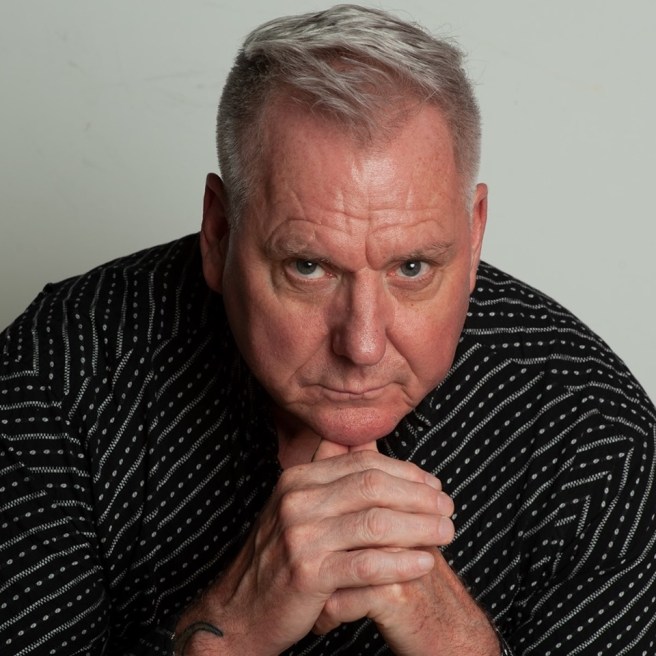
Daniel Edward Moore is an award-winning poet whose works have appeared in literary journals such as American Literary Review, Columbia Journal of Arts and Literature, Spoon River Poetry Review, Rattle, Mid-American Review, December and many others. His chapbook Boys is forthcoming from Duck Lake Books in December 2019. His full-length collection Waxing the Dents was a finalist for the Brick Road Poetry Prize and will be published by Brick Road Poetry Press in February 2020.
Risa Denenberg is the curator at The Poetry Cafe. She is a co-founder and editor at Headmistress Press and has published three full length collections of poetry, most recently,slight faith (MoonPath Press, 2018).
Body of Water Anniversary Interview with Lauren Davis
Lauren Davis: Your debut chapbook Body of Water was published on November 2, 2018. Congratulations on its one-year anniversary! When did you first start to put this manuscript together?
Jeff Santosuosso: Some elements of that book are ten years old, while the most recent, the title poem, is about a year old. That gave me a theme. I generally don’t think in terms of a single-themed work, so that focus was welcome. From there, I browsed my body of work to find similar elements and to tell a story with the chapbook.
LD: In one or two sentences, can you describe the function of a poetry chapbook?
JS: Short story with no overt plot. A flip book of words.
LD: Can you tell me a little bit about how you found your publisher?
JS: I found the publisher via a message board, CRWROPPS and via a referral from another poet. CRWROPPS is a great tool for writers looking for submission opportunities and other things. Clare Songbirds Publishing House is a fine little outfit in upstate New York. They did not require me to presell any chapbooks, as others do, nor did they require a submissions/reading fee. Writers work directly with management.
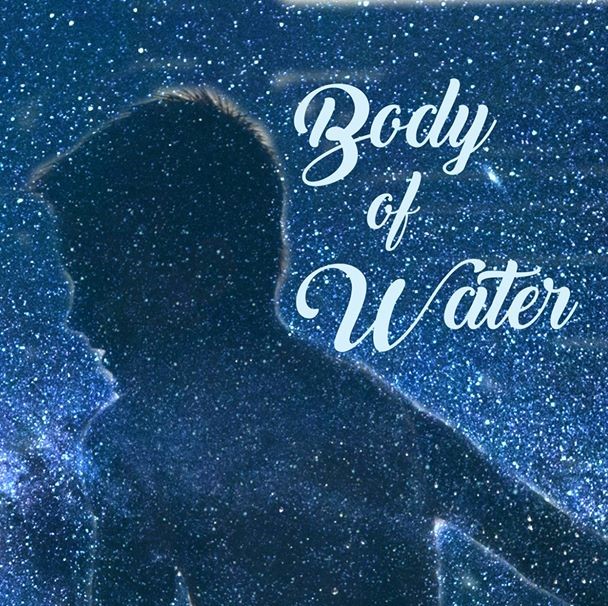
LD: Your cover is absolutely stunning. Did you provide this image for Clare Songbirds Publishing House?
JS: I love it too! I’ve received many compliments on it and have forwarded them to CSPH. The artist is Angela Yuriko Smith. She did that on her own, presumably having read all or part of the manuscript. In any case, the result is stunning!
LD: What was the editing process like with your publisher?
JS: Easy. Simple email exchange, quickly reverted by the publisher. High marks for that!
LD: And has your relationship to these poems changed any now that they’ve been out in the world?
JS: Not so much, though I’m fascinated by the feedback I get, what reaches and connects with people. My son read one of them for a college public speaking course and recorded it. Gives me the chills!
LD: That must have been a very special experience, to witness that. Tell me what poem you think best represents this collection.
JS: Probably the title poem and also “The Blue.” The first because it’s personal. The second because it’s universal. I grew up about five miles from Walden Pond, read the book in high school and have always credited it with lasting impact on my outlook. That poem is very introspective, almost a mood poem for me. Separately, I was prompted by the poet and teacher Matthew Lippman to write a poem about the sea/ocean. (What? Yeah, that’s never been done before, I’ve got such a fresh perspective. Uh-huh.) Anyway, that poem is historical and global, a sweep of a piece, if you will. For me, then, the two relate to our personal, internal, finite relationship with water and our universal, external, infinite relationship with it. I’ll always have a soft spot for “New Jersey Nighthawks,” which I wrote on a ski trip when I was reading a lot of Kerouac.
LD: What are you working on now?
JS: Ha! Come to think of it, more than I expected: an adaptation of one of the books of the Bible. A collaborative poetry work with a good friend, inspired by another. A totally killer video collage of Anglophones from all over the world with their luscious local accents reading “Jabberwocky.” Oh, and a novel about tennis, second chances, and redemption that’s finished. What’s the definition of “finished”?
LD: Do you have any advice for poets who are putting together a chapbook manuscript?
JS: Look for a theme. Look for alignment between your theme and what the editor seeks. Have the book tell a story or have some arrangement, narrative or otherwise. Follow the publisher’s guidelines.
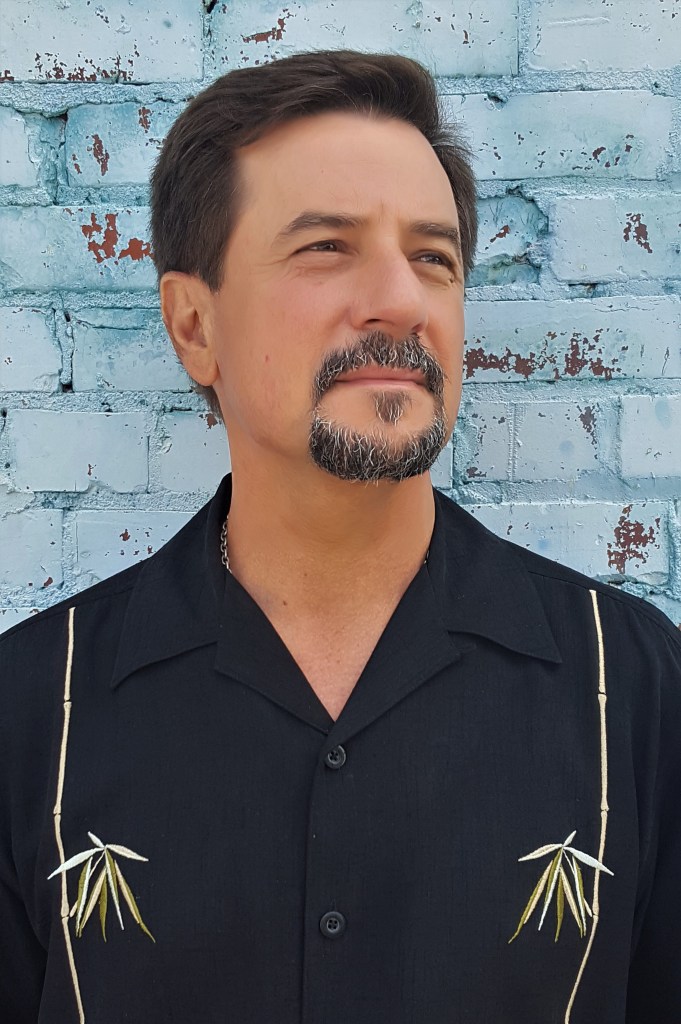
Jeff Santosuosso is a business consultant and award-winning poet living in Pensacola, Florida. His debut chapbook, Body of Water, was published at Clare Songbirds Publishing House. He is Editor-in-Chief of panoplyzine.com, an online journal of poetry and short prose.
Lauren Davis is the author of Each Wild Thing’s Consent (Poetry Wolf Press). She holds an MFA from the Bennington Writing Seminars, and her poetry, essays, stories, and fairy tales can be found in publications such as Prairie Schooner, Automata Review, Hobart, and Ninth Letter. Davis teaches at The Writers’ Workshoppe in Port Townsend, Washington.
Risa Denenberg is the curator at The Poetry Cafe. She is a co-founder and editor at Headmistress Press and has published three full length collections of poetry, most recently, “slight faith” (MoonPath Press, 2018).
Big thanks to all who have been following The Poetry Cafe Online and reading our reviews of poetry chapbooks. I continue to receive chapbooks from near and far, and am amazed at the quality of what I am reading. I am forever grateful to guest reviewers: Sarah Stockton, Jerri Frederickson, Siân Killingsworth and Lennart Lundh who have written such superb reviews. I’m always on the lookout for new reviewers, so please get in touch if you are interested.
Linera Lucas won the CrucibleFiction Prize and has had poetry and short stories published in Boomtown Anthology, Change Seven Magazine, Clover,Crucible,Elohi Gadugi Journal, Pindeldyboz, RKVRY, Spillway,The Vashon-Maury Island Beachcomber, VerbSap, VoiceCatcher Anthology and elsewhere. She has a BA from Reed College and an MFA from Queens University of Charlotte, and has taught creative writing at the University of Washington Women’s Center, the Reed College Alumni Writers Workshop, and Hugo House.
A Nation (Imagined) (Floating Bridge Press, 2018) is a lyric poem about love, grief, nature, and graceful endurance. The format is one long poem bookended by two short poems, and the story is a simple one: a man and a woman love one another, he goes off to war, she stays home, he dies and she continues to think of him. But the way Moni tells this story is anything but simple. Just because a book is short does not mean it is not profound.
The opening poem “And what if everything” makes it clear that this is going to be about death and memory. We are going back in time. First we are in a field of daffodils, and then we are in a minefield. The transition is brief and shocking, as if the reader is the one who is blown up. We start with sex and move to death where,
–the pause after love before love which is– now You are in a field of daffodils – no – a field of living mines
If you bend left, death. If you bend right, memory. This is the prologue, the poem that teaches the reader how to read the rest of the work. Thank you, much appreciated. It’s good to have a guide, even if I’m not quite certain just how much I can trust the poet who is leading me onward. The long poem begins,
Remember the year you forgot to water my jade
and ends with,
Do you remember this?
Next, we are going to have the
catalogue of what happened, in poet time, in real time, and in a mix of the
two. I feel as if I had been given the chance to open a secret box, to read
letters I am not supposed to know about, and I feel a little guilty, but I
don’t want to stop reading.
Now the poet writes to her lover, telling him what has happened since he left, how she wishes he would write to her, then I turn the page and she says a letter arrived three years too late, that their tree will be firewood,
Tomorrow our madrona becomes a cord what will keep
(our heat)
And what will keep their passion
alive, now that he is dead? This is a poem about coming to terms with grief,
also about not coming to terms with grief. She wants to send him his chickens,
tries not to weep, gives him a list of what she saw on her daily walk in the
woods. She saved a wildflower from a young girl who wanted to cut and press it.
“They” (the ever present outside world), would like her to do various things, to be more like someone else, to behave in a recognizable manner, but she wants her lover to “enter and with care // strike the lantern” . . . taste the apricots,
on your favorite plate your favorite plate
the one chipped from too much loving.
This might be my favorite passage in
the whole book.
Then there is the bargain she wants to make at the end of this poem: “unwind your voice / from my inner ear and I will ” not steam open the letter written to him, which started this whole story. What is in that letter? I am not going to find out, and I like that.
And now the final poem, the other bookend, “Letter to a Lover Whose Name Spells Dark Bird.” This is, of course, a letter to Corbin, the dead lover. Corbin is a variation on Corbie, which is another name for crow or raven, birds of intelligence connected with death and messages from the dead. This poem has the kind of bargaining that deep grief brings, past pleading and near madness, but such resigned madness. Here’s how it starts,
Look, when you call – bring the basket
and here’s how it ends,
Meet me and we will forget our bodies were ever anything but
a little salt, water waiting to be stirred.
and in between is,
the year we spent a lifetime sailing in the boat of our bed.
So that’s the last poem. I have read the story, and have been changed by it. What makes this chapbook so fulfilling is how real the grief and love are, how tender and fierce the poet narrator’s love for her dead Corbin, and then the ending, with the unopened letter. Because at the last, we never really know another person. We can guess at them, follow the clues from how their lives cross ours, but each person contains many mysteries.
Natasha Kochicheril Moni is the author of four poetry collections and a licensed naturopathic doctor in WA State. Her most recent chapbook, A Nation (Imagined), won the 2018 Floating Bridge Press Chapbook Award. Natasha’s writing has been featured in over sixty-five publications including Verse, Indiana Review, Entropy, The Rumpus, and the recently released Terrapin Press anthology, A Constellation of Kisses. As a former editor for a literary journal, a panelist for residency and grant award committees, and a chapbook contest judge, Natasha loves supporting fellow writers. She owns and operates Helios Center for Whole Health, PLLC, which offers naturopathic appointments, medical writing, poetry manuscript consultations, and writing and wellness lectures/workshops.
Risa Denenberg is the curator at The Poetry Cafe. She is a co-founder and editor at Headmistress Press and has published three full length collections of poetry, most recently, “slight faith” (MoonPath Press, 2018).
In Bad Anatomy (Glass Poetry Press, 2018), over the course of twenty poems, Hannah Cohen opens a window for readers into a world of isolation, regret, and danger at the edge of the speaker’s self-destructive tendencies. Using a broad variety of poetic arrangements ranging from ragged free verse to restrained couplets to ghazal, Cohen allows herself to run wild with form. Wildness seems to be an underlying drive of this book, as poem after poem incorporates images of monsters, monstrosities, defiant wrongness, and a celebration of imperfection.
Cohen’s
poems pull the reader into an already-running engine, a monologue in media
res. Readers witness and listen to a speaker who reveals her deepest feelings
and worst fears about herself as she recognizes their movements. This speaker
is an unreliable narrator who confesses to drinking, making questionable and
self-destructive decisions, and laments her own body’s betrayal.
The title poem, “Bad Anatomy,” appears early on and encapsulates the problems the speaker is grappling with. She feels not herself in her body, instead she feels that the “universe keeps me / betting against my conception,” and further admits she’s “unable / to divine the good.” As the poem ends, she claims defiantly that she doesn’t “need help / to empty my chest of its hope.”
The desolation and despair the speaker feels is the water this book is moored in, and the sense of bodily wrong pervades. In one of my favorite poems, the speaker morphs into a monster in “Self-Portrait as Grendel,” revealing,
I myself am half-hell and half morning
/ / /
A new head, a different name, but still my skin.
Cohen uses her speaker’s confessions to provide a context for a larger malaise. The book itself becomes a lament on the instability and inconstancy of a life, the missed opportunities due to the speaker’s struggles with pain, isolation, and depression. This speaker is willing to bare it all: to pull back the veil to show the feeling of being on the brink of something even more serious.
But before readers dive too deeply into the pit of despair with Cohen, she pulls us back with humor. A delicate stream of sarcasm or sometimes false bravado sparkles through the book, reinforcing the authenticity of this speaker; it is as if she were in your living room or at the other end of a phone. Witness this skillful play in her poem “Like Someone Driving Away from her Problems,”
even god doesn’t believe in the rusty jesus-saves signs can’t save her
The poem “Superficial” is where we really dig into the idea of bad anatomy. Here, the body has gone wrong and seems to be a stand-in for the speaker’s battered and distorted psyche. Opening with the horrified discovery of a specific type of birth defect, the speaker compares herself to babies “born with their intestines / outside their little baby bellies.” This gruesome image of bodies turned inside out serves up a metaphor for the speaker’s sense of self. Her own discomfort with her gut instincts and feelings are out for display, in contrast to the physical way surgery would be used to correct a birth defect. The intent of the poet seems to be to reveal the guts and gore and make us sit with the discomfort of existence.
In a gesture appropriate for this book, the final poem “Body as an Alberto Giacometti Sculpture,” refers to the stretched-out, abstracted human figures created by the sculptor (1901-1966), which are widely recognized as representing alienation, loneliness, and existential dread. This slim poem trails down one page and trickles onto the next with a blunt directive to the reader to see this alienation, the pose held by the speaker so that we may bear witness to it, this “beautiful arrangement / of flesh that isn’t love.”
I
thought it would be clarifying to include an interview with the poet herself. Cohen
was gracious enough to answer my questions, in this email exchange:
Siân Killingsworth: When did you first encounter poetry? How did you discover that you wanted to write poems?
Hanna Cohen: Like
most writers, I started writing at a young age. I loved writing and
illustrating my own stories and sharing my “books” with family members. As I
got older, my writing interests shifted from writing stories to poems. I read
Poe and Keats and Yeats. I wrote tons of garbage angsty poems as a teen. I
still write garbage angsty poems—they’re just (hopefully) better written. I’ve
written nonfiction (and am attempting to write fiction) but I primarily think
of myself as a poet first.
SK: Where do your poems most often come from— do you use
prompts? Do you overhear conversations and springboard off those? An image, a
sound, a phrase, an idea?
HC: It’s a mishmash of all the above! Sometimes I’ll hear a weird sentence out in public and write it down, so I don’t forget it. I mostly write based on how I’m feeling. There are certain themes I keep coming back to (identity, family, Judaism, depression, etc.) but I also like to write nonsense for the sake of generating lines of material. I don’t use prompts a whole lot since I don’t like forcing myself to write.
SK: Which writers (living or dead) do you feel have influenced you the most?
HC: It’s
hard to say who exactly influenced me, but the most obvious answers would be
Sylvia Plath, Adrienne Rich, and Robert Lowell. Nowadays, I find myself reading
Jewish poets such as Rosebud Ben-Oni, Rachel Mennies, and Erika Meitner. Though
his writing style isn’t exactly seen in my work, William Butler Yeats continues
to be a poet I return to.
SK: What are you reading now?
HC: I just
finished The Book of Joan by Lydia Yuknavitch a few weeks ago, which was all
parts amazing, slightly off-setting, and powerful. I had purchased the novel a
year ago, so I’m happy I finally read it. The most recent poetry collection I
read was Lauren Milici’s Final Girl and Emily O’Neill’s You Can’t
Pick Your Own Genre double feature collection.
SK: Tell us a little bit about your collection: What’s the significance of
the title? Are there overarching themes? What was the process of
assembling it? Was is a project book?
HC:Bad
Anatomy takes its title from a poem within the chapbook. I wish I could say
I had a thorough process but really, I chose the title because it sounded cool.
The book doesn’t have a true narrative but rather an emotional landscape of
depression, isolation, lots of self-deprecating humor and even flashes of hope.
There are other subjects present (drinking, body images, etc.) but those are
the more immediate themes.
When it
came to arranging these poems, it was important to have words and feelings
“echo” each other. What’s on the surface of the poem versus the interior, and
so on. I’m forever thankful to the poets who offered insights and edits into
the order of the poems—crafting a collection really isn’t a solitary job.
Most of
the poems in this chapbook were written during my time in graduate school.
However, those poems didn’t make the cut into my thesis due to the different
subject matter. When I learned that Glass Poetry Press was having an open
reading period for chapbooks, I basically took those twenty-odd poems and
compiled them into a chapbook. The rest is history.
SK: Tell us briefly how your poetry has changed since you began writing.
HC: I
think I’ve become more particular about the weight of words, and where to place
them within a poem. I’m also challenging myself to write poems about subjects
that I hadn’t considered, trying on new forms, and allowing myself space to NOT
write. Since I work a day job, writing time is far more precious than when I
was in school.
SK: What’s
your favorite piece of writing advice?
HC: If
you can’t think of a title for your poem, just start the title as “Poem
After/About/On [Insert Subject Here]”. It’s simple and direct. My newest poem,
“Poem After Reading the Chapter in Stephen King’s It Where the Word “Kike”
Appears Six Times” (forthcoming in Cherry Tree), is an example of this.
SK: What a great suggestion! I’ll try this in some of my newer poems. Sometimes I struggle with titles because I don’t want to be too obscure. This will do the trick, I think.
Hannah Cohen received her MFA from Queens University of Charlotte and lives in Virginia. She is the author of Bad Anatomy (Glass Poetry Press, 2018). She is a former contributing editor for Platypus Press and currently co-edits the online journal Cotton Xenomorph. Recent and forthcoming publications include Cherry Tree, The Rumpus, Berfrois, Entropy, Glass: A Journal of Poetry, Cosmonauts Avenue, and elsewhere. She was a finalist for Best of the Net 2018 and has received Pushcart Prize nominations.
Risa Denenberg is the curator at The Poetry Cafe. She is a co-founder and editor at Headmistress Press and has published three full length collections of poetry, most recently, “slight faith” (MoonPath Press, 2018).
“Carry On,” the front
cover says, coupling those two words with “(elegies),” and that’s a
double-edged phrase, the title poem being about carry-on luggage. Adam
Deutsch’s chapbook of twenty-five poems is double-edged throughout. On first
reading, it’s very author-personal and self-referential, as elegies often will
be, but a later, careful oral reading makes the poems reader-personal, universally
affective, and quite rewarding.
It quickly becomes obvious that none of the poems are elegies in the confined, traditional sense. Even “Great Aunt, Winter, & Sun” (p. 15), while written “for Marilyn Adler,” makes little reference to the deceased, and is more about the graveside ceremony that will “never really fill the hole” felt by the family. The bulk are, however, clearly about some form of loss, the sense of loss, or the aftermath of loss.
“The Roads Will Be Closed”
(p. 5) swings from a classroom non-incident to the Cold War of the Fifties that
now can only haunt but not harm:
I was schooled, too, and my parents, their sisters and brothers, looking at the bomb shelter signs beside the basement doors.
Individually spoken, but perfect for
the universal impact of today’s world, “Packing Heat” (p. 6) concerns
itself with the loss of principles, saying of a job offer after a year’s
unemployment, “I must wrestle down / genuine objection to wearing a
gun.”
“What Cuts through the Woods” (p. 8) speaks of urban sprawl’s impact on community, saying, “We all drink from the same well.” in a foreshadowing of the title poem. “Carry On” (p. 20), with the accent on the first syllable rather than the cover’s suggested last, re-emphasizes the “we” to make its lines resonate with truly shared loss:
We’re exiles of an old country’s long gone century, erased analog tape.
We’re plowing through this life in our longings so mighty, a bird swoops up ahead and is creamed by the bumper.
At the physical center of the book’s
thirty-seven pages, a pair of poems bring us to the two sides of our elegies
and rememberings. “The Center for Personal Growth is Next Door to Cremation
Services” (p. 16) describes those who refuse to let loved ones go, ending
a short list with the recognition that, “We’re of a people / who keep
absence / near. Handy / as duct tape.” This sets the stage for
“Strangers, Autumn, & Gray” (p. 18), with its dedication
“for those in the City of Ithaca Cemetery.” It speaks, in twelve
lines, of those who have let go:
A whole other mass, back in their ground,
/ / /
. . . the monuments abraded smooth, generations’ worth of runoff, drizzle, and pour.
There are, of course, other things
than death to be found here. We’re treated to small, but serious, observations.
“Golden Hill” (p. 34) says of preparing food, “Every beet I cut
/ looks like a heart / on fire in a Mexican / art piece.” and later points
to “a flower dealer / watching a woodpecker / with priorities in
order.” In “Our Advances Are Not Unique” (p. 24), the subject is
how “A sugar maple’s arms built a chest / around the block’s telephone
wires . . .”, and the closing “Returning” (p. 37) leaves us with
“An incredibly mysterious current event: a garage / door is wide open,
waiting for anything.”
We often think of elegies in terms of someone else’s physical death. Deutsch’s work comes to remind us that parts of each and all of us are dying every moment, often unnoticed until later. There isn’t always time or reason to mourn or feel melancholy, not until the speed of life slows, or an absence catches us by surprise. The message, as well as the poems which convey it, are well worth the reader’s consideration.
Adam Deutsch is the publisher at Cooper Dillon Books, and has work recently or forthcoming in Poetry International, Thrush, The Cossack Review, Ping Pong, and Typo, and has a chapbook called Carry On (Elegies). He teaches in the English Department at Grossmont College and lives in San Diego, CA. He can be found at adamdeutsch.com
Risa Denenberg is the curator at The Poetry Cafe. She is a co-founder and editor at Headmistress Press and has published three full length collections of poetry, most recently, “slight faith” (MoonPath Press, 2018).
Siân Killingsworth’s poetry has appeared in journals such as Stonecoast Review, Glass: A Journal of Poetry (Poets Resist),Columbia Poetry Review, Mom Egg Review, Ekphrastic Review, Oakland Review, and Mudfish. She has an MFA in poetry from the New School, where she served on the staff of Lit. She is a current board member of the Marin Poetry Center.
Sarah Nichols’ micro chapbook She May Be a Saint (Porkbelly Press, 2019) is an enigmatic exploration of a chimeric speaker, recounting the disintegration of a former identity and the darkly lyrical creation of a new self.
This
book is composed of seventeen centos—short poems created entirely from lines
and phrases selected from works of Sylvia Plath and C.D. Wright. It seems to me
that Nichols chose these two poets’ works because the source poems are densely
packed with images that are easy to pluck from a poem and repurpose. Only a few
of the lines are recognizable because Nichols so expertly weaves them into a
new, unique series of portraits. Admittedly, I have not read a lot of Wright,
so her voice seems to me wholly subsumed in this creation, while Plath is still
distantly identifiable – but perhaps only because she and her work have been so
mainstreamed into contemporary consciousness via movies, anthologies, stories
and the ubiquity of her most famous poems.
These poems are brief, with short lines comprised of few words. As a collection, She May Be a Saint is incredibly tight, as each poem builds on those preceding it in a lyric narrative that has a clear, multifaceted arc. It begins with the revelation of a self. The self goes on to describe her creation and we understand that it is in fact a re-creation in response to an unnamed trauma. In employing the voices of these other poets, Nichols creates an unsentimental speaker who describes a unique experience.
The speaker, “an unidentified woman,” opens in the first poem, “Once I Was” by inviting the reader to,
Call me the Duchess of nothing
To
self-identify in this way, the speaker permits readers to acknowledge some
measure of her stature and its simultaneous absence. A prominent member of
European royalty, a duchess (or duke) ranks immediately below the monarch, yet
to style oneself “the Duchess of nothing” is to suggest the
meaninglessness of such a title and also to herald the imminent revelations of
her dominion found in the poems that follow.
The religious elements of saints are jettisoned in favor of a more pagan supernaturality. The title is taken from Plath’s poem “Poem for a Birthday: Maenad,” and appears in “Once I Was,” signaling to us that this poem and the series that follows focus on re/birth and a watery spirit concealing (and revealing) her rage. In “Neat,” the water spirit is named again: the “undine-like maiden” is the blood running through veins.
Self-erasure is a thread that runs through the book. This Duchess notes “old happenings, / erased,’ and through the book makes oblique and overt references to her body being “a // coil, / blasted.” The speaker erases herself in order to create herself anew. Female saints of the past are known to have starved themselves, often to death, in the name of their religion, and their religious life was often founded in lieu of marriage. This physical diminishment has long been regarded as a form of self-effacement, and these acts were subsequently rewarded with sainthood after death. So, the Duchess, in a roundabout way, is the titular saint by way of self-negation.
Beginning
in roughly the Middle Ages, some Catholic girls and women fasted to the point
of developing anorexia mirabilis, a condition of self-induced starvation
that often led to death. Their intention was to leverage physical suffering to
get closer to God. Notable sufferers include Catherine of Siena and Saint
Wilgefortis, both of whom took vows of chastity, abstained from food, and
prayed for ugliness in order to avoid arranged marriage. Lack of food regularly
led to these proto saints seeing visions and hearing voices, phenomena that led
to a transformation from mortal to saint. In She May Be a Saint, the
voices of others have been reshaped to speak for her – both Wright and Plath
are manipulated and effaced so the Duchess’ own voice may come forth.
Many of the poems in She May Be a Saint refer to language, words, writing, ink, and carbon– a word with multiple meaning, calling to mind to the carbon of typewriter ribbon, carbon as replicated pages of print, the carbon graphite “lead” inside a pencil, and finally, carbon as the basic element of life. The Duchess replicates herself through telling, writing. She “drafted a / fictitious life.” Perhaps this is exactly what we’re reading: a juxtaposition of language, experience, erasure, rebirth. The opening poem again lays down the framework for this notion:
I poke at the carbon of it,
an end to the writing.
Words to rid me of
me.
As
an opening statement, this powerful self-negation sets the stage for the
Duchess to recount the traumas of the body, its difficult recuperation, and the
novelty of a created identity with which to begin anew. About halfway through
the chapbook, in “Invisible Wounds,” the Duchess reveals that she suffered an
unnamed trauma twenty years in the past that forced her into “dormancy.” This
is perhaps the reason for her original self-effacement. Rather than taking readers
through therapeutic dissertation (as some poets do) that allows her to work
through the trauma, the Duchess prefers to eliminate it and claim a new life
entirely.
Since the speaker’s identity evolves continuously through the course of these portraits, it can be somewhat difficult to pin down because of this flux. We are witness to her body’s disintegration, its pain and the lessening of pain via drugs, we learn in “The Mask Increases” how her “bones soften,” yet all the while, she reveals, “I think I have been healing.” She “inhabit[s] a doll’s body” and later, in the poem “Other Bodies” seems to acquire a new body, which she calls “My new instrument.” With slightly eerie nod to gothic horror, the Duchess pulls back the veil on her wounds, tenderness, fear, resignation, and (spoiler!) a hint of threat at the end.
Nichols’ micro chap is spare and concise, but each poem is crisp, brimming with electricity and mystery. As a reader, I was left feeling somewhat breathless, as one might feel after watching a psychological thriller. The Duchess’ self-immolation and regeneration is a gift to readers, letting us closely observe and feel the transformation from a wounded spirit to a powerful one full of potential and intent.
Sarah
Nichols lives and writes in Connecticut. She is the author of eight chapbooks,
including This is Not a Redemption Story (Dancing
Girl, 2018) and Dreamland for Keeps
(Porkbelly Press, 2018.) Her poems and essays have also appeared in Five:2: One, Otis Nebula, The Fourth River, and
FreezeRay.
Risa Denenberg is the curator at The Poetry Cafe. She is a co-founder and editor at Headmistress Press and has published three full length collections of poetry, most recently, “slight faith” (MoonPath Press, 2018).










 The Poetry Cafe