The Hatchet and the Hammer

The Hatchet and the Hammer, by Caitlin Scarano

Review by Risa Denenberg

I find myself wanting to respond to every line in Caitlin Scarano’s chapbook, The Hatchet and the Hammer (Ricochet Editions, 2020).  When she says, on page 2, “you can make him well, / if you simply / find the right offering,” I want to admit: “that was so true, for so much of my life.” And when the very last stanza reads,

How beautiful it will be to wake up one morning and know
I am not in love with anyone but the open fields I’m crossing,
the alter I’ve made. How beautiful it will be
to bury this.

I think, “You will bury it as I have. When you grow old.” I think about the decades where all of my hurt stood between me and the ability to fully love or forgive myself or others. I think about how focused my attention was on sex as repair for hurt. As Scarano’s narrator puts it, “fucking is a form of healing.” My own persistent repetition of behaviors that caused harm to self and others are described perfectly in the book as “our hardwood floor kind of love.”

I don’t think this reaction is a unique affair between me and this book, or between me and the poet. I think instead that when words engage me to this deep level of exploration and memory, when the writing is clear and unencumbered with disguise, the words are true.  No less true, whether or not they represent the poet’s own narrative. 

Certainly, The Hatchet and the Hammer tells a woman’s story that is filled with danger, pain, and loss. One grandfather threatening a young black man with a shotgun and another hitting his wife with a hammer; an alcoholic father dying of liver failure; a partner with intrusive thoughts of violent acts.

Questioning becomes the modus operandi here for growth and healing. Movement occurs, however slowly and non-linearly, thorough questioning reality, typically with no easy answers. When on p. 14 the narrator asks, “how were we to know?” and on p. 17, “What did I really know?” the poignancy of how a child’s naivety disguises harm is striking.  Scarano searches for a way out, asking on p.19, “How do I know when I have the truth about myself?” And her answer is hopeful,

I looked out over Lake Michigan
one morning and thought:
there must be someone

who all this won’t matter to,
someone who will forgive me
.

I must believe
we are not the worst we’ve done.

An image of the narrator’s mother, searching “for the [lost] diamond in the garden for hours,” is analogous with the book’s excavation of a life spent digging for answers. Answers are not always forthcoming, but on p. 29, the narrator uncovers a way of acknowledging the depths and layers of her humanity, saying, “Nesting doll, remember / who found you.”

The place where healing can begin, lies with perspective: time and distance. On page 33, as if an aside, there is this parenthetical observation:

(This is to say: I see now, like how clear constellations appear when you finally move out of the city, the points where I was wrong. How they pulse with pain. Let them.) 

The 34 pages of text in The Hatchet and the Hammer are organized in short stanzas, paragraphs, and information bits, separated by embellished dots that resemble colons. As if saying: this, and also this, and so forth. There are no titles, so instead, I’ve added page numbers so the reader can get a sense that there is an uneven sort of growth unfolding.

Incorporated material was referenced in an appendix of “works quoted,” from which Scarano borrowed words of Carl Phillips (In the end, courage has mattered so much less than / not spooking easily, which is all nerve is.), and Sharon Olds (“suddenly I understood his fondness for me was safe–nothing could touch it.”), alongside medical tidbits (OCD is a medical problem, / and not anyone’s fault.) Scarano also quotes from Elaine Scarry’s, The Body in Pain, a book I recall relying on to understand the meaning of illness in the nineties, during the AIDS epidemic.

There is also a line from June Jordan: Poetry means taking control of the language of your life. As The Hatchet and the Hammer suggests, writing may be an act of taking control, but it is not therapy. While I recognized myself in the narrator’s struggles, and take some solace in that act—by which I mean the act of being honest with myself about myself—I do not seek or find comfort in the battle. Healing is a goal for those who have experienced trauma, but it is not a given; at best it is a series of ever higher hills to climb, ever deeper excavations to dig. I am not one to give trigger warnings, I’d prefer to challenge others to read this book, to see what they find here, what they are willing to bear.


Caitlin Scarano is a writer based in Anacortes, Washington. She holds a PhD from the University of Wisconsin-Milwaukee, an MFA from the University of Alaska Fairbanks, and an MA from Bowling Green State University. Her second full length collection of poems, The Necessity of Wildfire, was selected by Ada Limón as the winner of the Wren Poetry Prize and will be released in spring 2022 by Blair. 
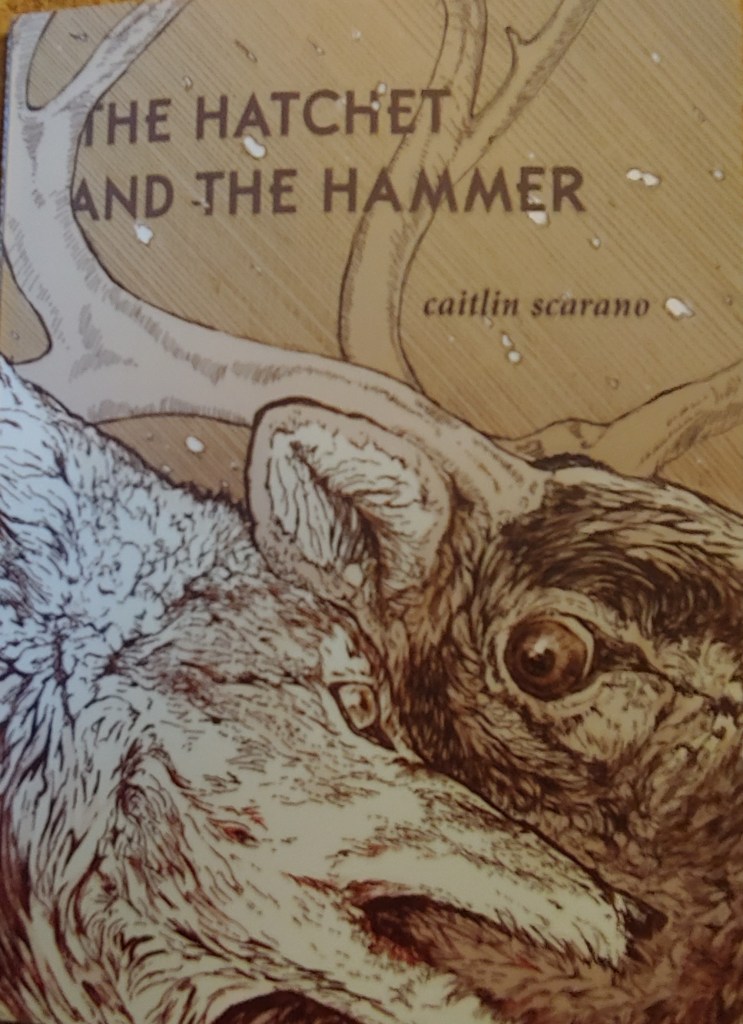

Title: The Hatchet and the Hammer
Author: Caitlin Scarano
Pub Date:3/3/2020
Publisher: Ricochet Editions
ISBN978-1-938900-34-1
Price: $10


Risa Denenberg lives on the Olympic peninsula in Washington state where she works as a nurse practitioner. She is a co-founder and editor at Headmistress Press and curator at The Poetry Café. She has published seven collections of poetry, most recently the full length collection, “slight faith” (MoonPath Press, 2018) and the chapbook, Posthuman, finalist in the Floating Bridge 2020 chapbook competition.

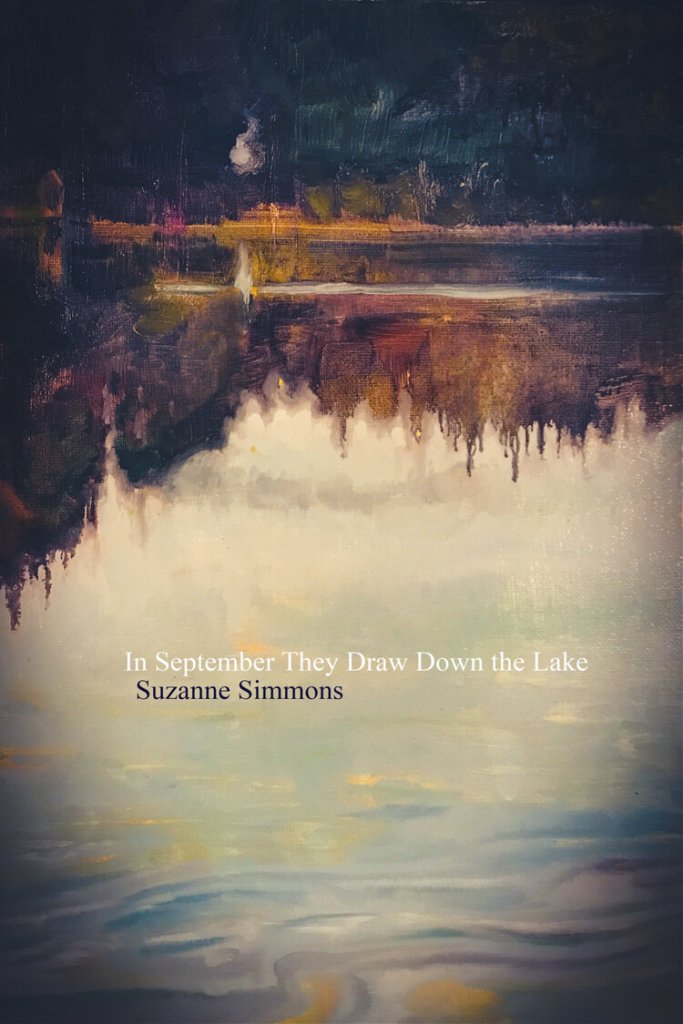
In September They Draw Down The Lake

In September They Draw Down The Lake, by Suzanne Simmons

Review by Bill Rector

I do not know Suzanne Simmons, except by way of her chapbook, In September They Draw Down The Lake (Alexandria Quarterly Press, 2020). This is fitting, as her work derives its tension from the distance, emotional, physical, and temporal, that exists between herself and others.

The second poem in the book, “Commute,” concludes:

The train streaking beside us
blows its whistle, years ago.
We’re almost there.

Are we? The last poem in the collection is the echo she hears in the “shivery tunnels” of loons’ cries:

They cut through my dreams. Wake me.
Do you hear them? You on your shore?

The book is divided into three, untitled sections. The initial section focuses on loss and its constant companion, regret.  The first loss is that of her mother, who had a glass eye, in which the author sees herself disappear. In “Self Portrait,” she writes:

I
fell
out
of
you
and
rolled

Then, the loss of a lover/husband:

(I don’t miss you.) I miss air. (I don’t miss you.)

The second section is about her third loss, which is that of her son, who has autism. “Nursery rhyme” concludes with this wrenching sequence:

Normal health baby

At six, he asked Mommy, please kill me.
Smeared feces on the dinosaur wallpaper.
Came at me with teeth and eyes wild, clawing.

Rocking, rocking, rocking.

A later poem, “Coded” shows a family torn apart. The poem begins during a parent-teacher conference, in which the poet is sitting in a child-sized chair, and ends:

My husband begins crawling for the door.
Seventeen years pass.
I’m sitting in a child-sized chair.
I’m about to speak.

The heroine of the third section of the book is the lake near which the poet lived and perhaps still does.

It was sweet when you held me up.
Sweeter still when I dove to your bottom.
Thanks for lapping and churning
and the mornings when you lay under the mist
silent. I was furious every winter when you froze.

One might expect the body of water to express, through the many forms available to metaphor, a form of reconciliation.

Not so. Here in “Long Night,” is this:

Cold stuns the lake
onto glass. Portal moon.

[ … ] Hunger Moon,
and one called crust.

This is the moon of the unfuckable.
Between my boots and the rutted earth,
a skin of ice breaks.

This book is skillfully written and worth reading for that reason alone. Its actively beating and, at times, raw and raging heart, is representative of our times.


Editor’s note: There is an introduction to In September They Draw Down the Lake, written by Ilya Kaminsky, author of Deaf Republic, which concludes with these words: “In a time of so much crisis, what a pleasure to read this kind, loving, beautiful work.”


Suzanne Simmons’ poems, essays and photographs have been published in the NYTimes, Fifth Wednesday, Rattle, Smartish Pace, The Baltimore Review and numerous other journals. Her chapbook In September They Draw Down the Lake was released by Alexandria Quarterly Press in 2020. Visit her at www.suzannesimmons.net.


Title: In September They Draw Down the Lake
Author: Suzanne Simmons
Publisher: Alexandria Quarterly Press, 2020

Price: $14


Bill Rector is a retired physician. He formerly edited the Yale Journal of Humanities in Medicine. His publishing credits include a full-length poetry collection entitled, bill, through Proem Press, and five chapbooks: Lost Moth, about the death of his daughter, which won the Epiphany magazine chapbook competition; Biography of a Name (Unsolicited Press), relating the death of Jimmy Hoffa to contemporary American culture; Brief Candle (Prolific Press), a series of sonnets in modern idiom about selected characters from Shakespeare; Two Worlds (White Knuckle Press), relating the transcendent to the ordinary, which the editors called one of the most beautiful collections they have published; and most recently, Hats are the Enemy of Poetry (Finishing Line Press).

Risa Denenberg is the curator at The Poetry Cafe.

Bill Rector

Bill Rector is a retired physician. He formerly edited the Yale Journal of Humanities in Medicine. His publishing credits include a full-length poetry collection entitled, bill, through Proem Press, and five chapbooks: Lost Moth, about the death of his daughter, which won the Epiphany magazine chapbook competition; Biography of a Name (Unsolicited Press), relating the death of Jimmy Hoffa to contemporary American culture; Brief Candle (Prolific Press), a series of sonnets in modern idiom about selected characters from Shakespeare; Two Worlds (White Knuckle Press), relating the transcendent to the ordinary, which the editors called one of the most beautiful collections they have published; and most recently, Hats are the Enemy of Poetry (Finishing Line Press).

ALL ELSE FALLS TO SHADOW

All Else Falls to Shadow, by Amy Lee Heinlen

Review by Christine Orchanian Adler

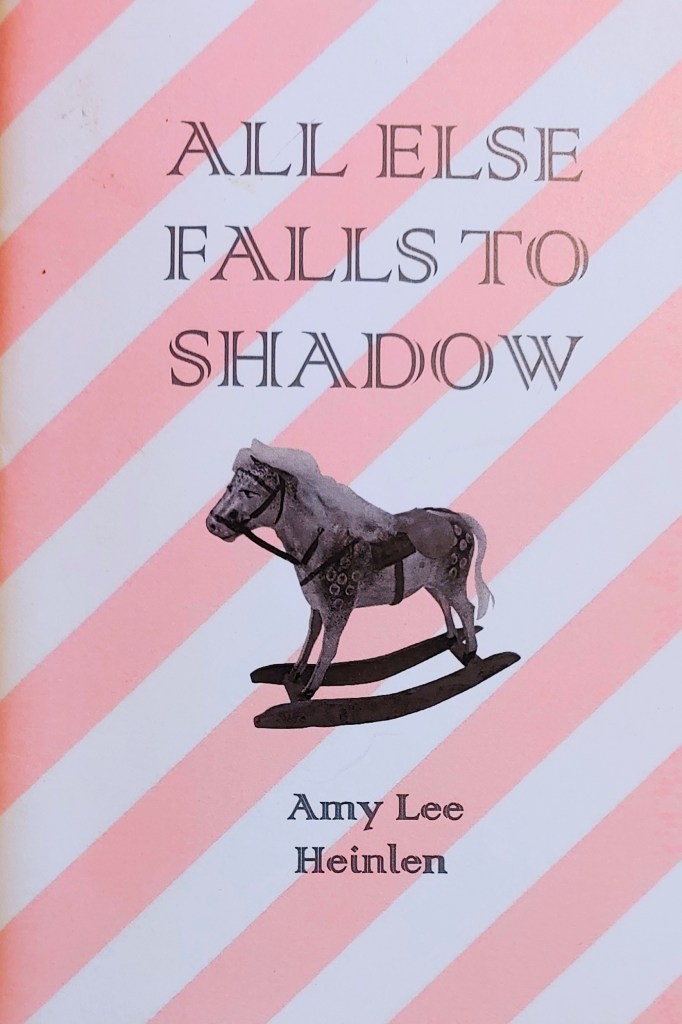
For many, motherhood conjures thoughts of gurgles and coos, tiny clothes, pastels and talcum. The cover of Amy Lee Heinlen’s chapbook, All Else Falls to Shadow (Dancing Girl Press & Studio, 2018), with its pink and white candy-cane stripes and child’s rocking horse, give it as charming and harmless an appearance as those innocent perceptions. Yet Heinlen’s poems also explore the real and darker side of motherhood many women experience after baby arrives.

Postpartum depression, and its power to overshadow the joy of life with a new baby, is all-encompassing, and too rarely discussed. As a mother who experienced post-partum depression after my second child, I couldn’t see it when it was happening—but I could see myself in the pages of this book.

In every culture dating back to biblical times, motherhood has been depicted in art, poetry, and song as a transformative experience, as natural as the tides. Fittingly, the bible and the ocean are referenced in Heinlen’s poems, like touch points for the speaker to grasp, to keep from drowning in her new reality.

The book begins with a peek of life before, when the speaker’s power lies fully within her mind. In “Self-Portrait As The Apostle Paul”, she glimpses her reflection, her hair wrapped in a towel, creating,

an image of a man in a turban, God shining
through him. In the mirror, I don’t have a beard,
but I could grow one if I wished, like an erection,
strong and sharp as the sword of a man of God

Understanding what’s to come seeps in slowly. In “What to Expect,” the nursery is prepared. Fresh paint, alphabet flashcards, and a mural of Noah’s Ark on the wall create a peaceful setting for the coming baby. Yet we begin to sense something ominous looms, that reality will soon violently overtake the fantasy of motherhood:

I sit in the rocker, gift from the aunts.
Green parrots squawk and flap

their wings but can’t warn Noah’s wife,
who has fallen asleep beside the bull

below deck. Leopards lick
the blood of unicorns from their lips.

In “Birth Plan,” the preparation and expectations are paralleled through repeated lines, half of which are heavily redacted. This visual depiction of fiction versus fact—literally and metaphorically in black and white—reveals how little all the preparation mattered; how little registers in a woman’s mind in the throes of labor; how little power she has when the act of childbirth fully overtakes her body until, at last, a healthy baby emerges. Finally, it would seem, all is well. But then the fall begins.

In the poem “Light, Blue”, it has only been hours since her child arrived, and the speaker has already deemed herself an unfit mother:

The first hours of your life, I fail
To help you wash the yellow pigment
From your body.

xxxxxxxxAt the hospital,
xxxxxxxxjaundice is common.

My dumb breasts sit and stare.

Throughout the poem are all the perceived ways the mother fails her new daughter: the inability to fix her jaundiced condition; the frustration of being unable to feed her, and the helplessness of listening to her cry because she is too hungry to sleep. Reading these lines, I just want to hug her.

Doctors tell her of the jaundice, the trouble breastfeeding: this is common. But what of the mother’s mindset? Is this depressed state common as well? That this question is not explored by the doctor is the real failure.

Heinlen writes with authority and without sentimentality about what a woman is told to expect after giving birth, versus what she experiences. The speaker’s shifting condition is revealed, poem by poem, throughout the book. Through this larger picture, the reader can feel the mother’s mind changing by degrees, making it is clear how the slow descent into a seeming madness can be overlooked from the outside.

“When You Come Home” is not about the baby coming home but, rather, the mother and the changes she sees in herself:

You will mark the time by hours, minutes.
The last time you…

xxxxxxslept (not you, the baby)
xxxxxxate (not you, the baby)
xxxxxxbathed (not you, the baby)
xxxxxxcried (you and the baby).


The speaker’s physical routine is gone, so she maintains some semblance of control by instead marking when she last accomplished these simple acts. Later, she considers how her mental norms have also changed:

You love your partner.
xxxxYou will hate him.
He will sleep right through it.xxxxxxNot at first.xxxNot
Every time.
xxxxxxYou will hate him for it.
xxxxxxYou will hate that you hate.
xxxxxxYou will be amazed by the heat of it. xxxThe spark.

The true understanding of how her foundation has been shaken, though, is most stark in “It’s Not That.” Here, the speaker considers the horrible fates that could have befallen her baby as a result of her postpartum depression, and how close the danger came:

xxxxxxIt’s not as if she sat secured
in the backseat on a hot day, overlooking a lake,
the Volvo left in neutral.
xxxxxxIt’s not even that I left
xxxxxxfor long, never came back, never made it home.
xxxxxxIt’s more that I could have,            
xxxxxxhow some mothers do.

When a baby joins the family, s/he becomes the sun around which the other members orbit. Because the infant’s needs are tantamount, a mother will often question whether her new struggles are real or imagined. Are they due to a larger problem with baby or merely her own inadequacies? More often than not, she will blame herself and press on. But by allowing baby’s day-to-day needs to trump her own, she unknowingly banishes herself into the darkness.

In a fitting parenthetical to the book’s first poem, a hopeful ray of light is eased into its last with the mother’s mind having righted itself, and her power finally returned. In “Considering A Second Child,” Heinlen writes, “I trade these / words for the chance to change my form once more.”

Ultimately, All Else Falls to Shadow is an introspective book about birth, both of a child and a mother. The woman births the child; the child transforms the woman into a mother. Heinlen brilliantly examines the multiple and complex threads among which the status of “mother” is tangled. By illustrating one woman’s experience—both the good and the frightening—she thoughtfully brings to light that which is too often left in the shadows.


Amy Lee Heinlen is a Pittsburgh-based poet and academic librarian. Her poems can be read at poets.orgGlass: A Journal of Poetry, Pittsburgh Poetry Houses, Wicked Alice, Rogue Agent, Pretty Owl Poetry, Nasty Women Poets: An Unapologetic Anthology of Subversive Verse, and elsewhere. In 2016, Amy Lee received an Academy of American Poets University and College prize and Best Thesis in Poetry award from Chatham University where she earned her MFA in Creative Writing for poetry and publishing. She is a mad-proud member of the Madwomen in the Attic writing workshops. You can find more about her current projects and poems at amyleeheinlen.com  


Title: All Else Falls to Shadow
Author: Amy Lee Heinlen
Publisher: Dancing Girl Press & Studio, 2018
Price: $7.00


Christine Orchanian Adler is a writer and editor whose poetry has appeared in Coal: A Poetry Anthology, Inkwell, Penumbra, Tipton Poetry Journal, and online at Bird and Moon, Damselfly Press, The Furnace Review, Literary Mama and elsewhere. Her chapbook, Undressing the Heart (Finishing Line Press, 2021), won an honorable mention in the Palettes & Quills 3rd Biennial Chapbook Contest. She served as a judge in the Greenburgh Arts & Culture Committee’s 35th Poetry Contest; The Harvey School’s annual Michael Lopes Poetry Recitation Contest, and as Editor and Managing Editor of Inkwell. Her articles, essays and book reviews have appeared in various publications throughout the Northeastern United States and Canada. You can read more of her work at http://christineoadler.com/.


Risa Denenberg is the curator at The Poetry Cafe.

Christine Orchanian Adler

Christine Orchanian Adler

Christine Orchanian Adler is a writer and editor whose poetry has appeared in Coal: A Poetry Anthology, Inkwell, Penumbra, Tipton Poetry Journal, and online at Bird and Moon, Damselfly Press, The Furnace Review, Literary Mama and elsewhere. Her chapbook, Undressing the Heart (Finishing Line Press, 2021), won an honorable mention in the Palettes & Quills 3rd Biennial Chapbook Contest. She served as a judge in the Greenburgh Arts & Culture Committee’s 35th Poetry Contest; The Harvey School’s annual Michael Lopes Poetry Recitation Contest, and as Editor and Managing Editor of Inkwell. Her articles, essays and book reviews have appeared in various publications throughout the Northeastern United States and Canada. You can read more of her work at http://christineoadler.com/.

John W. Bing

John Bing has spent some of his lifetime building metaphorical bridges, but most of his time amazed at and appreciating different cultures and peoples, from a number of countries in Africa and Europe and Latin America to his years—years ago—in Afghanistan as a Peace Corps Volunteer.  From these wanderings, and now from his perch in the American southwest, he has come to love both the peoples he has met and the lands that they inhabit.  Just as each person and each group have their own characteristics and belief systems, so every place has its particular geography and set of living things. John Bing’s Time Signatures is forthcoming from Kelsay Press.

Atlas of Lost Places

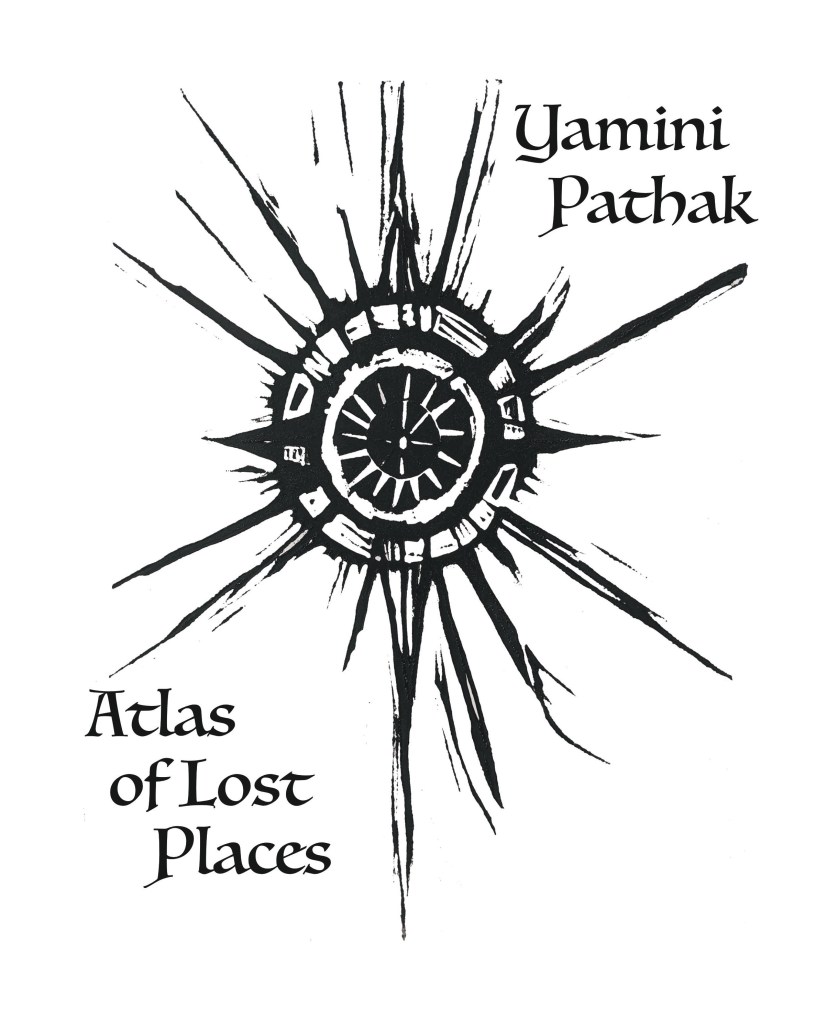
Atlas of Lost Places, by Yamini Pathak

Review by John W. Bing

Yamini Pathak’s first chapbook, Atlas of Lost Places (Milk and Cake Books, 2020) explores memories of a childhood in India and adulthood in the US, raising American children. She reminisces, weaves in myth and narrative, and blends theses elements into a lovely, lyrical whole. Beginning with the title, this is a series of poems that has echoes of many different kinds of lost places, lost but remembered maps.

From the opening poem, “Ahimsa,” representing the kinship of all things (from Sanskrit, meaning the absence of injury), come brilliant images:

xxxxxxxxxxxxxxxxxxxxxxxxxxxxxxCanyons are hewn
xxxxxxxxxxxxxxxxxxxxxxxxxxxxxxby a licking stream                                   
a tongue worrying stone after stone
like loosened teeth

Pathak’s “Ghazal for the Children Born Far from Home” describes one of the directions of her Atlas:  “I’ve severed you from old ways, this is my sorrow,” as the atlas points to a lost home.

In “Elegy for the Way Home,” Pathak continues her exploration of lost places:

Where shall you go my sons?  How will you ask for
answers. . .

xxxxxxxxxxxxxxxxxxxxxxxxyour meridians
lined on your palms and your
genomes, meaning you
were birthed from a language where parsaun, the day
after tomorrow wheels around to point at
xxxxxxxxxxxxxxxxxxxxxxxxthe day before yesterday

There is humor in this chapbook as well.  “In My Own Skin,” for example, fantasizes the strength of one’s own culture as a weapon to overcome office enemies:

I wear my Goddess skin to work
at the Monday morning meeting, I ride in
on a muscled tiger. . . .

When Petunia from Credit Policy goes into Striking Cobra
pose and venoms her questions at me with a hiss, flames
from my forehead laser forth and raze
her to the ground.  She makes a soft pile of ash.

In the last poem in this chapbook, “The Long Goodbye,” Pathak’s strength of incorporating the quotidian, daily events and objects, strews the poem with little jewels:

uncurl the leathered cheek
xxxxof an over-ripe pomegranate, spill rubies into our laps

Pathak is adept in various poetic forms:  Triolet, Ghazal, prose poems, and free verse for examples.  But the reader tends not to notice her technical competence because it is almost always at the service of bringing the reader to her side, to see her perspective, to share her vision and her losses.

While much of the poetry in this enchanted chapbook memorializes a lost homeland, it will speak to all of us who have managed the art of losing, whether it be a lover, a parent, a child, our youth, our mother country, or an ideal.  Being human means both to gain and to lose.  To us all, Pathak speaks words of deep understanding.  In sharing with us her lost places, she may help us with ours.


Yamini Pathak is a former software engineer turned poet and freelance writer. She was born and raised in India and now lives in New Jersey. Her poetry and non-fiction have appeared in Waxwing, Anomaly, The Kenyon Review blog, Jaggery, and elsewhere. A Dodge Foundation Poet in the Schools, she is poetry editor for Inch (Bull City Press) and an MFA candidate at Antioch University, Los Angeles. Yamini is an alumnus of VONA/Voices (Voices of Our Nations Arts Foundation), and Community of Writers.


Title: Atlas of Lost Places
Author: Yamini Pathak
Publisher: Milk and Cake Books, 2020
$14


John Bing has spent some of his lifetime building metaphorical bridges, but most of his time amazed at and appreciating different cultures and peoples, from a number of countries in Africa and Europe and Latin America to his years—years ago—in Afghanistan as a Peace Corps Volunteer.  From these wanderings, and now from his perch in the American southwest, he has come to love both the peoples he has met and the lands that they inhabit.  Just as each person and each group have their own characteristics and belief systems, so every place has its particular geography and set of living things. John Bing’s Time Signatures is forthcoming from Kelsay Press.


Risa Denenberg is the curator at The Poetry Cafe.

Elijah B Pringle, III

Elijah B Pringle, III, Artivist. A former Training Specialist and Director of Training, currently on sabbatical, is focusing his time on writing and editing. He is an advisor for Moonstone Art Center and a poetry editor for ToHo Journal.  Elijah has appeared on Stage, Radio and TV and was one of the hosts for Who Do You Love? a talk show on PhillyCam created by Warren Longmire to discuss writers.  He has been published both nationally and internationally.  Elijah comes from a strong tradition of educators and has facilitated numerous workshops.  He is finishing pre-production work on his play “Should Be …”  

Self-Portrait as a Sinking Ship

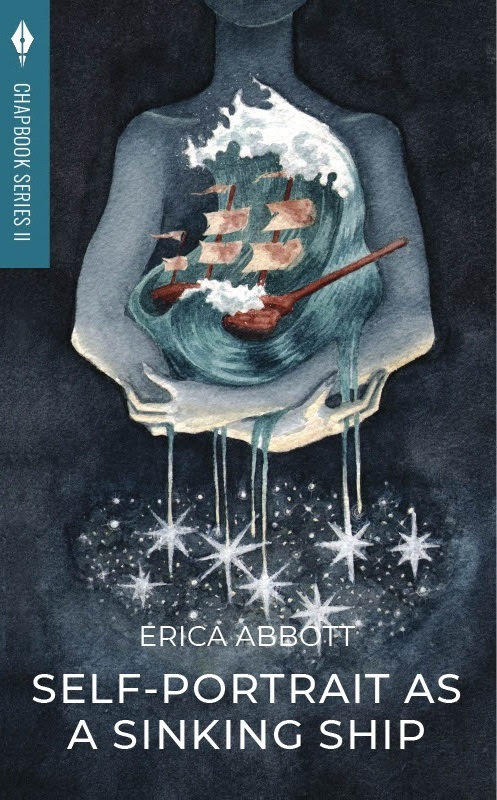
Self-Portrait as a Sinking Ship, by Erica Abbott

Review by Elijah B Pringle, III

Erica Abbott’s debut chapbook, Self-Portrait as a Sinking Ship (Toho Publishing, 2020), is replete with fresh observations and imagery. From her brilliantly conceived “Darkness and Hope” to her manifesto “How to Stargaze Through the Light Pollution, ” Abbott demonstrates she possesses a pen with a different kind of ink.   

The opening poem, “In Darkness and Hope,” dazzles with its playful construction. It can be read one column at a time or horizontally or, as I would suggest, both ways. No matter how you read it, it reveals reassurance and survival and sets the stage for a collection of poems that offers a buoyancy that belie the chapbook’s title. In this poem, the first four lines are about waiting for wishes. Or is it how the world was created?

future me tells ……………..the me of today
how an entire world………is created from stardust
once belonging to…………..this heavenly body
the sky………………………….holding infinite
waited in wishes……………possibilities

Abbott divides her offerings into two sections: “Darkness” and “Hope.”  In “Darkness” the imagery of water and cloaked-ness is most prevalent.  I’m not sure about her decision to include “10 Things You Should Know About Mental Illness” in this section.  I found this poem to be an artist enlightening her readers without hitting them over the head.  Instead of darkness it offers “ah ha’s” and actually removes the darkness of ignorance. One of her insights appears immediate in Section 1 of “10 Things You Should Know About Mental Illness”:

A façade is what makes me acceptable. It keeps
hidden everything that would otherwise scare
if it were to lie in plain sight

This is one of the most obvious and overlooked issues about mental illness—the hiddenness of it. Each section reveals a secret. The last section states the biggest obstacle I have found with mental illness.

You see what you want to see and none
of it is me.
It is not me.
Not from where I stand.   

The remaining poems in this section do not always further the theme of darkness but this does not rob them of their beauty.  The hidden gem for me is “Sandcastles and The Sea.”  The movement of the poem is like the crashing of waves:

I try to blink the saltwater away –
 …….      make my eyes flutter like that of a seabird
in flight – make no mistake

This image is so layered and simple.  “Not The Fire That Kills Me” is a great read. I especially loved seeing anxiety as smoke and fear as the fire which created it:

It is not the fire that kills
me – it’s the smoke
settling in my lungs

This section ends with the title poem “Self Portrait as a Sinking Ship” which is more reassuring then ominous:

No distress signals were ever responded to.
But somehow, against all odds,
I am still staying afloat.

The final section, “Hope,” starts with a beautiful poem that appears to be misplaced in this section.  “Days Like Today” continues the theme of the previous section.  The last lines declare,

You and me –
Because it’s all that’s keeping me alive.

………………..                That has to be enough for now.

These lines relay more of a sense of “oh well” and not the intentional resolve you would expect from hope.  The next poem “Sixty Percent Water” cymbals and boldly rings out survival and offers the hope this section is titled to be:

You are a life – sustaining force,
and you will rebuild yourself. You
hold more than enough power
to make it happen.

The momentum continues with “Saving Grace” and “Light in The Fog.”  How could anyone not love the imagery of “moonlight on a cobweb”? There is also great introspection found in “Stories on Our Skin.”  The last stanza is particularly moving.  It’s tattoo-worthy (albeit a painful one – LOL). The last three lines read:

When people look at me
What kind of story
Do I tell?

This wonderful debut collection crescendos with the manifesto “How to Stargaze Through the Light Pollution.”  Without being clichéd or trite, Abbott reveals to the reader that in darkness we can see the light through the obstructions:

Gaze into the eyes
of your lover. Lose yourself
in every shooting star and supernova
lighting up their face. This is how
you rediscover the universe.     

Erica Abbott (she/her) is a Philadelphia-based poet and writer whose work has previously appeared or is forthcoming in Anti-Heroin Chic, perhappened, Bandit Fiction, and other journals. She is the author of Self-Portrait as a Sinking Ship (Toho 2020), her debut poetry chapbook. She volunteers for Button Poetry and Mad Poets Society. Follow her on Instagram @poetry_erica and on Twitter @erica_abbott.

Title: Self-Portrait as a Sinking Ship
Author: Erica Abbott
Publisher Toho Press, 2020
Price $12


Elijah B Pringle, III, Artivist, is a former Training Specialist and Director of Training, currently on sabbatical, now focusing his time on writing and editing. He is an advisor for Moonstone Art Center and a poetry editor for ToHo Journal.  Elijah has appeared on Stage, Radio and TV and was one of the hosts for Who Do You Love? a talk show on PhillyCam created by Warren Longmire to discuss writers.  He has been published both nationally and internationally.  Elijah comes from a strong tradition of educators and has facilitated numerous workshops.  He is finishing pre-production work on his play “Should Be …”  


Risa Denenberg is the curator at The Poetry Cafe Online.

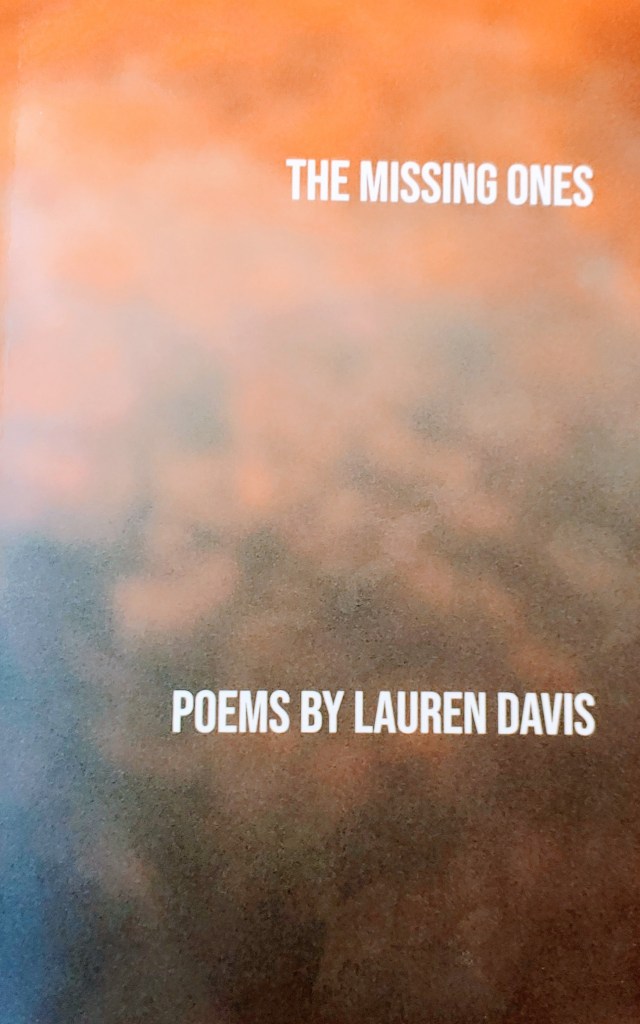
The Missing Ones

The Missing Ones, Poems by Lauren Davis

Review by Risa Denenberg

I’ll start with a disclosure: Lauren Davis and I are friends and often share our poetry with one another. The first review at the Café was my review of Davis’s chapbook, Each Wild Thing’s Consent, and Lauren has been a guest reviewer on this site. In The Poetry Café Guidelines For Reviewers, I say,

I am not at all reluctant to publish reviews of books from poets known to the reviewer, as long as the review is credible.

Reader, I promise, credibly, that I am besotted with The Missing Ones, and would urge you to order one of the limited press run of 40 copies, if any were still available. But it appears they are all gone. Befitting the poems, they have disappeared.  


The Missing Ones (Winter texts, Limited edition, 2021) by Lauren Davis,is a tour de force narrative of persons lost at sea. More specifically persons lost in the glacial-fed, crystal-clear body of Lake Crescent, a lake which reaches a maximum depth of over 1000 feet, is algae-free due to the water’s nitrogen content, and has an average temperature of 44 degrees.  Davis’s interest in the stories of these lost lives is also compelling to me as we both live on the Olympic Peninsula, near this iconic lake. Davis’s poetry is equally enthralling, and a remarkable lyrical match for the story she tells in these poems.  

In the book’s preface the reader learns,

On July 3, 1929, Russell Warren picked up his wife, Blanch … They drove U.S. Route 101 along Lake Crescent towards their home in Port Angeles, Washington. They’d promised to celebrate the Fourth of July with their sons. But the couple did not arrive home. The two boys never saw their parents again.

In the poem, “Seven Thousand Years Ago,” the story’s history opens,

            The earthquake cut a drowned country
            xxxxx for us to rest.
            In these depths, God laid out a marriage bed.

The first poem in the book, “Blanch Says,” starts with the line, “There are dangers / in deep waters no one / speaks of.” The enormity and terror of nature as it unfolded and continues to evolve on the Olympic Peninsula is rendered skillfully in these lines. As humans struggle to stay relevant on mother earth, nature plods on, on her own course. In “The Missing Ones,” Blanch is an iconic symbol of that struggle when her voice says,

There is a stain on the rock
unfolding. I drink the lake,

All of it. I make it mine.   

And in “What Makes the Lake So Thirsty,” the plot thickens,

We are not the only mislaid ones.
They rest at separate depths.
            //
We are the republic of secrets
and missing person cases.
I wore my least favorite dress to our death.
The lake floor is a reversed sky,

And yet, there is a life in the depths, and in “Things That are Pleasing,” Blanch’s voice lists some of them,

Beardslee trout dancing.
A rainstorm I hear but cannot feel.
The small of winter in hidden splits.
My husband’s eyes in the depths.

Now I must tell you something about Beardslee trout: they are a species of rainbow trout that are endemic to and live only in Lake Crescent. If this piques your interest, read more at The Native Fish Society. It is this detail, among others gleaned from the long history of the lake, that deepen the emotional resonance of these poems.

Blanch also has her complaints. In “Things that Irritate,” she lists some of them:

Candy wrappers that float into my bedroom.
Friends who do not say goodbye after they are found.
Long weeks without rain.
Divers that swim past my outstretched hand.

And there are also “Rare Things,”

Minutes that I do not miss my sons.
Green herons.
Decades without new bodies.

Blanch’s voice tells her story in “I’ll Tell you What Happened,” a narrative of drowning that is precise and terrifying, and yet redemptive at the same time.

This is how it feels to drown:
You’ll try not to inhale, but you will.

Water will fill the lungs. When your beloved drifts by
you will be unable to reach your hands to him.
Just try to move a single muscle. Your eyes will

stay open. Your husband has something to tell you—
you can sense it in the cold. Wait until you are both done
drowning. Then build a new home.

The details here are stunning, make me want to believe in this afterlife of the drowned dead. I grieve for Blanch and the others when she says, in “When the Lady of the Lake Comes to Stay,”

Russell, we have a visitor
and nothing to offer—
 no cake, no coffee.

Let us share our home
with its many rooms of water.

These poems are not at all sentimental. I am not a sentimental person. And yet, even at the fifth reading of them, I have cried.

Why would I review a book that is currently out of print? In part because I want you to remember the name of the poet. Lauren Davis. The poet has other books for you to buy and you will find her poems on the internet in many places. You will be hearing more from her, I promise. And, as the first printing sold out, hopefully, a second printing won’t be far behind, so that you can have your own copy!


Lauren Davis is the author of Home Beneath the Church (Fernwood Press, forthcoming), and the chapbooks Each Wild Thing’s Consent (Poetry Wolf Press, 2018), and The Missing Ones (Winter texts, 2021). She holds an MFA from the Bennington College Writing Seminars, and she teaches at The Writers’ Workshoppe and Imprint Books. She is a former Editor in Residence at The Puritan’s Town Crier and has been awarded a residency at Hypatia-in-the-Woods. Davis lives on the Olympic Peninsula in a Victorian seaport community. Her work has appeared in over fifty literary publications and anthologies including Prairie Schooner, Spillway, Poet Lore, Ibbetson Street, Ninth Letter and elsewhere. 


Title: The Missing Ones
Author: Lauren Davis
Publisher: Winter texts (first edition, limited run)


Risa Denenberg is the curator at The Poetry Cafe.