Carmine DiBiase

Carmine DiBiase writes about English and Italian literature, and his poems have appeared in various journals. Last year his English translations of thirteen poems by Cesare Pavese appeared in L’anello che non tiene: Journal of Modern Italian Literature. Occasionally he reviews books for the Times Literary Supplement. He has recently retired as Distinguished Professor of English at Jacksonville State University in Alabama. His chapbook of poems, American Rondeau, is due out from Finishing Line Press in August of 2022.

Grammars of Hope

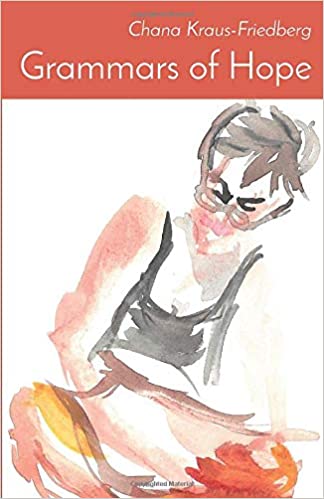
Grammars of Hope by Chana Kraus-Friedberg

Review by Cheryl Caesar

As a friend, I encouraged Chana Kraus-Friedberg to enter her chapbook Grammars of Hope (Finishing Line Press, 2021) into the Mark Ritzenhein Emerging Poet contest, and I was not surprised when she won first prize!


“Grammar” has a hard sound: grasping, grinding. Few admit to loving this field of study. We, as members of this select club, see it as the skeleton holding up the flesh of words, the skin of imagery. There is no language without grammar. A modal auxiliary like “may,” in the title poem, indicates a whole universe of possible futures for a friend’s young niece. I am reminded of Steinbeck’s East of Eden, and the Chinese servant Lee who works for years to find the best translation of the Hebrew word timshel, spoken by God to Cain. Did God say, “Thou shalt triumph over evil.”? That would be merely a statement of a predetermined future. Did He say, “Do thou triumph”? That is only a command. Lee finally concludes that God told Cain, “Thou mayest triumph over evil,” and that in the word “may” lies all the greatness of the human struggle. Likewise, Chana sees a great field of possibilities before her young heroine:

But I like to imagine
your niece’s grammar
as more hope
than mistake,
as though she’d been
shown two limited paths
and refused them both.
That’s not enough, and it can’t be
all there is,
she might (one day)
say.
May there be…?
There may be better ways.

But Chana is also a lover of words themselves, for their colors, smells, or moods, as in the poem “Authorial Intent”: “sickening” has an adamant, exceptional sound, / with that hard solid K in the center.

Or in “Sometimes You Ask Me,” where she reflects of the common phrase “what the day holds”:

I imagine it
like a pair of cupped hands
waiting to be filled.

This chapbook’s title, then, is important for at least two reasons. Words of Hope would have been merely banal. And the plural form lets us know that the author is the product of no one grammar, language or culture; she lives and finds her hope while moving between them.

In revealing these worlds, Chana shares a history that few of us will find familiar. She begins with her ultra-Orthodox Jewish childhood in Brooklyn, early becoming aware that her response to other girls is not the “normal” one, is not something that people speak of. “Brooklyn Lust” tells the poignant story of her “tender, insistent ache,” while standing behind a classmate, breasts pressed against her back, braiding her hair. Chana takes us through her life nearly to the present, to the years of COVID and Brett Kavanaugh. We hear of romances following her coming out–some with presumably real people, others with historical figures like Emma Goldman that she meets on library shelves. But we also follow her to Twelve Step meetings:

I didn’t know it would
feel like that,
all that pain with
no drugs to put on it –

//

But I’m grateful
for this chair
I’m sitting on.
I know if I stop being grateful
what happens

 With each new piece, the identity of the poet continues to take shape before us.

Chana’s writing is highly literate but never affected. It is strong and always searching. There is no lazy or pretty phrase. We feel that the poet is exploring the words, feeling the sounds, finding the meaning along with us. I can see her looking back, bemused, at the lines that have come from her. It’s the same expression that I see on poet Stevie Smith, with her cognomen of “peculiar”– the same wry shaking of the head. In the poem “Authorial Intent,” Chana concludes:

But lately I wonder
how a sentence survives
in the wild.
I could take it outdoors in
my pocket, speak it and see all
the words strung together like small shining orbs:
and I’d know what I meant,
why I’d placed them that way.
I’d know I’d said it.

I can’t guess what you’d hear.

Chana shares the puzzle with us and invites us to join the experiment. It’s an invitation worth accepting.


Chana Kraus-Friedberg is the winner of the 2020 Ritzenhein Emerging Poet Award. She grew up in an ultra-Orthodox Jewish community in Brooklyn, New York. Since leaving that community at the age of 20, she has earned a Ph.D in archaeology from the University of Pennsylvania and an MS in Library Science from the University of North Carolina-Chapel Hill. She currently lives with three feline companions in Lansing, Michigan, where she is a health sciences librarian at Michigan State University. This is her first chapbook.


Title: Grammars of Hope
Author: Chana Kraus-Friedberg
Publisher: Finishing Line Press, 2021
ISBN: ‎ 978-1646624386
Cost: $14.99


Cheryl Caesar lived in Paris, Tuscany and Sligo for 25 years; she earned her doctorate in comparative literature at the Sorbonne. She teaches writing at Michigan State University. Some of her COVID-era poems appear in Rejoice Everyone! Reo Town Reading Anthology, and in The Social Gap Experiment, both available from Amazon. Her writing and artwork will appear soon in Words Across the Water, a joint anthology by the Lansing Poetry Club and the Poets’ Club of Chicago. With co-editor Ruelaine Stokes, she is gathering a volume of reminiscences of the Lansing poetry scene in the 70s and 80s.


Risa Denenberg is the curator at The Poetry Cafe Online.

Cheryl Caesar

Cheryl Caesar lived in Paris, Tuscany and Sligo for 25 years; she earned her doctorate in comparative literature at the Sorbonne. She teaches writing at Michigan State University. Some of her COVID-era poems appear in Rejoice Everyone! Reo Town Reading Anthology, and in The Social Gap Experiment, both available from Amazon. Her writing and artwork will appear soon in Words Across the Water, a joint anthology by the Lansing Poetry Club and the Poets’ Club of Chicago. With co-editor Ruelaine Stokes, she is gathering a volume of reminiscences of the Lansing poetry scene in the 70s and 80s.

Cheryl Caesar

Tears on the Glass Desert

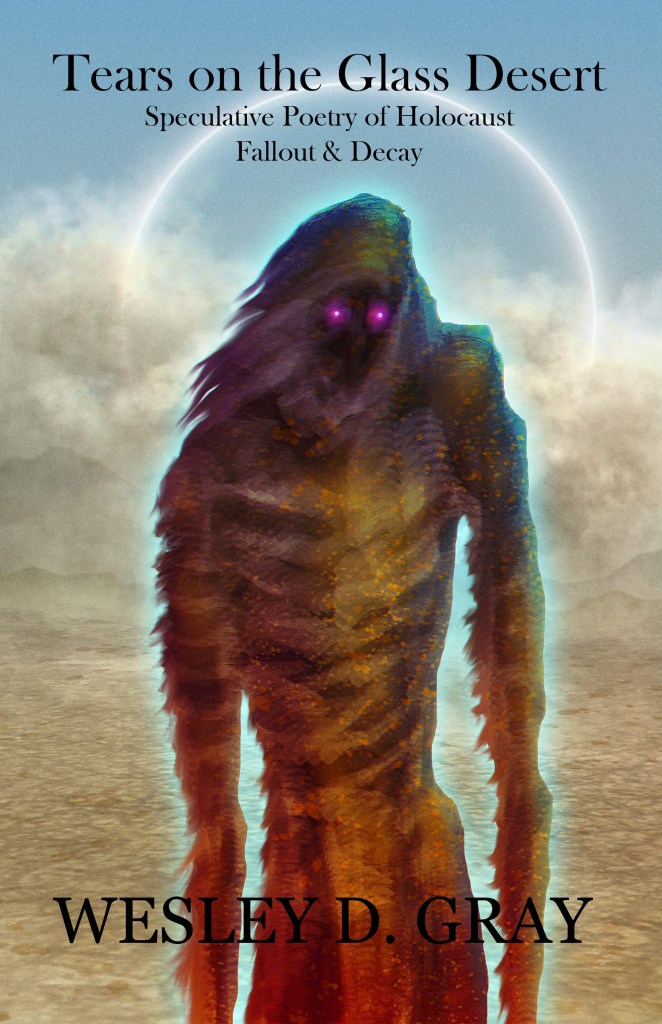
Tears on the Glass Desert: Speculative Poetry of Holocaust Fallout & Decay by Wesley D. Gray

Review by Don Beukes

As a secret childhood reader of horror—books such as The Rats, by James Herbert or It by Stephen King—and glued to the television watching films like The Birds or Carrie, I knew I was hooked on this genre from an early age.

In Tears on the Glass Desert (Marrowroot Press, 2021), Wesley D. Gray both establishes and earns the subtitle Speculative Poetry of Holocaust, Fallout and Decay. In his own description of the book, Gray invites us to “savor the final three seconds before Doomsday” and to “step through the shattered glass door leading beyond The End and walk through the veil of an apocalyptic dreamscape” in his chapbook of twenty-four poems that “speculate on both the inevitabilities and the impossibilities of nuclear holocaust, the fallout it brings, and the aftermath of its Decay.”

We witness an actual “countdown” over three sequences packed with astonishing and realistic poetic acumen in this cinematic literary journey, taking us to what we might fear the most—the end of this world as we know it.

In the first sequence, “Three to Ignition,” we are immediately plunged into the last three seconds of humanity in the first poem, “23:59:57.”  We are lulled into an almost hypnotic state by clever use of melodic near-rhymes such as chime/shine. Gray continues to lull us in the poem “Mushroom State,” in phrases such as igniting the nighttime, where assonance may conceal our awareness of the subject matter. This is also seen in this unique tug-of-words,

our bodies
flail within the flames
waving like an ocean of enraged kelp

In the second sequence, I found unique cinematic scenes in the poem, “From Corn to Sea” with each stanza using the first person, I see, I fear, I run, I sail, I feel, I fade, I wake, I pull, I shudder, I rise, I hear. This leaves us with a strange and effective sensory overload, willing us to also see, feel, shudder, run, fear and fade. This line reminds me of the Alien films,  

I pull
and my cheeks peel from the muscle, shreds
from bone

A revelatory moment comes upon the insight that perhaps the haunting figure on the cover might actually be the narrator. This awareness arrives in the poem, “Burning on re-entry,”

I was everything.
I was the gravity of a black hole
in the icy chars of a comet.
//
I hit the blue-domed atmosphere,
ready to split, ready to shatter.
//
I am ash,
a char upon the glass desert.

This collection is not for the fainthearted; it displays gore, guts and grime, while at the same time displaying the beauty of language. This sensory narrative gives an almost tactile impression of a nuclear fallout and the aftermath of decay.  We see this in the poem, “Covet,”

When our bones
were crushed
into the asphalt dream,

as I watched you turn to liquid
and your marrow
soak into earth,

Other equally chilling lines include, ash caskets rain from Eden’s Skyline, in “Prisoner Zero.” And in “Witness to a Schoolyard Burial” we find, Atomic children stir below the grasses, / continuing education in soil spit.  And in “Impressions,”

gullies filled with flakes of flesh,
their fodder-formed whispers
curdled, weaved in dust.

In the last poem, “A Final Visitation to our Monumental Glass Desert,” Gray holds our attention with lines such as, bone canyons with web-nested eyes / spilling regret from cavernous sockets, and continues the spell to these very last lines,

Blood and tears
are encased within
like swirls inside a marble,
mixed with all that liquid skin,
curled in slithers of flesh-resin tongues.

Gray’s thoughts go beyond the poems, as we find in his own description of the book’s lingering questions:  Let us witness the horrors of an apocalyptic dreamscape. Let us witness the horrors that await these lucky ones called survivors . . . What will become of our Children of the Fallout? Will they live beyond Death’s second coming, or are they simply doomed to fade away?

In his first chapbook, Come Fly with Death – Poems Inspired by the Artwork of Zdzislaw Beksinski (Marrowroot Press), and in his horror novel, Feeding Lazarus (Jaded Books Publishing), Gray displays equally gruesome language and his great skill at writing horror. His work reminds me of Stephen King. In all of these books, he poses existential questions for humanity.


As an author of fiction and a poet, Wesley D. Gray is a writer of things that are mostly strange. He is an Active member of the Horror Writers Association, as well as a member of the Science Fiction and Fantasy Poetry Association. His other books include Come Fly with Death: Poems Inspired by the Artwork of Zdzislaw Beksinski, and the horror novel, Feeding Lazarus (originally published as Rafe Grayson). When he isn’t writing, Wesley enjoys geek status while claiming to be: a tabletop gamer, a reader, a dreamer, a veteran, a Trekkie, a Whovian, an amateur photographer, a radiographer, nature-lover, coffeeholic, boxed wine enthusiast, and an all-around nice guy, among other things. He resides in Florida with his wife and two children. Learn more at the author’s website: WesDGray.com.


Title: Tears on the Glass Desert
Author: Wesley D. Gray
Publisher: Marrowroot Press, 2021

Format/Price: Kindle Edition ($ 0.99), Paperback ($5.99)


Don Beukes is a South African, British and EU writer. He has written Ekphrastic Poetry since 2015 collaborating with artists internationally. He is the author of The Salamander Chronicles, Icarus Rising-Volume 1 (ABP), an ekphrastic collection and Sic Transit Gloria Mundi (Concrete Mist Press). He taught English and Geography in both South Africa and the UK. His poetry has been anthologized in numerous collections and translated into Afrikaans, Persian, French, Kreole (Mauritius) and Albanian. He was nominated by Roxana Nastase, editor of Scarlet Leaf Review for the Best of the Net in 2017 as well as the Pushcart Poetry Prize (USA) in 2016. He was published in his first SA Anthology In Pursuit of Poetic Perfection in 2018 (Libbo Publishers) and his second Cape Sounds in 2019 (Gavin Joachims Publishing, Cape Town). He is also an amateur photographer and his debut Photographic publication appeared in Spirit Fire Review in June 2019.


Risa Denenberg is the curator at The Poetry Cafe Online.

Don Beukes

Don Beukes is a South African, British and EU writer. He has written Ekphrastic Poetry since 2015 collaborating with artists internationally. He is the author of The Salamander Chronicles, Icarus Rising-Volume 1 (ABP), an ekphrastic collection, and Sic Transit Gloria Mundi (Concrete Mist Press). He taught English and Geography in both South Africa and the UK. His poetry has been anthologized in numerous collections and translated into Afrikaans, Persian, French, Kreole (Mauritius) and Albanian. He was nominated by Roxana Nastase, editor of Scarlet Leaf Review for the Best of the Net in 2017 as well as the Pushcart Poetry Prize (USA) in 2016. He was published in his first SA Anthology In Pursuit of Poetic Perfection in 2018 (Libbo Publishers) and his second Cape Sounds in 2019 (Gavin Joachims Publishing Cape Town). He is also an amateur photographer and his debut Photographic publication appeared in Spirit Fire Review in June 2019.

Don Beukes es un escritor sudafricano y británico. Es el autor de ‘The Salamander Chronicles’ (CTU) y ‘Icarus Rising-Volume 1’ (ABP), una colección de ekphrastic. Él enseñó inglés y geografía en Sudáfrica y el Reino Unido. Su poesía ha sido antologizada en numerosas colecciones y traducida al persa, francés y albanés. Fue nominado por Roxana Nastase, editora de Scarlet Leaf Review por “Best of the Net” en 2017, así como por el Premio Pushcart Poetry en 2016. Fue publicado en su primera Antología de SA “En busca de la perfección poética” en 2018 ( Editores Libbo) y su segundo ‘suena de cabo’ en 2019 (Gavin Joachims Publishing). También es un fotógrafo aficionado y su publicación fotográfica debut apareció en Spirit Fire Review en junio de 2019.

They Become Stars: History as Poetry

They Become Stars by Liz Marlow was the Slapering Hol Press’s 2019 Chapbook winner.

A Conversation with Deborah Kahan Kolb

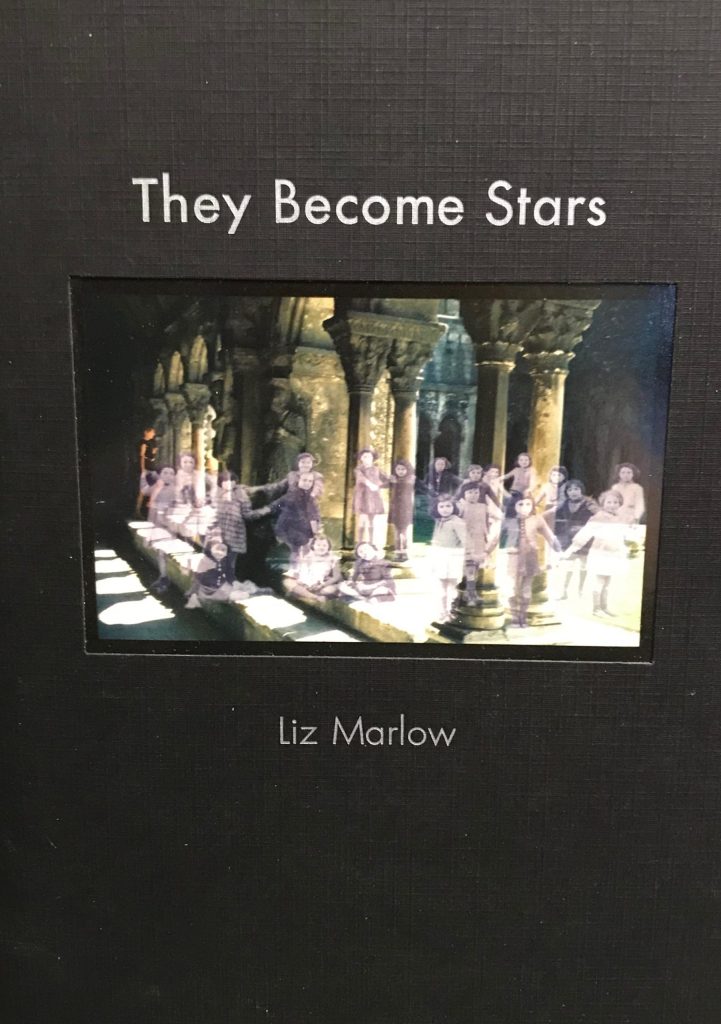
When I first held Liz Marlow’s chapbook They Become Stars (Slapering Hol Press, 2020) in my hands, I was struck by the beauty of this finely crafted book. It’s a work of art to be carefully read and absorbed. The haunting photos, on the cover and throughout the slim volume, demand to be noticed, as Marlow’s poems about one of history’s darkest eras demand space in the reader’s heart and mind.

I reached out to the author to ask her about her inspiration and process for this work.

Deborah Kahan Kolb: First of all, congratulations on winning the 2019 Slapering Hol Press Chapbook Competition. How would you describe your experience working with the editors of Slapering Hol Press as they shepherded your chapbook into being?

Liz Marlow: Thank you! I had an incredible experience working with the editors of Slapering Hol Press. They believed in my chapbook and provided solid suggestions for revision but gave me the creative license to revise as much as I wanted. However, I found that all of their suggestions and questions helped elevate my work in one way or another. Even if I thought that one of the editors might have misunderstood a line, I took it to heart and saw that the entire line or stanza was weak and needed to be revised. Even though the chapbook was published over a year ago, I have applied their general suggestions (such as playing more with enjambment and connecting images more thematically) to poems that I have recently drafted. I honestly could not have imagined a better experience.

DKK: Your work touches me deeply, not only because of its evident merit but because the subject speaks to me personally, as a grandchild of Holocaust survivors. Many Holocaust poems I’ve come across treat the topic in overarching, all-encompassing terms. Yet you manage to individualize the general atrocities, even to the point of making this brutal time in history accessible, in a way, by detailing specific places, names, and dates. What inspired you to delve into the particular historical figure of Chaim Rumkowski?

LM: My great-grandparents’ brothers, sisters, nieces, nephews, and cousins did not have the means to come to the United States before World War II. As far as we know, all of those family members perished in the Holocaust, because my great-grandparents stopped receiving mail from family members in Europe shortly after Germany invaded Poland. I wanted to piece together what happened to them. As I researched towns in which I know for certain my family lived and potential ghettos where they might have been deported, I stumbled upon Chaim Rumkowski: Judenrat Chairman of the Łódź Ghetto. What drew me first to him was the fact that he was both a victim of Nazi exploitation and a sexual predator. Some historians believe that had the war ended a year before it did, he would have been considered a hero for how many Jews he saved, because the Łódź Ghetto was the last that the Nazis liquidated due to him establishing more than a hundred factories inside the ghetto for Nazi supplies. As arguably the most powerful Judenrat Chairman in Nazi Germany, there is no way of knowing exactly how many women and children he sexually molested. Therefore, as I read about him, I wanted to give those powerless children a voice in my work. My goal was to get as specific as I could so that a reader could not walk away without remembering what happened to these children. I wanted these dead children to regain power. Even though he was an extreme personality, there were many extreme situations during the Holocaust, and over two hundred thousand Jews were sent to the Łódź Ghetto throughout World War II. Since he was Judenrat Chairman of the ghetto from its establishment in October 1939 until its liquidation in August 1944, his influence and power affected all of those people.  Additionally, even though these poems are detailed with specific dates, the experiences are universal in many ways in how some people in power exploit the powerless and in how some individuals will do whatever it takes to survive difficult situations while others give up.

DKK: Throughout the collection, but especially for speakers Miriam and Shayna, you use strong, colorful images of candy and fruit: “green gummy bears,” “tart apples,” the colors and flavors of “candy pebbles” in “Miriam Arrives at Chaim Rumkowski’s Orphanage”; and “plump/like plums” and “overripe cherries” in “Shayna Sees Chaim Rumkowski for the First Time.” Can you describe the connection of these images to the work as a whole?

LM: Because most people who have read about the Holocaust remember images of Muselmänner—starving humans reduced to skin and bones, I thought that the juxtaposition of starvation with descriptions of types of food that Jews had little or no access to in the ghetto world (such as fruit), would emphasize that hunger. In my mind, a person like Shayna, in her hunger, would be obsessed with food and see it everywhere—even in people’s faces. Additionally, Chaim Rumkowski was known for sexually exploiting women and children in the ghetto and in the orphanage where he worked before the war. To me, that was an extra layer of horror during an already horrific time for Jews. As I read about him, what struck me the most was the fact that he had control over who received the limited special food items (such as candy and fruit) and used that control specifically for the exploitation of children. Therefore, I was drawn towards using candy throughout the chapbook to highlight that exploitation.

DKK: Music—its sound and texture, its instruments, its connection to memory—is another powerful vehicle that drives many of your poems. How do you use music to convey ideas as they relate to the sounds of the Holocaust?

LM: It was extremely important to me that music be a driving force in the chapbook, because I had based the character, Miriam, on a real young musician Holocaust victim who loved music and played extremely well for how young she was up until Rumkowski molested her. Because she haunted me while I wrote the chapbook, there were times that I tried to imagine how she would describe the world around her. For example, even though the child that Miriam was based on had already died (via a Nazi guard) when the Vel d’Hiv roundup took place, I had her in mind when I wrote the “sound” section of “Vel d’Hiv Roundup of 7,000 Jews Detained in a Cycling Arena.”

DKK: The ghostly photographs included in the book add an element of otherworldliness to a collection rooted in the specifics of the young victims’ lived realities, their suffering and terror. What do the photos of these children express and how do they add texture to your poems?

LM: Lynn Butler created the double exposure photographs used for the cover and pages in the chapbook, which include a Jewish orphanage in France where all but three of forty children died in Auschwitz, overlaid with those child victims. Because the first three poems of the chapbook take place in a Jewish orphanage in Łódź, I thought of Lynn Butler’s work as photopoetry to accompany my poems. Since the photos of the children are negatives, they are ghostly. Even though her photos are from a different orphanage than the one I wrote about, they are appropriate to me because out of over 10,000 known school children from the Łódź Ghetto, there were only 27 known survivors. Miriam is a ghost. Shayna is a ghost. The children dancing on the cover of my chapbook are ghosts. I tried to do what Lynn Butler did with her photos—put faces to child victims from the Holocaust. Lynn Butler’s photos of the children were originally included in The Children of Izieu: A Human Tragedy by Serge Klarsfeld. I am extremely grateful that she worked with Serge Klarsfeld and the editors at Slapering Hol Press so that those photos could be included in my chapbook.  

DKK: Tell us about the Stars in the title of your book. I suspect there’s more to the title than the obvious connection to the yellow “Jude” stars of Nazi Germany.

LM: The title came from a poem that was originally published in Wilderness House Literary Review. This poem was included as an introductory poem in earlier drafts of They Become Stars, but I ended up taking it out, because its form did not fit with the rest of the chapbook.

Exits

cities’ stale facades crumble
like stacks of crackers
roaches, rats got into
everyone
exits

on never-ending roads
made of death
marches
cattle cars
gas
vans

each pebble forming roads
represents a lost man
woman child stars
become them
as they
become
stars

I wanted readers to make connections to celebrity, since I am sure that a large part of why Chaim Rumkowski did what he did was to survive the war and be praised as a hero for saving so many lives due to the choices he made (or rather, the choices that Nazis encouraged him to make). He wanted the power and status that people associate with celebrity—this is why he rode through the ghetto in a horse-drawn carriage while other inhabitants were crawling and starving to death. Another reason for Stars was the obvious association with celestial bodies: 6,000,000 people who wore yellow stars died. That is such a large number that is like looking up at the sky in the desert and trying to count the stars.

Thank you for the opportunity to participate in this interview. I am extremely grateful for you giving They Become Stars such a close read and coming up with such insightful questions.


Liz Marlow’s debut chapbook, They Become Stars, was the winner of the 2019 Slapering Hol Press Chapbook Competition and was published in 2020. Additionally, her work has appeared or is forthcoming in The Bitter Oleander, The Rumpus, Valparaiso Poetry Review, Yemassee, and elsewhere. She lives in Memphis, Tennessee with her husband and two children. Find more at lizmarlow.com


Title: They Become Stars
Author: Liz Marlow
Publisher: Slapering Hol Press, 2020
Price: $15


Deborah Kahan Kolb is the author of Escape of Light and Windows and a Looking Glass, a finalist for the New Women’s Voices Chapbook Contest (Finishing Line Press). Much of her work is informed by the unique experiences and challenges of growing up in the insular world of Hasidic Judaism. Deborah is a two-time recipient, for poetry and fiction, of the Bronx Council on the Arts BRIO Award, and her work has been selected as a finalist for the Anna Davidson Rosenberg Poetry Award and an Honorable Mention for the 2019 Glimmer Train Fiction Open. Deborah is the producer of the award-winning short film Write Me, adapted from her poems. Her writing is published in 3Elements Review, Lunch TicketMom Egg Review, PRISMRise Up Review, The New Verse NewsVerse Daily, and others. Deborah is currently at work on a novel of linked short stories. For more, please visit deborahkahankolb.com.


Risa Denenberg is the curator at The Poetry Cafe Online.

Deborah Kahan Kolb

Deborah Kahan Kolb is the author of Escape of Light and Windows and a Looking Glass, a finalist for the New Women’s Voices Chapbook Contest (Finishing Line Press). Much of her work is informed by the unique experiences and challenges of growing up in the insular world of Hasidic Judaism. Deborah is a two-time recipient, for poetry and fiction, of the Bronx Council on the Arts BRIO Award, and her work has been selected as a finalist for the Anna Davidson Rosenberg Poetry Award and an Honorable Mention for the 2019 Glimmer Train Fiction Open. Deborah is the producer of the award-winning short film Write Me, adapted from her poems. Her writing is published in 3Elements Review, Lunch TicketMom Egg Review, PRISMRise Up Review, The New Verse NewsVerse Daily, and others. Deborah is currently at work on a novel of linked short stories. For more, please visit deborahkahankolb.com.

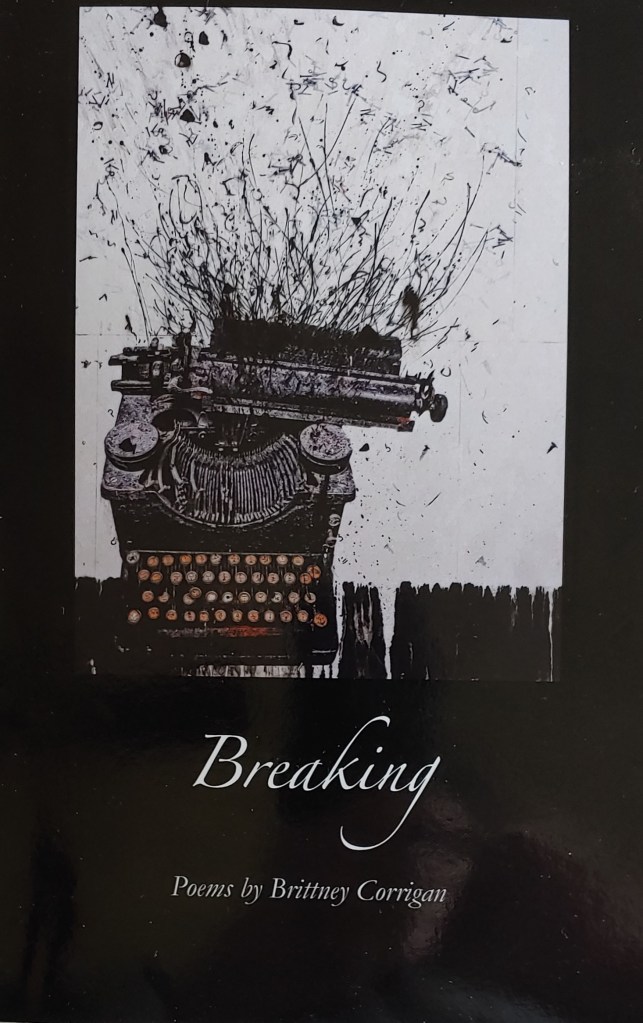
Breaking

Breaking by Brittney Corrigan

Review by Risa Denenberg

Brittney Corrigan is a woman trying to make sense of the world using every power that blending breaking news events with imagination and metaphor will afford. In Breaking (Word Tech Editions, 2021), Corrigan displays a sensitive balance of empathy and craft while superimposing global trauma with details from her own life. These twenty-one poems are paired responses to events that occurred during the years 2013-2019; yet they seem timeless.

When I first opened Breaking, perusing at random, I ignored the postscripts included with each of the twenty-one poems, indicating which global event the poem was written “after,” such as “After the death of Cecil the lion in Zimbabwe’s Hwange National Park at the hands of trophy hunter Walter Palmer on July 1, 2015.” None of these poems actually need these postscripts, they are strong stuff on their own.

When I picked up Breaking again, with the goal of reviewing it, the dedication struck me:

For Angie Rinaldo Crowder,

my 8th grade social studies teacher,
who taught me the importance
of paying attention to the events of the world.

To be needlessly repetitive, this is a dedication to a social studies teacher, not a poetry mentor. This early lesson was not only internalized but considered, examined, and transformed by a poetic consciousness. And what better way to comprehend the bombings, mass murders, separation of children and families at the US-Mexican border, endangered animals, and catastrophic floods and fires? And, I should add, some wondrous events: “the female pilot who safely landed Southwest Airlines flight 1380;” the escape of “Ollie a female bobcat” from the Smithsonian National Park Zoo; or “the first all-female spacewalk.”

Floating above “After the suicide bombing of the Ariana Grande concert in Manchester, England that killed 22 people on May 20,1917,” is the poem “Put Your Hearts Up,” in which a “cousin’s 12-year old daughter / is dying.” This close-to-home tragedy is lined up with the mass murder. “This world in which freak accident / and planned evil turn out the same.” It goes on,

But patching up one hole leaves another gaping.
Hearts are fracturing all around us, all across
this organ of our earth. Our fear, our grief, is audible
and persists. And yet our bodies cleave us together,
quicken and pulse.

Other poems also carry the weight of tragedy mixed with credible hopefulness. “Unflap” is written in the voice of a person surviving a harrowing emergency plane landing who feels,

The gravity of our hearts plunging
for what we’ve lost. Gripping onto
each other, remembering what’s worth
saving as the mess of us lands.  

In “Steller’s Jay the Week of the Boston Marathon Bombings,” Corrigan considers her own culpability when,

The young cat whose life I saved carries
a Steller’s jay in his mouth, the blue
form limp on either side of his jaws.

            . . .

xxxxxxxxxxxxxxxxxx Somewhere behind
him in the trees the little jays call from their nest:
their blue mouths open.

And then she juxtaposes her “responsibility for this rending” with that of the mother of a murderer,   

She would still run to him now, still gather
him into her arms, rock him like a child—
no matter what is lashed to his chest.

Corrigan finds a special place in these poems for wildlife: the bobcat escaping from the zoo; Cecil the lion in Nairobi’s National Park; the mother orca, Tahlequah, “who carried her dead calf for more than two weeks” while “immigrant families were being separated at the United States border with Mexico.” Here she muses, “The orcas are better than we at buoying up our own.”

In “Truck Carrying Live Eels Overturns on Highway 101,” she pictures the eels ultimate fate “not to be shipped off to Korea,” but instead becoming roadkill—

xxxxxxxxxx[a] viscous mass of lives
across the pavement, racing the bulldozer,
the push of its knobby, rolling track
folding them on top of each other
as if they were no more than snow,
clearing a path through the wreckage
in which no one was injured.

The irony of that quiet last line is heartrending.

We each bear awful news in our own way, pay attention to the things we feel moved to respond to, try to protect ourselves from becoming overwhelmed, suicidally depressed, or callously disconnected. I am particularly sensitive to images of trauma and for this reason, after the events of 9/11/01 in New York City, I gave away my television, and have not owned one since. In Breaking, Corrigan paints dreadful images with words and puts forth a response (something I’m not always able to do) while making a valiant effort to not overwhelm, depress, or paralyze her readers. There is a feminist consciousness here as well, sharing fears and yearnings for a young daughter in “On Telling My Nine-Year-Old Daughter that Hillary Won’t be President,” and in praise poems such as “Astrosisters,” where, “two women navigate the Space Station in weightless / calm.”

I suspect that this practice of responding swiftly to events by writing poems (three of these were published in Rattle: Poets Respond) is a source of emotional self-care as well as a challenge to connect one woman’s life with larger events going on simultaneously. This engenders a sort of humanity on all things, large and small, human or fauna.

Corrigan can say, “The tide is against us. The children slip and slip and slip away,” but also,

From this ruin, we knead kindness
into loaves, then break them. The fishes
slip and slip from our outstretched palms.


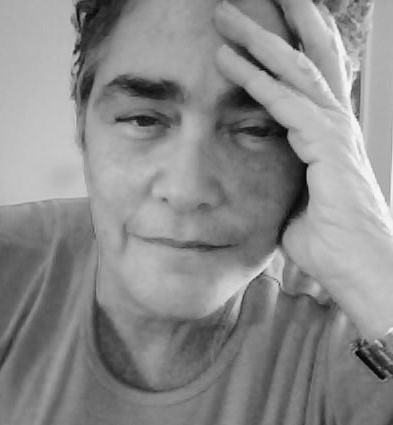
Photo credit: Nina Johnson Photography

Brittney Corrigan is the author of the poetry collections Navigation, 40 Weeks, and most recently, Breaking, a chapbook responding to events in the news over the past several years. Daughters, a series of persona poems in the voices of daughters of various characters from folklore, mythology, and popular culture, is forthcoming from Airlie Press in September, 2021. Corrigan was raised in Colorado and has lived in Portland, Oregon for the past three decades, where she is an alumna and employee of Reed College. She is currently at work on her first short story collection and on a collection of poems about climate change and the Anthropocene age. For more information, visit http://brittneycorrigan.com/


Title: Breaking
Author: Brittney
Publisher: Word Tech Editions
ISBN: 978-1625493736
Price: $16


Risa Denenberg lives on the Olympic peninsula in Washington state where she works as a nurse practitioner. She is a co-founder and editor at Headmistress Press and curator at The Poetry Café. Her chapbook, POSTHUMAN, was the finalist in the Floating Bridge 2020 chapbook contest.


Risa Denenberg is the curator at The Poetry Cafe.

Submit Anytime!

Small independent presses that accept poetry chapbooks on a rolling basis:

Bottlecap Press

Bottlecap Press is a millennial publishing outfit dedicated to authors’ rights and fair pay, on a constant journey to explore the infinite possibilities of literary multimedia. Founded in Skagway, Alaska in 2014 and currently located in Joshua Tree, California, we are here to showcase the best in artistic talent through the works of visionary authors whose wonderful books speak for themselves. We are publishers of poetry and fiction, chapbooks and full lengths, and all of our books are lovingly handcrafted on demand.

Manuscript submission guidelines:
We’re accepting chapbook submissions for Bottlecap Features, a weekly chapbook series from Bottlecap Press. All genres are welcome, and the maximum page count is 36. Please send submissions to bottlecappress@gmail.com

Sylvia Byrne Pollack

Sylvia Byrne Pollack, a scientist turned poet, has published in Floating Bridge ReviewCrab Creek Review and Clover, among other print and online journals. A two-time Pushcart nominee, she won the 2013 Mason’s Road Literary Award, was a 2019 Jack Straw Writer and will be a 2021 Mineral School Resident. Her debut full-length collection Risking It is published by Red Mountain Press (2021.)

Sylvia Byrne Pollack